EU, please let go of your contradictions and entanglements: Global Times editorial
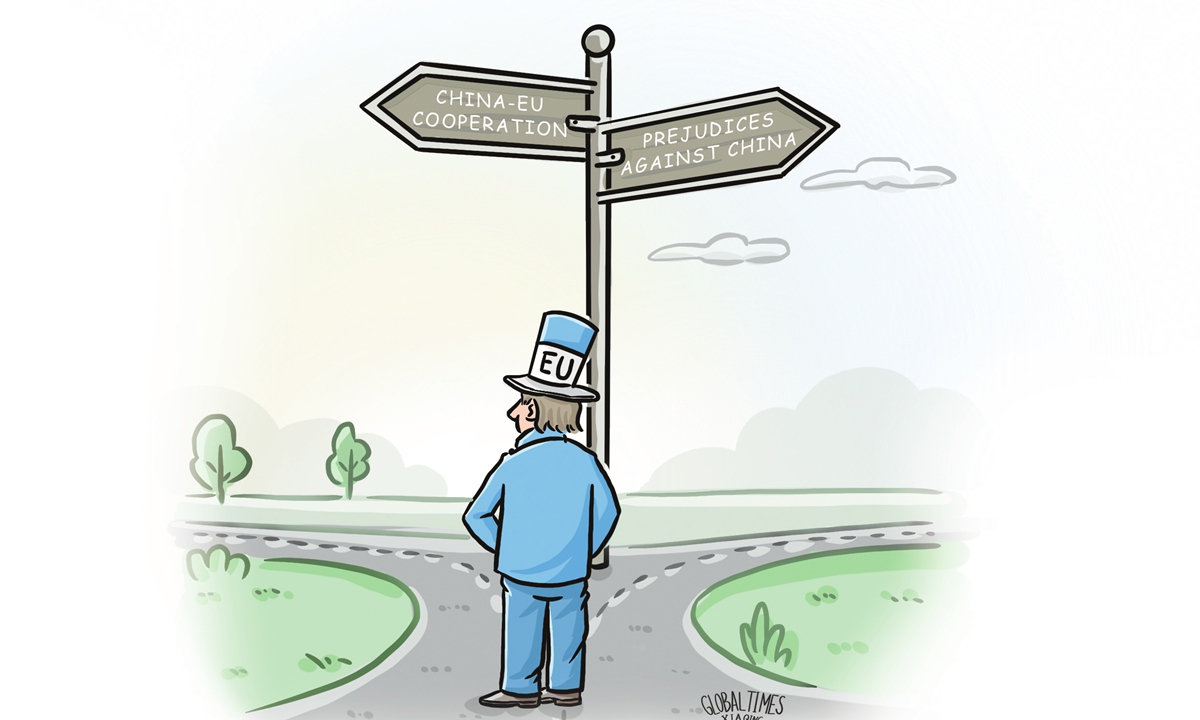
Illustration: Xia Qing/GT
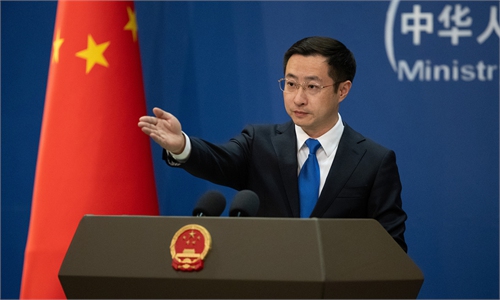
Recently, some US and UK media outlets revealed that Washington pressured the EU to impose tariffs of up to 100 percent on China and India citing their purchases of Russian oil. The Financial Times quoted an anonymous US official as saying, "we're only going to do this if our European partners step up with us," and "we'll share the pain together." The Chinese Foreign Ministry responded on Wednesday stating that China's position on the Ukraine crisis is objective and just, China did not create the crisis, nor is China a party to it, and we oppose making an issue of China or imposing so-called "economic pressure" on us.The Financial Times report claimed that European capitals were discussing the feasibility of the US proposal, but "many are nervous given the EU's trade relations with Beijing and New Delhi." This highlights the EU's entanglement and contradictory mentality in its relations with China for some time. It wants to be both a partner and a competitor; it wants to balance economic and trade relations and also pursue so-called de-risking; it is both concerned about China-Russia relations and has even imposed sanctions on Chinese companies, while also demanding that China cooperate in putting pressure on Russia. This "want it all" mentality has left it at a loss in a turbulent and changing world and has also caused numerous problems in China-EU relations. No wonder Spanish scholar Marta Montoro wrote in an article that if the EU wants to sit at the same table with China, it must learn to wear long trousers.
The EU's contradictory mindset is prominently reflected at three levels. First, at the cognitive level, the "triple position" policy bluntly combines the three incompatible roles of China as partner, competitor, and systemic rival. While ostensibly intended to accommodate differing voices within the EU, it actually reflects the zero-sum mentality of some on the EU side. Unresolved cognitive issues easily lead to constant fluctuations in the development of bilateral ties. Second, on the economic and trade front, EU leaders have stated their commitment to resolving frictions and conflicts through negotiation and consultation. However, in reality, they have unilaterally put pressure on China and made demands, while ignoring China's cooperation initiatives and legitimate concerns, demonstrating a growing trend toward protectionism. Furthermore, on hot-button issues, the EU hopes for a ceasefire between Russia and Ukraine, but blindly follows the US' lead, continuously increasing sanctions on Russia and shifting the blame to China. In recent years, the EU has also cooperated with the US' "Indo-Pacific Strategy," constantly stoking regional tensions.
Fundamentally, the reason for the EU's contradictory mentality is that the EU has not formed a clear understanding of the direction of the century's transformations, its own position, and its future development, nor has it found clear answers to strategic and directional questions concerning its own future. Should it choose dependence on the US or strategic autonomy? Will it obsess over geopolitical competition or embrace open cooperation? Different answers will lead to completely different future and destiny of the EU.
The EU has always attached importance to transatlantic relations, which in itself is understandable. But if it blindly prioritizes the US' interests, even serving as a pawn of Washington's geopolitical strategy, rather than engaging the US on an equal footing as a major global player, it will only undermine the independence and credibility of the EU's own foreign and security policy. On the Ukraine issue, after making Europe "bleed," the US turned around to "drain" Europe again on economic and trade matters. Yet, rather than reflecting on the underlying issues of the US-EU relationship, some in Europe frequently use China as an excuse, attempting to curry favor with Washington at the expense of China's interests and China-EU relations, hoping to maintain transatlantic unity by exaggerating the so-called "common threat." This approach will never earn the respect of the US, while seriously damaging relations and cooperation with China.
What ordinary people want is peace, stability, and secured livelihoods, and not to create enemies on all sides. Europe is no exception. The EU's main decision-making bodies are neither elected by the public nor directly accountable to Europeans. Internally, the EU institutions are fragmented by factions, diverging interests, and competing views, with cumbersome decision-making. It is unclear whose views or whose interests their China policy actually reflects. Polls show that EU member states are more inclined to support French President Emmanuel Macron's vision of China as a "strategic and global partner," rather than framing the relationship in terms of "de-risking" or confrontation.
Dialogue and cooperation with China are the EU's right choice. China is the EU's partner in achieving security and enhancing competitiveness, and the two sides have vast potential for cooperation in emerging fields such as artificial intelligence, the digital economy, and green development. The EU needs to adopt a more comprehensive, objective, and constructive attitude toward China-EU economic and trade ties, promote balanced and forward-looking development through mutual openness, and handle trade frictions properly through dialogue and consultation. In today's turbulent world, where unilateralism and bullying severely challenge international order and norms, the more complex the global situation becomes, the more China and the EU need to strengthen solidarity and coordination, firmly acting as a stabilizing force in a volatile world.
This year marks the 80th anniversary of the victory in the World Anti-Fascist War. Looking back at the history of World War II, the most important lesson for Europe is that compromise and appeasement do not bring peace and respect. The EU should let go of its internal contradictions and entanglements as early as possible and return to the right track of a comprehensive strategic partnership with China.
This is the best choice that serves the EU's fundamental and long-term interests.
RELATED ARTICLES