Pre-made dishes trigger hot debate
Industry's future lies in standardized, transparent and innovative development: experts
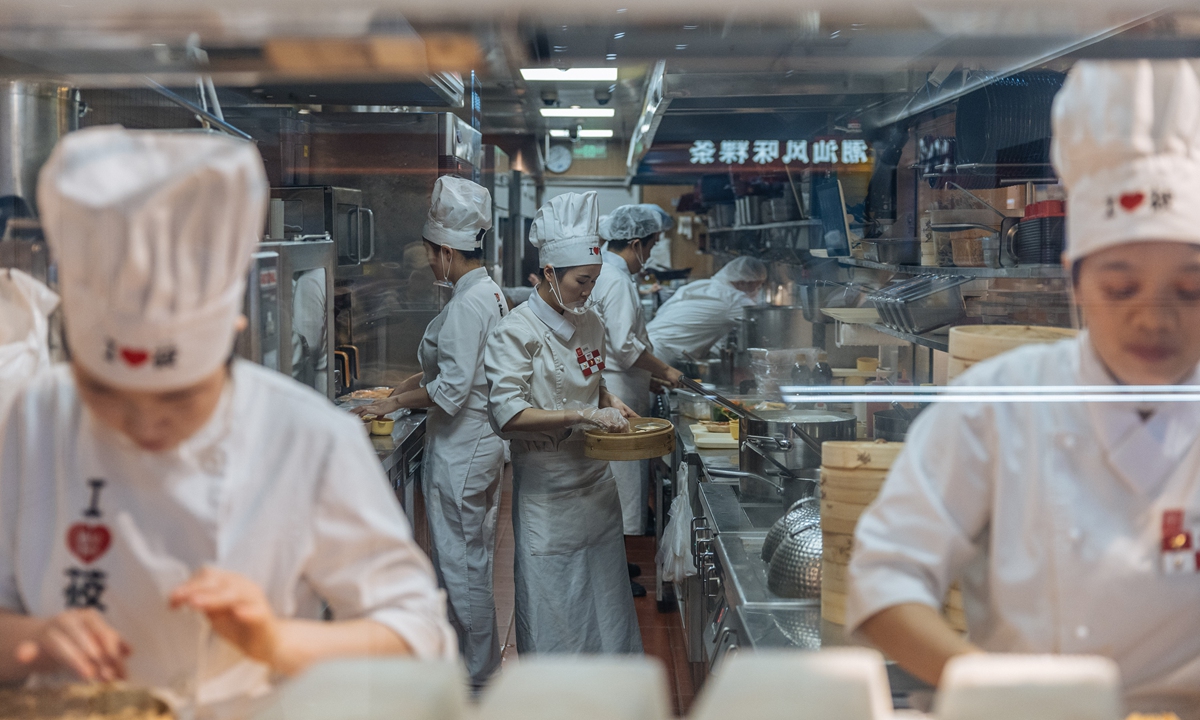
Chefs work at a Xibei restaurant in Beijing amid the controversy over "pre-made dishes" on September 13, 2025. Photo: Li Hao/GT
The issue of "pre-made dishes" has come under close public scrutiny in China, with Xinhua News Agency publishing a report on Sunday examining what consumers really care about, and People's Daily posting a micro-commentary calling for greater transparency so that diners can make informed choices.
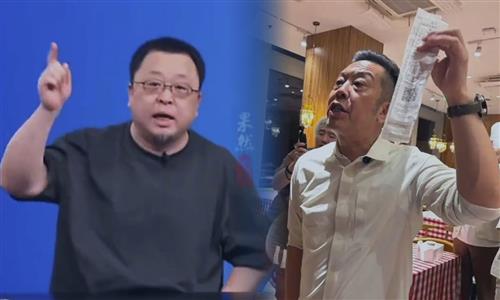
The online feud started with a post by internet celebrity Luo Yonghao on Wednesday, who said that the well-known Chinese restaurant chain Xibei's dishes were "almost all pre-made, and so expensive." On Thursday, Xibei founder Jia Guolong denied the accusation, saying none of the restaurant's dishes qualify as pre-made under national regulations.
According to Xinhua, pre-made dishes are an important part of the food industry, and how to develop them responsibly to meet growing consumer demand is a key issue.
The use of pre-made dishes is common among large chain restaurants. Citing Lu Xing, a pseudonymous industry veteran, Xinhua reported two main reasons: Many outlets have restrictions on open flames and raw meat handling, making pre-made or centrally prepared ingredients safer; and for some cold dishes or marinated items, pre-made components save costs, enhance flavor, speed up service and improve both business efficiency and customer experience.
However, pre-made dishes remain controversial among consumers, Xinhua noted. Small restaurants may struggle with food safety, eroding public trust. Heating pre-made packages for delivery often occurs in unsanitary conditions, leaving some consumers with the impression that pre-made equals low-quality. The lack of clear definitions and unified standards has also left consumers uncertain. Finally, some restaurants market "freshly made" dishes that are actually microwaved pre-made meals but charged at full price, which undermines consumer rights.
Finally, Xinhua cited experts and industry insiders saying that the future of the pre-made dishes industry lies in standardized, transparent and innovative development.
Information on pre-made dishes must be more transparent in order to enable consumers to make informed choices, said the People's Daily in a micro-commentary. The true challenge lies not in technology, but in building trust with consumers. While efficiency and convenience are important, it must also meet the essential public demand for safe, clearly labeled food.
The debate should move toward a rational and constructive approach: improving governance to foster a healthier environment for pre-made dishes, promoting standardized business practices, and safeguarding consumers' right to know. Only by earning public trust can the industry secure a sustainable and promising future, the micro-commentary said.
According to the Notice on Strengthening the Food Safety Supervision of Pre-made Dishes and Promoting the High-Quality Development of the Industry issued by several departments including the State Administration for Market Regulation in March 2024, pre-made dishes, also known as pre-prepared dishes, refer to pre-packaged dishes made from one or more edible agricultural products and their processed products as raw materials, with or without auxiliary materials such as seasonings, and without adding preservatives. They are produced through industrial pre-processing (including stirring, marinating, tumbling, shaping, stir-frying, deep-frying, roasting, boiling, steaming, etc.), may or may not be accompanied by seasoning packets, and comply with the storage, transportation and sales conditions indicated on the product labels. They can only be consumed after heating or cooking, according to the information from gov.cn
Notably, consumers generally regard dishes made from long-preserved frozen ingredients that only require simple heating as "pre-made dishes." According to official designation, dishes distributed by central kitchens and some processed frozen ingredients are not in the category of pre-made dishes, which provides basis for Xibei's claim that its dishes are not pre-made.
A draft national food safety standard for pre-made dishes, led by the National Health Commission, has passed expert review and will soon be released for public comment, Yicai, citing an expert involved in drafting the standard, reported on Sunday. "The standard mainly specifies definitions and food safety requirements," the expert said.
Luo later shared the news, calling it "great and long-awaited." He stressed that he is not against pre-made dishes and would even choose them on occasion for convenience, when short on time, or when lacking appetite. He noted that while restaurants are entitled to use pre-made dishes as long as they are legal, consumers have the right to know whether they are being served.
Zhu Yi, an associate professor at China Agricultural University, told the Global Times on Sunday that disputes over pre-made dishes are not unique to China. Countries worldwide face similar challenges, working to develop regulations and standards that balance efficiency and integrity, tradition and innovation, as well as cost with flavor.
Pre-made dishes have clear advantages: They are fast and affordable. Negative public perceptions mostly stem from a lack of transparency and high prices. For example, Xibei faced criticism mainly because of its pricing rather than the food itself, Zhu noted, adding that pre-made dishes should be clearly labeled and offered at a reasonable price.
"Consumers should have the right to decide whether to eat pre-made dishes, and restaurants must clearly mark them on menus," said Su, a recent Xibei customer.
"Ensuring that consumers clearly know what they are eating, while creating fair pricing mechanisms and regulatory standards, is a challenge faced by countries worldwide amid the wave of industrialized catering," Zhu added.
Earlier on Saturday night, Luo said the controversy over restaurant chain Xibei had come to an end and urged the swift rollout of national regulations on pre-made dishes. The following day afternoon, Xibei's customer service said all its outlets had suspended kitchen tours to ensure normal operations, noting that filming and livestreaming in kitchens had raised privacy concerns among diners.
RELATED ARTICLES