Illustration: Liu Xidan/GT
Recently, the Financial Times reported that China's electrification rate reached 32 percent in 2023 and is growing by about one percentage point annually, progressing significantly faster than major economies in Europe and America. Consequently, the Financial Times has designated China as the world's first significant "electrostate," with its economic growth increasingly relying on electricity rather than fossil fuels.This observation describes China's profound energy transition, which is also a historic reshaping of the global energy landscape.
China's emergence as an "electrostate" represents both the natural outcome of its energy transition and the convergence of national strategy, technological advancement and global cooperation. It signifies the formation of a new energy development model characterized by cleanliness, efficiency, self-reliance and shared benefits. This paradigm is profoundly transforming the operational framework of the global energy system while providing a Chinese solution and impetus for the global shift toward green, low-carbon development.
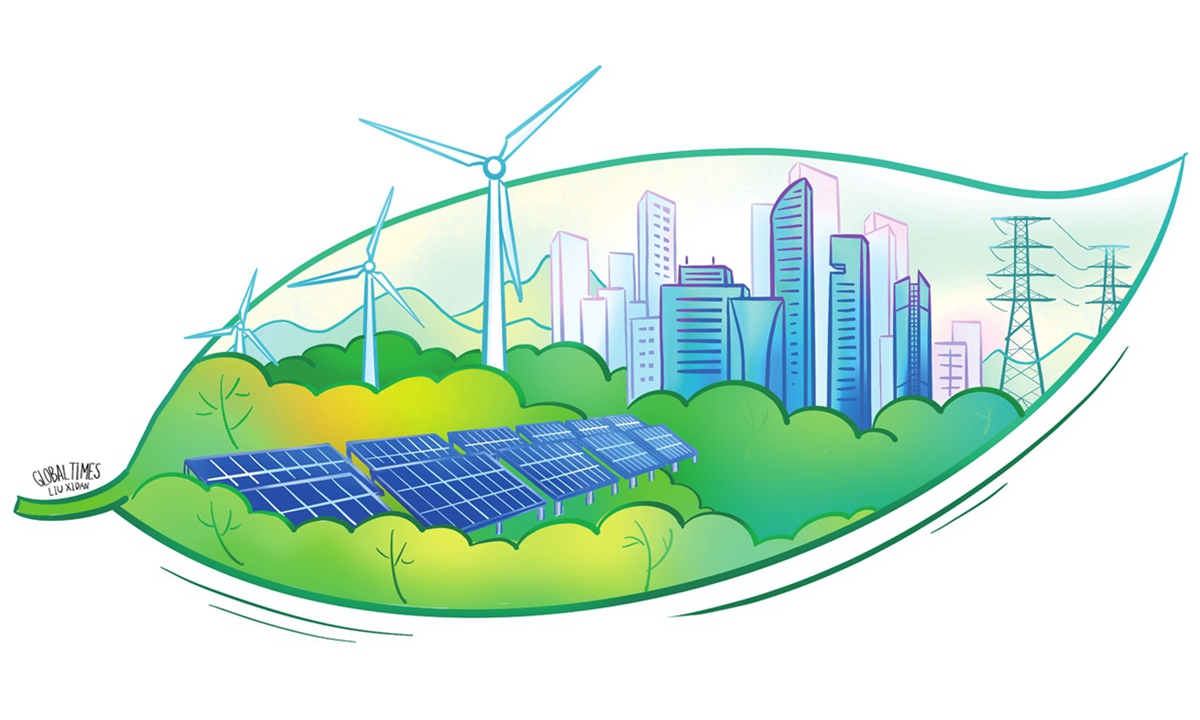
Over the past decade, China's energy structure has undergone a systemic transformation. The traditional fossil fuel-dominated landscape, centered on coal, is being replaced by a clean energy system. By 2024, renewable energy accounted for over 56 percent of China's total installed power generation capacity, with both photovoltaic and wind power newly installed capacity ranking first globally. Within the country's total electricity generation, the share of non-fossil energy sources has risen steadily, while electricity's dominant position in terminal energy consumption has become increasingly pronounced.
This structural shift stems from China's strategic blueprint for high-quality development and a fundamental renewal of the national energy security paradigm. From establishing carbon neutrality targets to reforming the power sector, investing in energy storage and transmission infrastructure, and systematically supporting the new-energy industry chain, China's clean power system is progressively becoming the cornerstone of national high-quality development. China is enhancing its energy security resilience through technological innovation and systemic development, thereby reducing dependence on external oil and gas resources.
Technological innovation drives cost reduction and industrial upgrading. For example, photovoltaic module prices have fallen by over 80 percent in the past decade, with the cost per watt dropping to below 0.8 yuan ($0.11). Technologies in energy storage, wind power, hydrogen energy and electric vehicles are also undergoing rapid iteration. These advances have not only driven China toward establishing a complete industrial ecosystem spanning equipment manufacturing to system integration, but are also reshaping the global clean energy supply chain.
As clean technologies become more widespread, the clean energy industry is emerging as a new engine for China's economy, with its catalytic effects extending beyond the energy sector into manufacturing, transportation, information technology and other industries. The underlying logic of the energy transition is also undergoing a profound transformation: from being policy-guided to market-driven, and from being a cost burden to a competitive advantage.
At present, China possesses advantages in production capacity and cost efficiency. Moreover, it has also become a leading example in terms of energy systems and development concepts. As technological innovation, industrial upgrading and market expansion mutually reinforce one another, clean electricity has evolved into an endogenous force propelling China's high-quality economic development.
While reshaping domestic production patterns, China's energy transformation is also beginning to influence the global energy landscape systemically. Through technological innovation and industrial capabilities, China is providing the world with cost-effective, reliable new-energy solutions. Besides exporting equipment and projects, China is facilitating the development of comprehensive energy systems centered on clean electricity, enabling more countries - particularly the developing ones - to rapidly enhance their energy security and sustainable development. In this sense, China's energy transition carries strategic global significance, not only fostering economic cooperation but also shaping global low-carbon development rules and governance models.
Behind this global impact lies China's broader strategic vision. From an "electrostate" to an "energy community," China's objective extends beyond cleaning its own energy mix to fostering an open, shared and sustainable global energy cooperation framework. It aims to deliver high-quality, low-cost solutions for climate change mitigation worldwide. This approach transcends the logic of geopolitical competition, embodying the concept of global public goods centered on a community with a shared future for humanity. Through technological innovation and green investment, China has demonstrated the responsibilities of a major country through action, injecting stability and hope into the global energy transition.
The author is a chair professor and dean of the China Institute for Studies in Energy Policy of the School of Management at Xiamen University. opinion@globaltimes.com.cn
RELATED ARTICLES