If Takaichi refuses to retract her erroneous remarks, it would be truly troubling: Japanese scholar
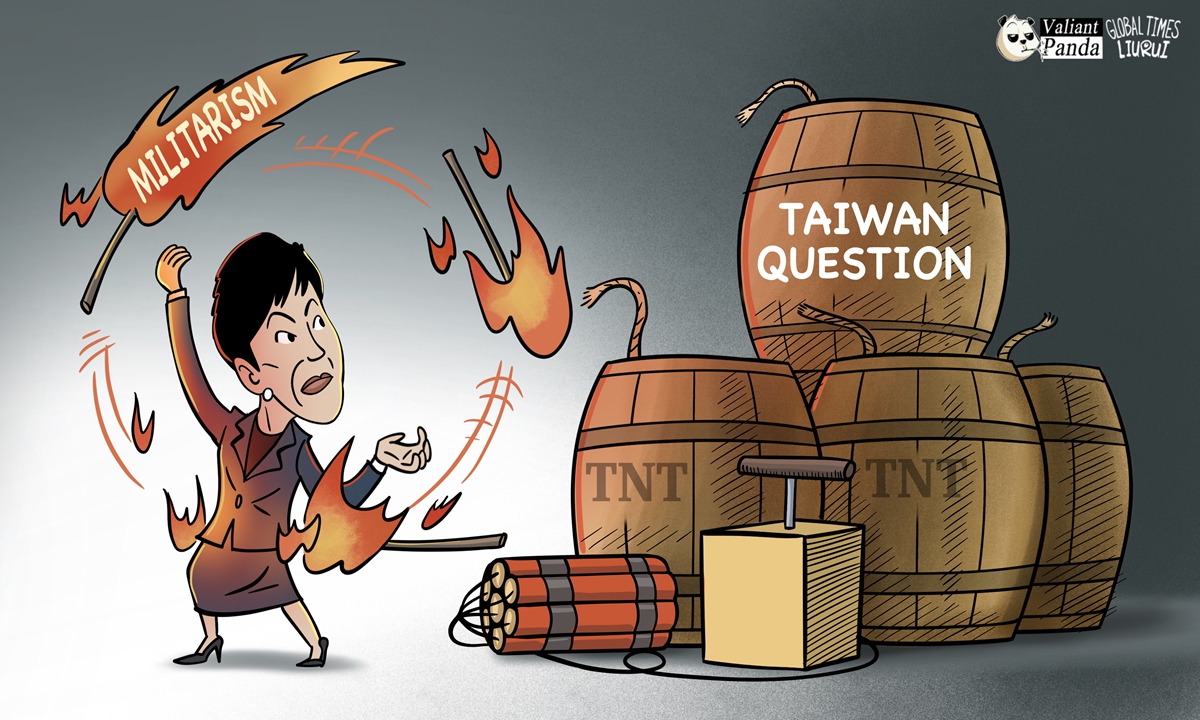
Illustration: Liu Rui/GT
Editor's Note:
Japanese Prime Minister Sanae Takaichi's extremely erroneous and hostile remarks concerning the Taiwan question have not only triggered strong protests from China, but have also raised alarms and drawn criticism from within Japan. Global Times (GT) reporters Xing Xiaojing and Wang Wenwen interviewed Hiroshi Shiratori (Shiratori), a political science professor at Hosei University in Tokyo, about the erroneous and dangerous nature of Takaichi's recent remarks. "Takaichi insists on escalating tensions in this way, making people feel that Japan is sowing the seeds of war and could even become a trigger for conflict," he said.
GT: According to Japan's Kyodo News, Takaichi is considering revising Japan's "three non-nuclear principles" as part of the planned overhaul of the National Security Strategy and other related security documents. Considering Takaichi's recent erroneous remarks that the Chinese mainland's "use of force on Taiwan" could constitute a "survival-threatening situation" for Japan, and her attempts to blur Japan's political stance on the non-nuclear principles, how do you assess these moves?
Shiratori: I believe that a series of recent moves by the Takaichi Cabinet are already beginning to deviate from Japan's traditional approach, and even drift away from the government's previous positions in parliamentary responses.
First, regarding Takaichi's recent remarks related to a "survival-threatening situation," the Taiwan region is not Japanese territory, and under normal circumstances, it is hard to imagine Japan attempting to "defend" Taiwan island or dispatching the Self-Defense Forces there.
Japan has long adhered to an exclusively defense-oriented policy. But if Japan were to act as Takaichi suggests, it would mean deploying the Self-Defense Forces to fight on foreign soil - something that clearly violates the constitution.
Japan has consistently upheld the one-China policy. The Taiwan question is a matter of China's internal affairs, in which Japan should not interfere. This should be the Japanese government's long-standing basic position. The idea of drastically altering such long-held principles is deeply concerning.
Even more concerning is that: The "three non-nuclear principles" serve as the foundation of Japan's commitment to global nuclear disarmament, given its unique history as the only country to have experienced atomic bombings, however, Takaichi's remarks on this matter effectively undermine this fundamental position. In other words, this signals a major shift in Japan's long-standing foreign policy - including its attitude toward the historical legacy associated with nuclear weapons.
From my perspective, Takaichi's comments could, in a certain sense, create unnecessary tension in the East Asian region. Moreover, considering that she made such remarks shortly after holding talks with the Chinese side on the sidelines of the APEC meeting, it is likely to appear baffling to the international community.
GT: What impact will Japan's ongoing direction in security policy have - not only on Japan itself, but also on the broader Asian region in the future?
Shiratori: Although the Takaichi administration's dramatic shift in foreign and defense policy has not yet fully materialized, the intention and direction are already leaving a distinct impression on East Asian countries regarding Japan's diplomatic posture.
In particular, Japan had originally planned to gradually raise defense spending by 2027, but it has now abruptly decided to reach a defense spending level equivalent to 2 percent of GDP within this fiscal year. This is likely to make countries across Asia feel that Japan is increasingly becoming a potential threat.
These actions by Takaichi will undoubtedly stir turbulence in the current landscape of Asian international relations - and it is difficult to say that such behavior reflects the posture of a nation that claims to value peace.
Notably, this year marks the 80th anniversary of the victory of the Chinese People's War of Resistance Against Japanese Aggression and the World Anti-Fascist War. Yet, in such a year, Japan has repeatedly issued remarks suggesting plans to strengthen its defense capability. For other countries, this naturally raises questions: What is Japan thinking? What is it planning? Where does it intend to go?
GT: Some voices argue that Takaichi, through such remarks, is deliberately amplifying the "China threat" narrative and using it as a pretext to justify Japan's military buildup and its departure from an exclusively defense-oriented policy. Her claims are also irresponsible toward the residents in the Taiwan region. What are your thoughts on this?
Shiratori: I believe that Takaichi's groundless promotion of the "China threat" narrative is aimed at legitimizing Japan's rearmament, strengthening its defense capabilities and even deploying the Self-Defense Forces overseas. In essence, the situation in East Asia is not actually that tense at the moment. However, Takaichi insists on escalating tensions in this way, making people feel that Japan is sowing the seeds of war and could even become a trigger for conflict.
In a certain sense, some politicians in Japan are using the Taiwan question as a pretext to gain support from conservative factions, and I find this approach quite inappropriate. Such actions, which gratuitously heighten tensions, would be a source of great distress for the residents of the Taiwan island.
Under the framework of Japan's constitution, postwar Japan began by reflecting on war, striving to walk the path as a peaceful nation while providing substantial economic aid to various countries. Yet Takaichi's remarks fundamentally overturn this positioning of Japan.
In my view, Takaichi's remarks are by no means a satisfactory statement for the Japanese people. If this continues, countries across Asia will develop strong resentment toward Japan's military buildup and increased defense spending. If such a situation arises, it could spark movements to boycott Japanese products or refuse to buy them, which would certainly not be good for the populace, and the majority of citizens do not wish for this to happen.
GT: Given the provocations from Takaichi's Cabinet against China over the Taiwan question, how should you view Japan's future relations with China?
Shiratori: I believe that China-Japan relations may become extremely difficult in the future.
No matter how you look at it, Japan is heavily influenced by China economically - China is currently Japan's largest trading partner, yet Takaichi seems to have given little thought to what a cooling of relations with China would mean for Japan's national interests.
Her remarks give the impression that she is entirely unaware that if China were to take economic measures against Japan, the Japanese economy would suffer a devastating blow. In a certain sense, it is precisely this kind of erroneous remarks that could ultimately put Japanese citizens in a difficult position and naturally lead to a deterioration in China-Japan relations. When it comes to the root cause, Takaichi's remarks are certainly one of them.
I believe that her remarks need to be corrected as soon as possible. But if she firmly refuses to retract the relevant comments, that would be truly troubling - after all, when the prime minister thinks and speaks in this way, it is the citizens who suffer. The Japanese people never want this, yet such remarks have emerged, which is truly regrettable.
RELATED ARTICLES