Beijing says no meeting planned with Japan leader at G20, urges Japan to show self-respect
By Published: Nov 20, 2025 11:17 PM

Mao Ning
A spokesperson of the Chinese Foreign Ministry said on Thursday there are no plans for Chinese Premier Li Qiang to meet with the Japanese leader at G20, urging the Japanese side to maintain self-respect.
This is the second time in less than a week the ministry has stated that there is no such arrangement for Premier Li to meet with the Japanese leader.
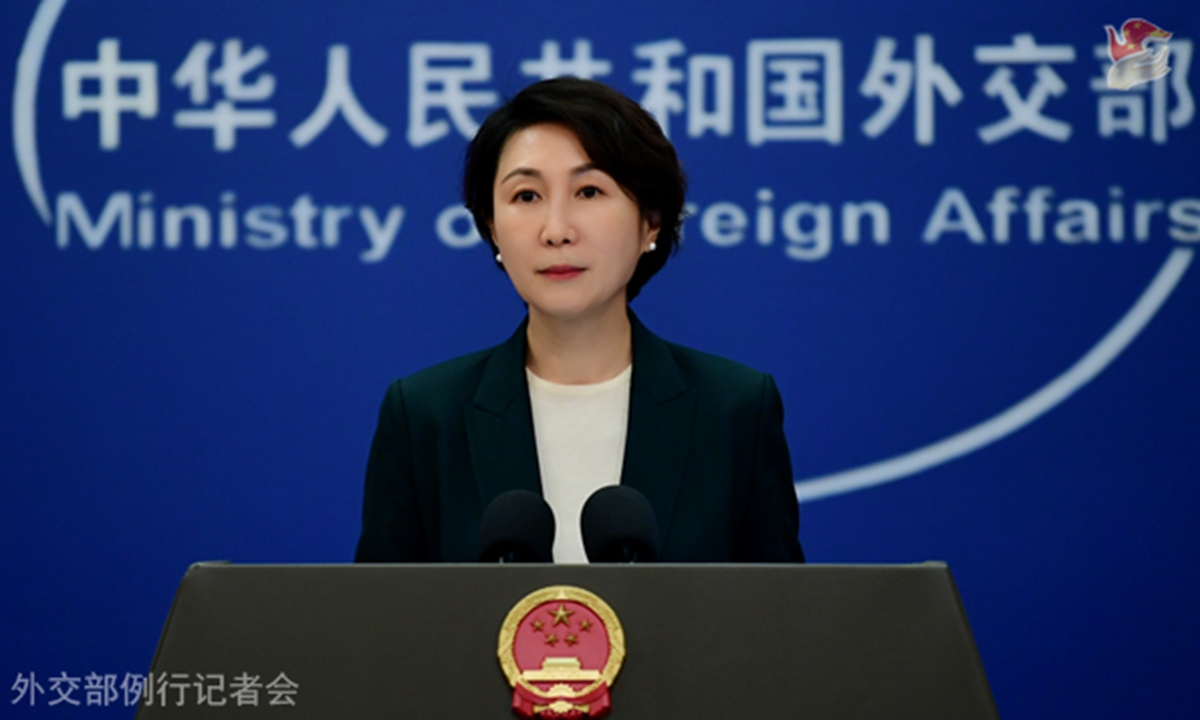
At the regular press briefing on Monday, Chinese Foreign Ministry Spokesperson Mao Ning said that a meeting with the Japanese leader is not on Premier Li Qiang's agenda when asked if Premier Li will speak with the Japanese Prime Minister at the G20.
Questions frequently addressed
Regarding Takaichi's erroneous remarks on China's Taiwan region, China's Ministry of Foreign Affairs has over the week repeatedly addressed the issue and made stern warnings, urging the Japanese side to retract the remarks.
In response to a question regarding that Chinese people believe that Japan bears historical responsibility on the Taiwan question and is least of all in a position to talk about situations concerning Taiwan, Mao said on Thursday that this year marks the 80th anniversary of China's restoration of Taiwan. Japan must never forget that Taiwan is China's Taiwan. Taiwan is none of Japan's business. If Japan creates trouble on Taiwan, Japan will not get away with it.
Also when asked whether China accepts Japan's explanation, after several Japanese senior officials claimed that Takaichi's remarks on Taiwan do not alter the government's existing position and that Japan does not intend to retract them, Mao said on Thursday, "I'm not sure what exactly Japan meant by 'the Japanese government's existing position'." When it comes to the Taiwan question, the position of the Japanese government is supposed to be upholding the one-China principle and abiding by the spirit of the four political documents between China and Japan, instead of being deliberately ambiguous, and still less turning back the wheel of history, Mao said.
Mao said that if there has truly been no change to the Japanese government's position on the Taiwan question, the Japanese leader should not have linked it to a so-called "survival-threatening situation," and should not have acted against China's red line over and over while claiming that there has been no change to Japan's position.
Merely stating that the position "has not changed" does not resolve China's concerns. Japan needs to take seriously what it has heard from China, retract the erroneous remarks, and take practical steps to honor its commitments to China, Mao stressed.
Asked to comment on a media report claiming South Korea's Ministry of Culture, Sports and Tourism is notified by the Chinese side that the China-Japan-ROK Culture Ministers' Meeting that was scheduled for this month will be postponed, Mao said the extremely erroneous remarks made by the Japanese leader on Taiwan have hurt the sentiments of the Chinese people and posed a challenge to the postwar international order. They have disrupted the foundation and atmosphere of trilateral cooperation among China, Japan and South Korea.
As a result, the conditions are not yet ready for holding the relevant meeting, Mao said.
Backlash at home
Takaichi's remarks has drawn increasing criticism back home.
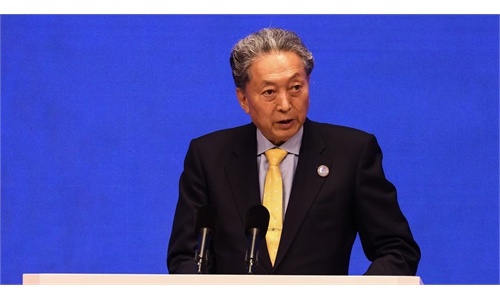
Posting on social platform X on Thursday, former Japanese Prime Minister Yukio Hatoyama wrote that "a leader's remarks, which deviated from the road that 'the Taiwan question is China's internal affair,' have brought Japan-China relations to the brink of a worst-case scenario, with one hotel reportedly receiving a thousand cancellations. The damage to Japan's national interest is immeasurable."
"Confucius said that 'When you have faults, do not fear to abandon them.' 'Not to mend the fault one has made is to err indeed.' It is imperative that this error be rectified without delay," wrote the former Japanese Prime Minister.
Emotional hardline rhetoric toward China, which ignores the reality of mutual dependence, may lead Japan to repeat the mistakes of war, Japanese social media influencer Hiroshi Nishimura, who has 2.68 million followers on X, expressed his concern in an interview with the Global Times on Wednesday. In his view, Takaichi increases the burden on ordinary people to please her supporters, as her erroneous remarks on the Taiwan question have drawn strong backlash from China.
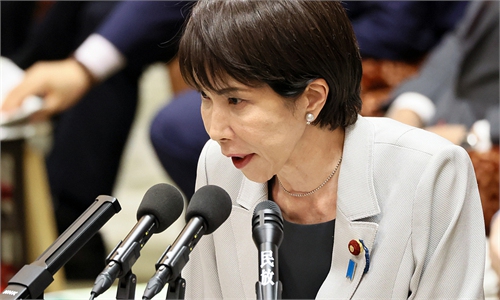
Takaichi claimed at a Diet meeting on November 7 that the Chinese mainland's "use of force on Taiwan" could constitute a "survival-threatening situation" for Japan. She refused to retract her remarks, implying the possibility of armed intervention in the Taiwan Straits, according to Japanese media outlet Asahi Shimbun.
Multiple Chinese ministries and government agencies have condemned the Japanese side's related moves and remarks, warning that Japan would face a resolute response if it dares to meddle in the Taiwan question.
In addition to impacting tourism-related industries, more Japanese economic sectors are starting to feel the pressure caused by the Japanese Prime Minister's wrong words and actions.
Asked whether the Chinese Ministry of Commerce can confirm media reports that the Chinese government has notified Japan that it would suspend imports of aquatic products from Japan, He Yongqian, a spokesperson for the ministry, said on Thursday that there was no information to provide regarding this issue at the moment.
"But I want to stress that the erroneous remarks regarding Taiwan made by Takaichi have sparked strong indignation among the Chinese public. Japan cannot expect to hurt China's feelings on the one hand while seeking benefits on the other. This is not the right way to engage with China. We urge the Japanese side to immediately correct its wrong practices," He said.
China has made clear that the future trajectory of China-Japan relations hinges on whether Japanese government moves to correct Takaichi's erroneous remarks on Taiwan. If Japan refuses to withdraw the comments, the bilateral relationship will inevitably enter a period of severe conflict, Xiang Haoyu, a senior research fellow at the China Institute of International Studies, told the Global Times.
Xiang said that if the Japanese side has further negative rhetoric or actions, that will prompt stronger countermeasures from China, accelerating the downward spiral in ties. While Beijing urges Tokyo to handle the situation responsibly and demonstrate genuine goodwill by rectifying its mistake, it also stresses that it will not compromise on issues involving core interests.
Heading to dangerous path
Japan's ruling Liberal Democratic Party on Thursday launched discussions on revising the country's three key security documents, including potential changes to its long-held principles of not possessing, producing or allowing the introduction of nuclear arms, as it reassesses its defense spending amid what it describes as growing security challenges posed by China and North Korea, Japan's Kyodo News reported.
The party plans to compile a set of proposals as early as next spring and the government is expected to revise by the end of 2026 its National Security Strategy long-term policy guideline and two other documents, which were last revised in 2022, according to the report.
Takaichi's plan to review the country's long-standing Three Non-Nuclear Principles has drawn a backlash at home.
Hiroshima Mayor Kazumi Matsui on Wednesday criticized Takaichi at his regular press conference, saying that Japan "should uphold" its Three Non-Nuclear Principles, Japan's Asahi reported.
Matsui said Japan should not heighten tensions between states by explicitly relying on nuclear deterrence, but instead focus on easing tensions through confidence-building dialogue and devote itself to diplomatic efforts.
At a regular press conference on Tuesday, Hiroshima Governor Hidehiko Yuzaki stated, in response to Takaichi's plan to review the Three Non-Nuclear Principles, that "as the first place in human history to experience the horrors of nuclear bombing, these principles are something that must, without question, be upheld," according to Kyodo news.
He added that should discussions on revising the principles come to the surface, he would call on the government to maintain them.
Even Japanese Defense Minister Shinjiro Koizumi emphasized on Tuesday that the Japanese government "upholds the Three Non-Nuclear Principles as a policy guideline" in response to an inquiry regarding Takaichi's attempt to review the long-standing policy.
The discussion of Japan's key security documents has exposed Takaichi's drive to push the country further to the right, Da Zhigang, director of the Institute of Northeast Asian Studies at the Heilongjiang Provincial Academy of Social Sciences, told the Global Times.
Da pointed out that many of the terms, such as raising the country's defense spending, have already been signaled to the US, leaving the remaining steps largely procedural.
Takaichi has vowed to bring forward the country's target of raising defense spending and related initiatives to 2 percent of gross domestic product by two years to fiscal 2025, while the US has reportedly pressed Japan behind the scenes to raise its defense spending to 3.5 percent of GDP, per Kyodo.
On the same day, the National Institute for Defense Studies, a think tank under Japan's Defense Ministry, published a report on China's military activities that claimed China and Russia have been deepening military cooperation over the Taiwan region and the East and South China seas, and the trilateral relationship between China, Russia and North Korea is heightening uncertainties in the security environment of the Indo-Pacific region, according to Jiji press.
Takaichi's government has amplified claims that China, Russia and North Korea pose rising regional threats, using the external security climate to justify its policy shift and energize Japan's hard-right forces, which have long pushed for "defense autonomy" and a stronger military posture, said Xiang.
Japan's recent provocations have already frayed its ties with South Korea, Russia and others, leaving its regional diplomacy increasingly isolated. Its headlong shift to the right risks deepening that isolation, as a rapid military build-up is likely to fuel an arms race and further inflame relations with Beijing, which are already in steep decline, said Xiang.
In response, Lin Jian, spokesperson from China's Ministry of Foreign Affairs, said on November 14 that China is seriously concerned over Japan's recent military and security moves. While Japan claims to be a peace-loving country and advocates a world free of nuclear weapons, the Takaichi administration has been making ambiguous statements about the Three Non-Nuclear Principles and implying the possibility of abandoning them.
Senior Japanese officials have even claimed that Japan has not ruled out the possibility of possessing nuclear submarines. These fully reveal that Japan is making a major negative policy shift, which sends a dangerous signal to the international community, said Lin, urging Japan to repent for its history of aggression, stick to the path of peaceful development, stop finding excuses for its military buildup, and take concrete actions to earn the trust from its Asian neighbors and the international community.
RELATED ARTICLES