China’s 15th Five-Year Plan to unlock unlimited potential of economy: German scholar
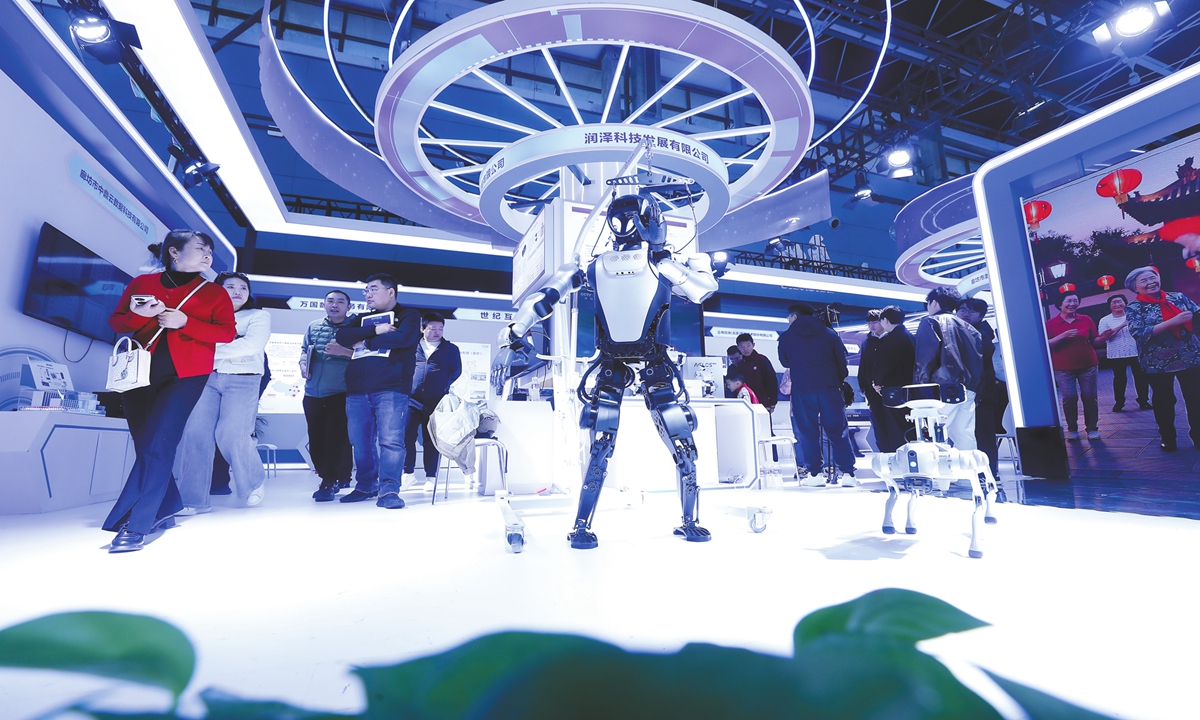
Robots are on display at the 2025 China International Digital Economy Expo in Langfang, North China's Hebei Province on October 18, 2025. Photo: VCG
China's 15th Five-Year Plan (2026-30) could unlock the unlimited potential of the economy, as it defines, based on the unparalleled scientific and technological success China has achieved over the past several years, a powerful perspective for the future.
China's economy has been developing in a stable and sound manner. During the 14th Five-Year Plan period (2021-25), China has been strengthening the domestic market, building up a stronger middle-income group, upgrading the development of the rural regions, and prioritizing the role of innovation in the economy. Many countries, including those in the Global South, while witnessing deeper integration with the massive Chinese market, have been benefiting from China's development,
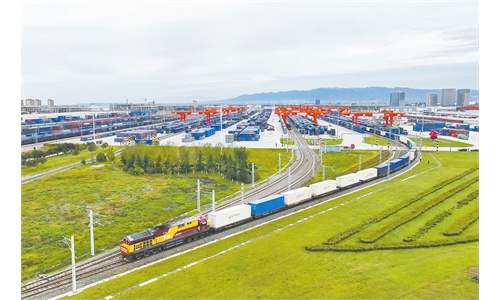
And under the framework of the 15th Five-Year Plan, China will continue to advance independent opening-up, foster trade innovation, expand two-way investment cooperation, and promote high-quality Belt and Road cooperation.
One of the most significant elements in the plan is that priority is given to directing a greater share of total research and development (R&D) spending toward the field of basic research, which spells out the country's emphasis on original innovation in scientific research and technological development, as well as the emphasis on disruptive innovation. It is for sure that China's focus on new technologies, including artificial intelligence (AI), will bring about an acceleration of the changes in the domestic economy and structure of the workforce. At the same time, in the next five years, the technological revolutions being made in China will enable emerging economies in Africa, Asia and Latin America to "leapfrog" their own development and accomplish their development objectives.
In pursuing high-quality Belt and Road cooperation, the 15th Five-Year Plan (2026-30) also carries significance for cooperation between China and Europe. There are many obvious areas where bilateral cooperation could be strengthened, especially in the areas of advanced scientific research, for example research in fusion technology and space science in which China is a leading player.
China's 15th Five-Year Plan (2026-30) has stressed that the country should strengthen strategic alignment with Belt and Road partner countries and better coordinate and manage cooperation programs. The China-proposed Belt and Road Initiative (BRI) has proven itself to be a public good that puts the economic relations among all partner countries on a strong and equitable basis. It also shows that the method of pragmatic cooperation among nations for their mutual benefit should be more effective than a mere focus on geopolitical relations.
The next five years will bring the world to major crossroads, where geopolitical confrontation and unilateralism could intensify. It must be noted that cooperation in areas of joint interest won't be replaced by "unilateralism." And certain Western countries should realize that rather than hyping the so-called "China threat," a cooperative approach would be a much better way to jointly tackle the challenge.
The article is compiled based on an interview with Helga Zepp-LaRouche, the founder of the German-based think tank Schiller Institute.
RELATED ARTICLES