Japanese group urges Takaichi to retract erroneous Taiwan-related remarks
Claims equivalent to revival of militarism, harming Japan's national interests: association chairman
By Published: Dec 08, 2025 11:13 PM

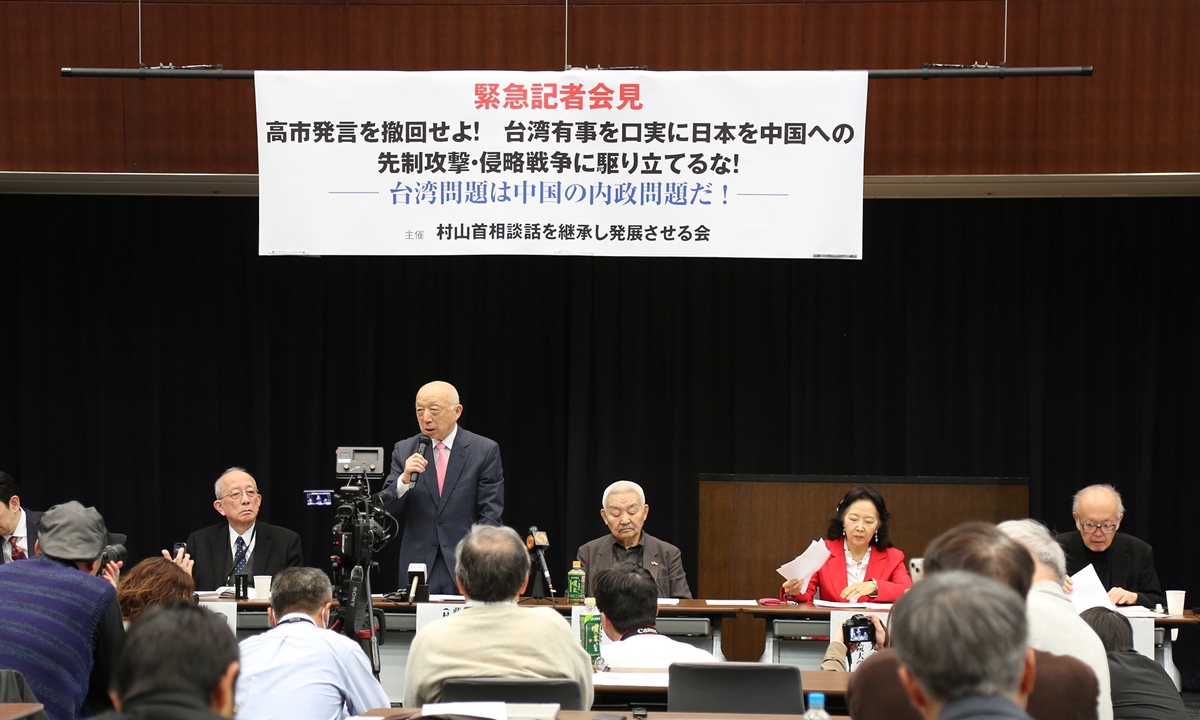
Association for Inheriting and Propagating the Murayama Statement holds a press conference on December 8, 2025 at the Members’ Office Building of the House of Councillors in Japan, urging PM Takaichi to retract her erroneous remarks. Photo: VCG
As Japanese Prime Minister Sanae Takaichi's erroneous remarks concerning Taiwan question continue to raise tensions, the Association for Inheriting and Propagating the Murayama Statement held a press conference on Monday at the Members' Office Building of the House of Councillors, urging Takaichi to retract her erroneous remarks.
"Takaichi, who lacks basic military knowledge and has failed to uphold Japan's previous commitments to China, must immediately retract her remarks involving war intervention," according to a statement sent by the association to the Global Times. The press conference was attended by representative scholars, university professors, lawyers and other figures from various sectors of Japan, Takakage Fujita, secretary-general of the association, told the Global Times on Monday.
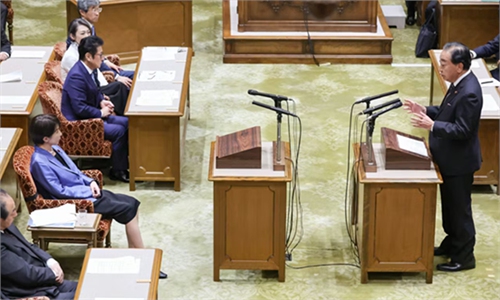
Takaichi claimed at a Diet meeting on November 7 that a "Taiwan contingency" could constitute a "survival-threatening situation" for Japan. She persistently refused to retract her remarks, which imply the possibility of armed intervention in the Taiwan Straits.
Multiple Chinese ministries and government agencies have condemned the remarks, warning that Japan would face a resolute response if it dared to meddle in the Taiwan question.
The association statement also called on Japan to recall the Murayama Statement in 1995, which officially recognized Japan's invasion and colonial domination of Asian nations and expressed remorse and an apology.
Noting that Takaichi's Taiwan-related claims "contradict the long-standing position of the Japanese administrations", the association statement said that her claims "marked the first time Japan has explicitly stated in the Diet that 'Japan can enter a war footing in the event of a Taiwan contingency,' an act equivalent to the revival of Japanese militarism."
"Takaichi's remarks undermine the foundation of Japan-China relations since the normalization of diplomatic ties, severely harming Japan's national interests. They imply that Japan would launch a preemptive war of aggression against China without even being attacked by China. These are extremely serious statements, an unprecedented and absurd outburst in Japan's postwar history. We must say that China's severe criticism is entirely justified," Fujita told the Global Times.
Fujita urged Takaichi to retract those remarks, apologize to the peoples of Japan and of China, return to the starting point of the normalization of Japan-China relations, and steer Japan-China relations back onto the track of peace and stability, otherwise, Takaichi should resign from her post.
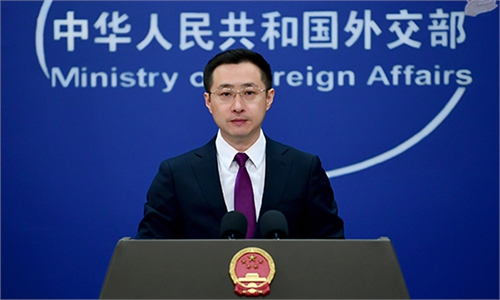
In response to media reports that Liberal Democratic Party Vice President Taro Aso voiced support for Takaichi's Taiwan-related remarks, Chinese Foreign Ministry spokesperson Guo Jiakun stated on Monday that the remarks of this Japanese politician reflect that Takaichi and the Japanese right-wing forces behind her are still misjudging the situation, refusing to repent, turning a deaf ear to criticisms both at home and abroad. They downplay, distort facts, and ignore right and wrong regarding acts of interfering in other countries' internal affairs and threatening other countries with force.
In response to Takaichi's claims, China has adopted countermeasures, inflicting economic losses on Japan, and the negative impact of her remarks has begun to spread to academic, people-to-people and other exchange fields, Fujita told the Global Times.
"Regarding the problem caused by Japan itself, acting as if they were the victims will never resolve the situation," read the statement sent by Fujita.
The Japan Times reported Monday that Japan's economy shrank in the three months through September. GDP fell at an annualized pace of 2.3 percent in the third quarter, the report said, noting that the contraction was deeper than the initial reading of a 1.8 percent fall, and was the first in six quarters.
According to Fujita, recently, conscientious politicians, citizens, scholars, university professors, lawyers, and others in Japan who understand the history and circumstances of the normalization of China-Japan relations have voiced fierce criticism against Takaichi. "Protest rallies have been held continuously in front of the Prime Minister's Office. It is noteworthy that many young Japanese men and women are participating in these protests," Fujita said.
Fujita also criticized Japan's military expansion ambitions.
In recent years, from Yonaguni Island, Okinawa Island and other islands to western Japan, Japan has been transforming these regions into military zones jointly usable by Japan and the US through a series of measures, including deploying missile units, constructing radar bases, building new military bases, expanding ammunition depots, establishing joint training facilities, and promoting the militarization of civilian facilities, according to Fujita. "Despite strong opposition from local residents and widespread concerns about personal safety in the event of war spreading to the islands, Japan has persisted in pushing these measures forward," Fujita added.
RELATED ARTICLES