Analysis published in Nature suggests global scientific collaboration shifting toward China; experts cite multiple factors
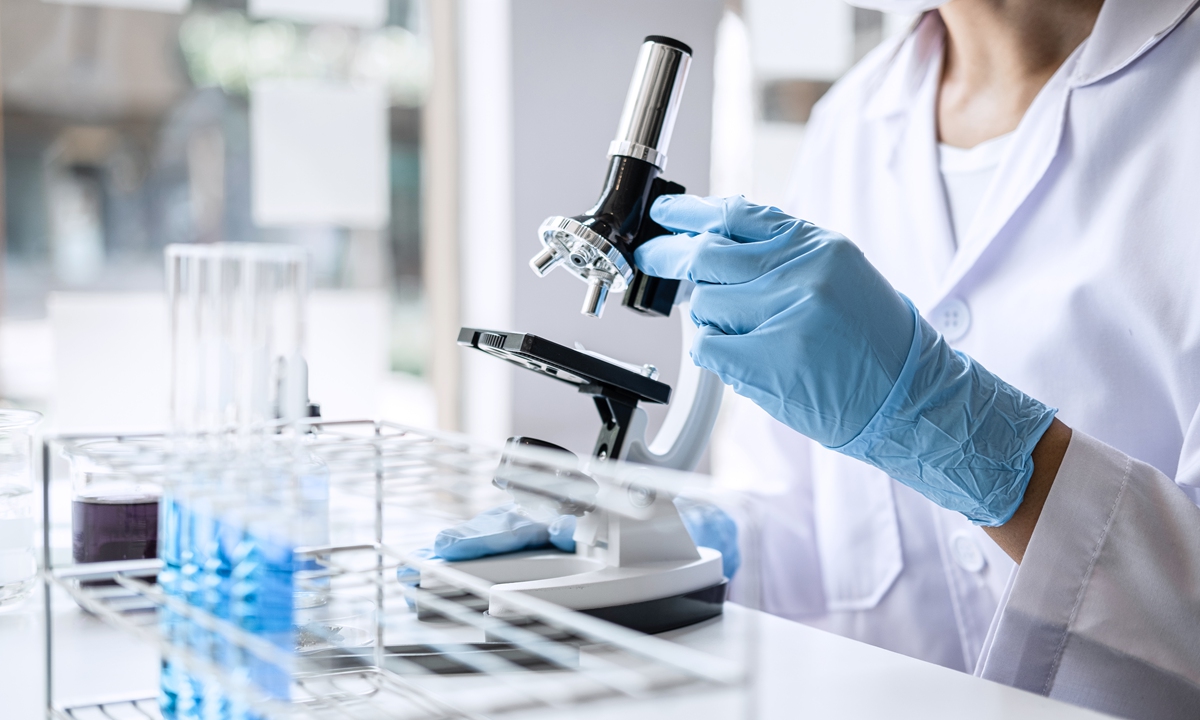
Photo:VCG
A recent analysis published in international academic journal Nature suggests that global scientific collaboration is shifting toward China. A Chinese expert told the Global Times on Monday that this shift stems from multiple factors, including China's growing research capacity, its openness to international collaboration, and the advantages of its large, rapidly expanding market.
Clarivate, an academic information services company, analyzed international collaborative research data over the past 25 years and published the findings in Nature.
The article in Nature noted that China is redrawing the global science map, based on analysis by Clarivate, which operates the global academic database Web of Science.
According to the article, China is increasing research collaborations with European partners, and expands academic influence into emerging areas like Southeast Asia, the Middle East and Africa. The US, meanwhile, is losing its long-held lead as a research powerhouse and collaborator in world science research.
The analysis also warns of the looming consequences of policies instituted by the current US administration. Among other actions, it has cut grant funding, sought to restrict the number of foreign students and undermined research in crucial areas such as vaccines and climate change.
Chinese collaborations with international partners around the world - particularly in Europe - have continued to rise, the article said. It also noted that, on the domestic front, China's research output has more than doubled over the past decade: it surpassed the US as the largest producer of research papers in 2020 and is now poised to take the lead in citations.
China's rise in scientific research is driven by multiple factors, Wang Peng, an associate researcher at the Beijing Academy of Social Sciences, told the Global Times on Monday. He added that strong policy guidance and long-term planning provide clear direction and resources for research. A comprehensive talent-training system cultivates researchers from basic to higher education and actively attracts overseas talent.
Besides, an improving research environment stimulates innovation, while industry-driven demand promotes deep integration of academia and industry, accelerating the application of research results, Wang added.
On China's collaborations with international partners, particularly those in Europe, Wang said both sides complement each other's strengths, with Europe excelling in basic research and China in application and industrialization. Supportive policies and simplified cooperation processes further boost collaboration. Economic globalization allows partners to pool resources and tackle global challenges, while cultural exchanges deepen mutual understanding and provide a human foundation for joint research.
By contrast, the article said, the US has struggled to maintain both the quantity and quality of its science. US research output has yet to recover from a widespread pandemic dip, but the analysis suggests that its troubles began earlier. The country's citation impact for domestic research has been going down steadily for decades as other nations have upped their game, but Jonathan Adams, chief scientist at Clarivate's Institute of Scientific Information in London, says the rate of decline has accelerated since around 2018.
Cuts to research funding, restrictions on the influx of international students, and weakened research in vaccines and climate change have led to a decline in the quality of research published in the US. "We have expected throughout our lifetimes to see the US leading everything, and it isn't any more," Adams stated.
According to the Nature article, the larger danger is that the global science enterprise itself will suffer if barriers to collaboration and the sharing of information are erected in the name of national security and economic competitiveness, says Caroline Wagner, a research-policy specialist at the Ohio State University in Columbus. "We're coming out of almost a golden era, where people were very free to connect across political boundaries," Wagner says. "That's changing."
Adams says the latest data make it clear that high-impact science is increasingly dependent on global engagement and collaboration. "If you're not part of that international network, you're not going to be doing the stuff that's really going to matter".
On this, Wang said, "Global scientific research involves both competition and collaboration. Countries, including China and the US, can work together to create a multilateral, win-win outcome."
RELATED ARTICLES