ASPI-proposed Australia-Japan ‘division of labor’ an attempt to militarize the Pacific
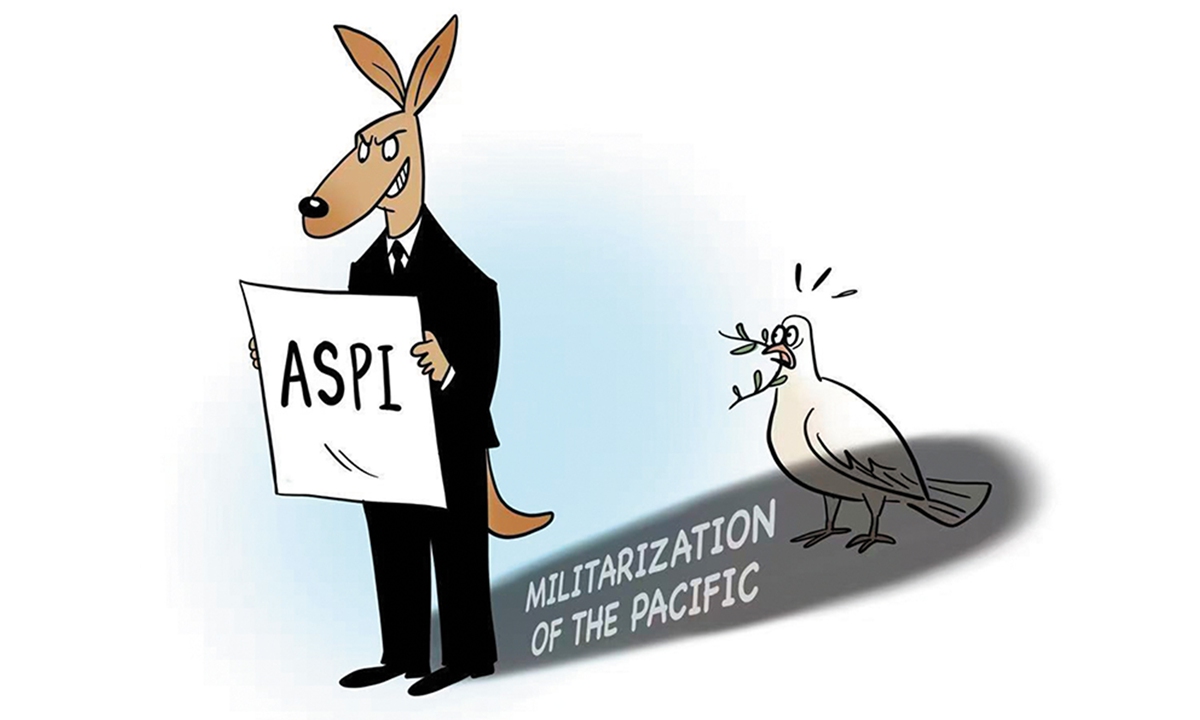
Illustration: Liu Rui/GT
Some in the Australian strategic circle could not find a more "appropriate" timing than now to once again hype up the "China threat" rhetoric and propose measures against China. The spat between China and Japan, triggered by Japanese Prime Minister Sanae Takaichi's erroneous remarks regarding China's Taiwan region, is still ongoing. The Japan Times on Thursday gave coverage of an upcoming report by the infamous Australian Strategic Policy Institute (ASPI) think tank, which proposes that Japan and Australia divide up efforts to boost ties with Pacific Island nations to maintain critical supply lines and prevent China from gaining a military foothold in the region in the event of a war.Obviously, the report is projecting the aggressive mindset of Australia and Japan onto China. Chen Hong, director of the Australian Studies Centre of East China Normal University, told the Global Times on Thursday that the ASPI report is maneuvering the current complex situation between China and Japan to hype up a "Chinese attack," in an attempt to militarize the whole of the Pacific and create tensions in the region so that Japan and Australia could have the excuse to enhance their own military presence and quasi-allied partnership.
Chen noted that the division of labor proposed by the ASPI report - Japan pays more attention to countering China in Micronesia, while Australia plays a more prominent role in Polynesia - aims to push Pacific Island nations into the forefront of confrontation. This is not protection, but a strategic bet where no one will win.
It sounds like the old colonial powers are dividing their sphere of influence, viewing Pacific Island nations as pieces on a chessboard rather than sovereign countries with independent thinking. On the surface, it is about "division of labor," or "burden-sharing" among partners, but in essence, it is an exclusive strategy aimed at maintaining the traditional sphere of influence, containing China's influence, and fixating Pacific Island nations in the position of "strategic backyard" of the US and its allies.
Li Jianjun, director of the Australian Studies Centre at Beijing Foreign Studies University, told the Global Times on Thursday that ultimately, some in the Australian strategic circle want Australia, together with Japan, to play a coordinating role to the US, so as to guarantee security from the US, even at the cost of peace and stability in the Pacific.
This may make the Pacific Island countries resentful, because it is forcing Pacific Island countries to pick a side and depriving the rights of these countries to choose partners who can truly help with their development.
Pacific Island countries are adopting pragmatic policies regarding their relations with major powers so as to maximize their national interests. Their urgent tasks are addressing the climate crisis and developing their economies, rather than being dragged into any military clashes. Especially amid the current evolving international and regional landscape, the era in which the regional "sheriffs" dictate the minds and actions of Pacific Island countries is long gone.
Chen noted that the Pacific needs partners for joint development instead of geopolitical manipulators; it needs concrete cooperation rather than narratives that cause panic. Pacific Island countries have the right to refuse to cater to the illusions of some strategic elites from other countries, and they should firmly reject being a tool used by them to provoke confrontation.
RELATED ARTICLES