China slams Japanese militarism as ‘common foe’ of world ahead of national memorial day for Nanjing Massacre victims
Undeniable evidence of Unit 731's germ-warfare crimes released


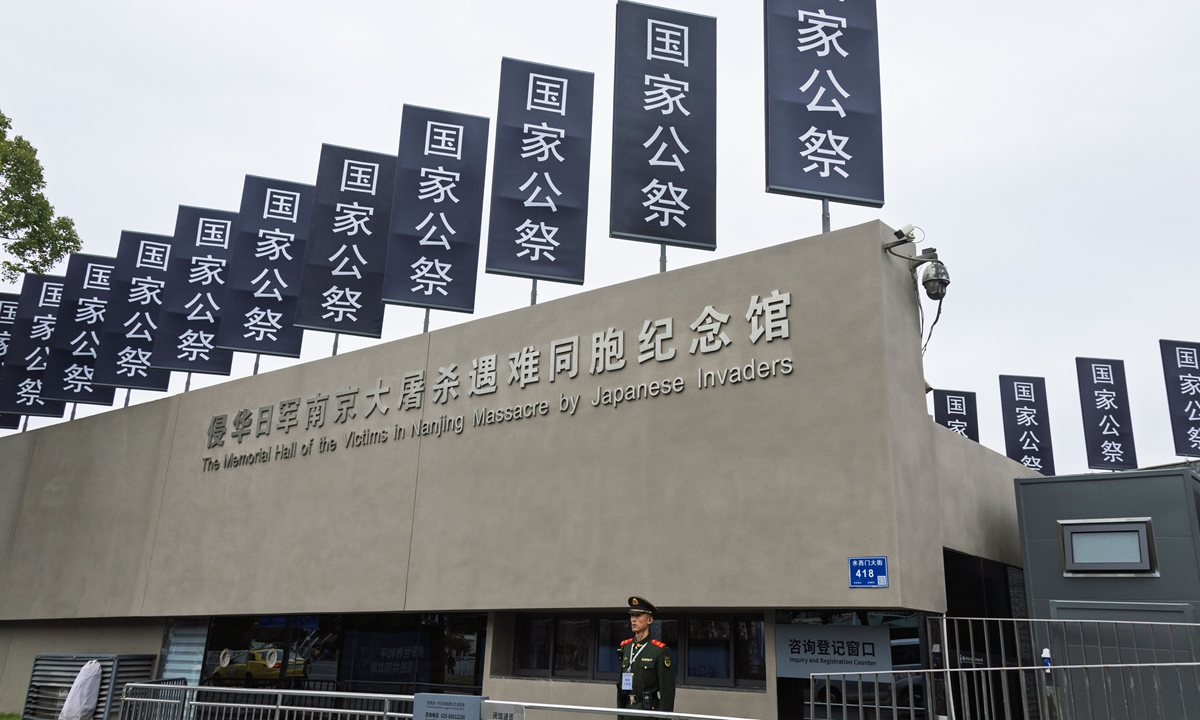
An officer from the Chinese People's Armed Police Force (CAPF) carries out duty operations in front of the Memorial Hall of the Victims in Nanjing Massacre by Japanese Invaders in Nanjing, East China's Jiangsu Province on December 12, 2025. Photos: VCG
On the eve of China's 12th National Memorial Day for the Victims of the Nanjing Massacre, the Chinese Foreign Ministry on Friday blasted the Japanese militarists' wars of invasion against China and other Asian countries as a disgrace in the history of human civilization, stressing that the resurrection of Japanese militarism will never be tolerated and urging Tokyo to take concrete actions to get rid of the specter of militarism that still haunts it. Meanwhile, more evidence exposing Japan's inhumane wartime atrocities has been made public.
In response to a media inquiry about how China will carry out commemorative activities, especially amid the current tensions between China and Japan caused by Japanese Prime Minister Sanae Takaichi's erroneous remarks on Taiwan, Chinese Foreign Ministry spokesperson Guo Jiakun said that this year marks the 88th anniversary of the Nanjing Massacre. In accordance with the decision ratified by the National People's Congress, China will host the annual national memorial commemoration for the victims of the Nanjing Massacre to honor those who lost their lives.
"The massacre in Nanjing is a horrendous crime committed by Japanese militarists. There is no room for denial," Guo said, "Japanese militarists' war of aggression against China and other Asian countries under the pretext of the so-called "survival-threatening situation" and untold crimes against humanity are nothing but a disgrace in the history of human civilization."
Guo further noted that the Japanese government has long abetted the right-wing forces' retrogressive moves. Several prime ministers and political dignitaries have paid tribute to the Yasukuni Shrine where class-A war criminals are honored. Some politicians have publicly called into question the Murayama Statement which showed reflection on and apologies for Japan's colonial rule and aggression. The Japanese side even attempted to whitewash its war crimes and change the verdict on its history of aggression by revising textbooks more than once.
China will never allow Japan's right-wing forces to turn back the wheel of history, never allow external forces to lay their hands on China's Taiwan region, and never allow the resurgence of Japan's militarism, said Guo,
By stressing that Japanese militarism is the common foe of all peoples around the world, Guo added that China will work with all peace-loving countries and people to jointly safeguard the outcomes of World War II victory and the post-war international order.
Also Russian Foreign Ministry spokesperson Maria Zakharova stressed during a press briefing on Thursday that the historical truth of the Nanjing Massacre is beyond dispute, the Xinhua News Agency reported.
Zakharova said this horrific tragedy "has become a symbol of the inhumanity and barbarity of Japanese militarism", and will forever be etched in the memories of people around the world.
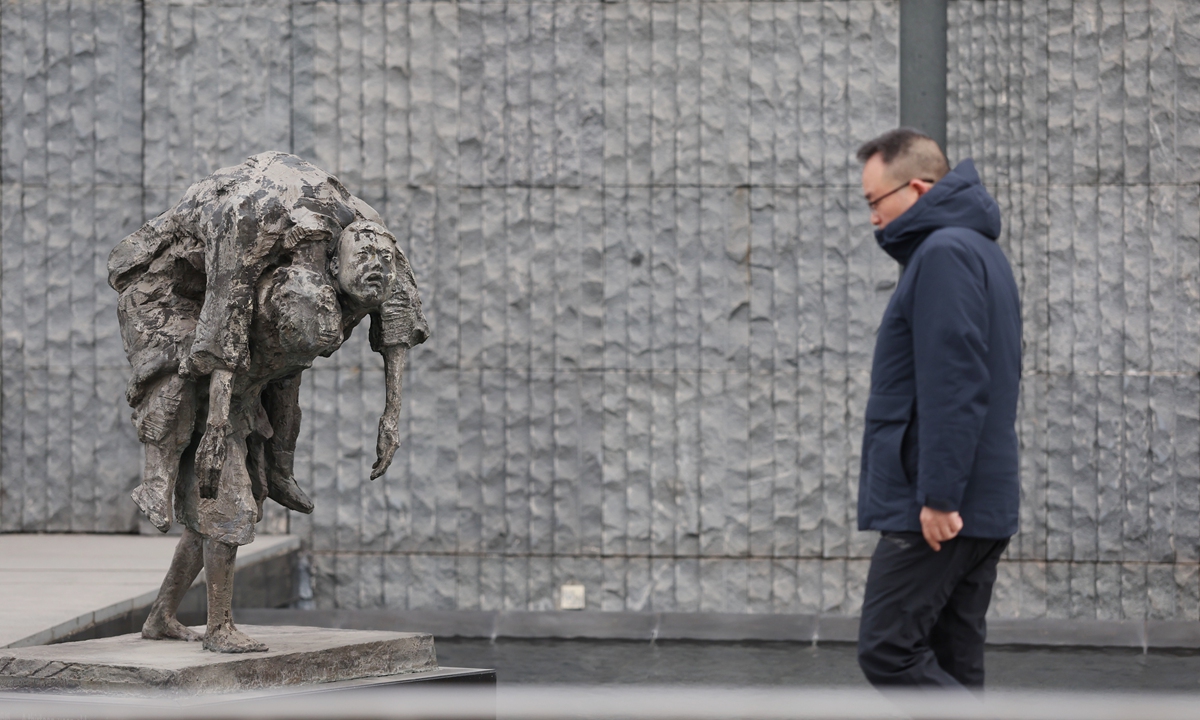
A passer-by walks past the main thematic sculpture at Memorial Hall of the Victims in Nanjing Massacre by Japanese Invaders in Nanjing, East China's Jiangsu Province on December 12, 2025. Photo: Cui Meng/GT
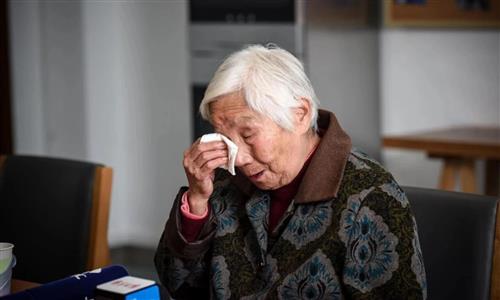
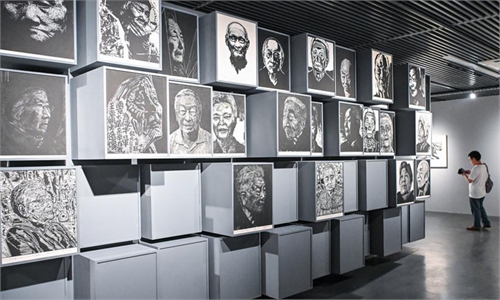
Remembering historyIn 1937, invading Japanese troops captured Nanjing, then the Chinese capital, and began six weeks of slaughter that claimed the lives of more than 300,000 Chinese civilians and unarmed soldiers. Eight survivors have passed away since the beginning of 2025, reducing the number of living registered survivors to 24, according to the Memorial Hall of the Victims in Nanjing Massacre by Japanese Invaders in Nanjing.
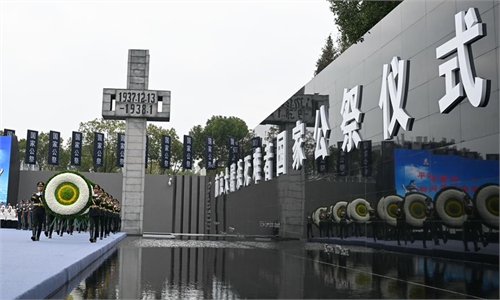
In Nanjing, the Memorial Hall of the Victims in Nanjing Massacre by Japanese Invaders remained closed to the public on Friday to prepare for the National Memorial Day mourning ceremony scheduled for 10:00 am Saturday.
High above the main building, rows of large black plaques bearing the stark white characters "National Memorial" stood in solemn silence, each measuring roughly 1.3 by 3 meters, Global Times reporters observed and learned.
Along the surrounding streets, blue banners with white lettering swayed softly beneath the street lamps. One side read: "Remember History, Honour the Martyrs; Cherish Peace, Create a Better Future." The other proclaimed: "Safeguard World Peace, Promote Common Development."
Reporters learned that on Saturday, mourning ceremonies will be held simultaneously at multiple mass burial sites across Nanjing for the victims of the Nanjing Massacre. At the Beijige site, one of the key mass graves, a memorial monument already stands adorned with flower baskets expressing profound grief and remembrance as of Friday.
On Friday, Nanjing lay shrouded in a piercing winter chill. Global Times reporters observed that many passers-by paused occasionally outside the memorial hall, with many taking photographs of the solemn site.
It is not about remembering history to perpetuate hatred; rather, it is about preventing the recurrence of historical tragedies, a local resident surnamed Liu told the Global Times. He also expressed concerns over the signs of revival of Japanese militarism.
"This year marks the 80th anniversary of the Chinese People's War of Resistance Against Japanese Aggression. However, Takaichi's erroneous Taiwan-related remarks, coupled with the rising influence of right-wing forces in Japan, the spread of historical revisionism, the aggressive pursuit of military buildup and expansion, and attempts to radically intervene in regional security affairs, have laid bare the grave dangers of a resurgence of Japanese militarism," said Xiang Haoyu, a research fellow at the Department for Asia-Pacific Studies of the China Institute of International Studies.
"That makes this year's National Memorial Day carry a profound and significant meaning," Xiang said, "it is hoped that the event will raise global attention and vigilance toward present realities."
Also on Friday, Seediq Bale, a two-part historical epic depicting Taiwan compatriots' resistance against Japanese colonial rule, opened across the mainland, with the second part following on Saturday.
The Hong Kong Special Administrative region on Saturday will also hold a ceremony to mourn the 300,000 victims of the Nanjing Massacre, with Chief Executive John Lee expected to lay wreath during his attendance, Hong Kong local media reported on Friday.
Undeniable evidence
About 2,000 kilometers from Nanjing, the Exhibition Hall of Evidences of Crime Committed by Unit 731 of the Japanese Imperial Army in Northeast China's Harbin on Thursday released a 38-minute video of a former member of Unit 731, a notorious Japanese germ-warfare unit during WWII, according to Xinhua.
The video was recorded in 1997 by Japanese scholar Fuyuko Nishisato and donated to the exhibition hall in 2019, according to the hall, which was built on the former site of the headquarters of Unit 731 in Harbin.
At least 3,000 people were used for human experiments by Unit 731, and more than 300,000 people in China were killed by Japan's biological weapons, Xinhua reported.
In the footage, former Unit 731 member Tsuruo Nishijima testified to the "rainfall experiments" conducted by Unit 731, which involved aircraft releasing bacterial agents at extremely low altitudes.
At a field-testing site in Anda City, Heilongjiang, Unit 731 aircraft descended to about 50 meters above the ground and sprayed bacterial culture liquids onto "maruta" -- human test subjects -- who were tied to wooden stakes.
"They knew they would not survive after inhaling the liquid, so they closed their eyes and held their breath, which prevented the experiments from proceeding," said Nishijima in the video, "So, a special-unit soldier with a gun was positioned beside each 'Maruta' to force them to open their mouths."
Each experiment involved about 30 people, spaced roughly five meters apart. After the experiments, the victims were loaded into sealed trucks and transported back to the unit, where their symptoms and disease progression were recorded over a period of several days.
The video further disclosed details of the meteorological squad's involvement in frostbite experiments. To study wartime needs in frigid regions, the invading Japanese army forced the victims to expose their bodies for five to ten minutes in temperatures ranging from minus 20 to minus 35 degrees Celsius and observed their physical reactions.
According to the exhibition hall, Nishijima's video, a piece of oral history from a perpetrator's perspective, further reconstructs the criminal chain of Unit 731 and once again demonstrates that the invading Japanese army's biological warfare crime was systematic and inhumane, and was an undeniable historical truth, according to Xinhua.
Lü Chao, a professor at the Liaoning Academy of Social Sciences, told the Global Times on Friday that although 80 years have elapsed since the end of the war, Japan's crimes against humanity have yet to be fully settled and brought to justice.
During the postwar Tokyo Trials, the US adopted a policy of shielding certain Japanese war criminals. Furthermore, the vast majority of evidence related to Unit 731's germ-warfare and chemical-warfare programs was deliberately destroyed by the Japanese side prior to surrender, the expert added.
Certain Japanese militarists continue to cling to a delusional hope, believing that the passage of time will allow Japan's grave sins to fade from the world's memory, said Lü.
China will join forces with international advocates of justice and peace-loving groups within Japan to reveal more historical truths to the world, use ironclad evidence to refute Japan's historical revisionism and manipulative narratives, and resolutely fight against Japanese right-wing forces, said Xiang.
In addition, for individuals and organizations exhibiting particularly egregious behavior, China should consider imposing targeted, legally grounded countermeasures, Xiang suggested.
Li Weilin contributed to the story
RELATED ARTICLES