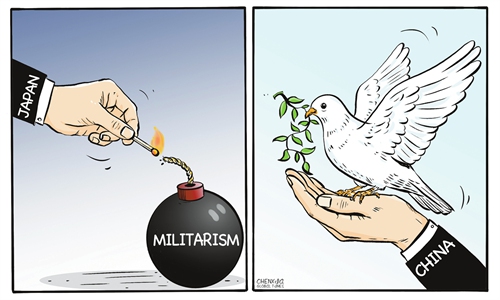
Preventing the resurgence of Japanese militarism is the shared will of the forces of justice: Zhong Sheng
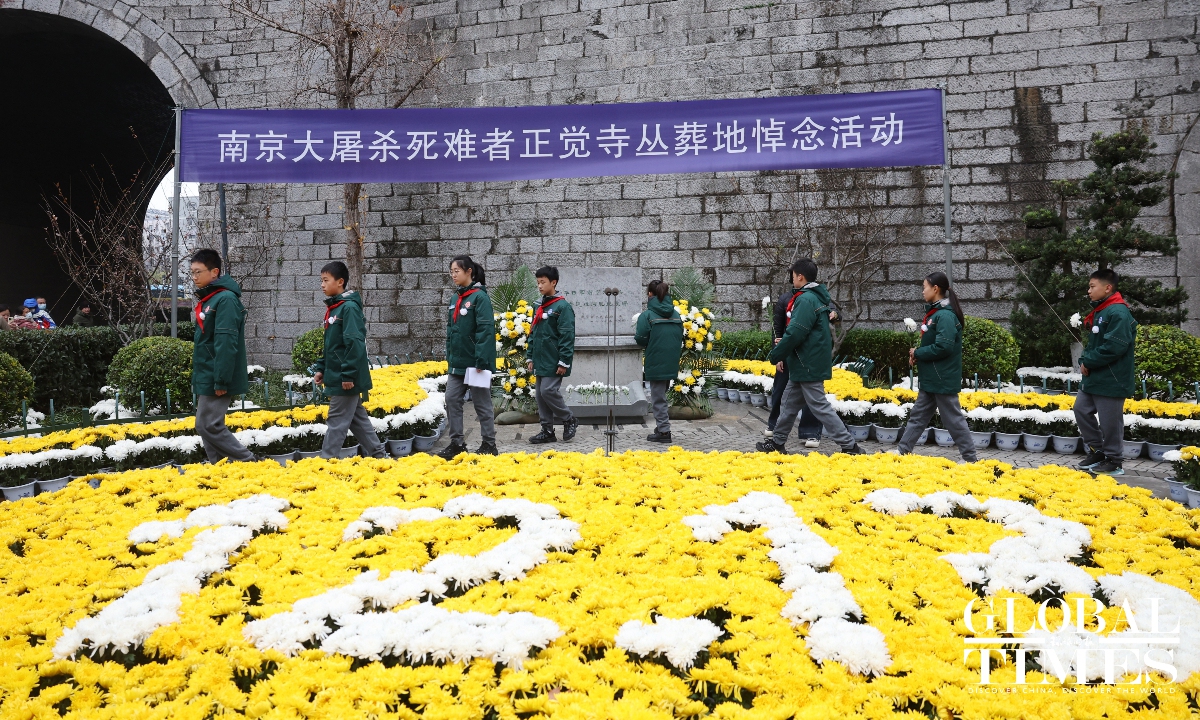
Many residents gather at a mass burial site near Zhengjue Temple in Nanjing, East China's Jiangsu Province on December 13, 2025. Photo: Cui Meng/GT
On Saturday, 88 young people recited a declaration of peace at China's national memorial ceremony for Nanjing Massacre victims, conveying a firm commitment to remembering history and safeguarding peace.
On that day, China's Central Archives published a batch of declassified archives transferred from Russia, containing Soviet interrogations of members of the Japanese Unit 731, the Japanese Imperial Army's notorious germ-warfare unit. During World War II, Japanese militarism committed innumerable crimes of aggression against the Chinese people - specifically, the horrors of the Nanjing Massacre and the inhumane biological warfare - constituting an exceptionally dark chapter in human history. The archives provided by Russia identified more than 200 individuals linked to the crimes of Unit 731, including 12 war criminals who confessed to violating international conventions and to preparing and carrying out biological warfare in public trials. They complement and mutually verify the archives on Unit 731 crimes and site evidence preserved in China, offering irrefutable proof for restoring historical truth and further confirming that the germ warfare launched by Japanese militarism was a premeditated, state-organized and top-down war crime.
The international community has long delivered a just verdict on the aggressive acts of Japanese militarism. International legal documents such as the Cairo Declaration and the Potsdam Proclamation established the basic principles of the postwar international order, clearly stipulating opposition against aggression, the punishment of war criminals and the elimination of militarism. After the victory of WWII, both the International Military Tribunal for the Far East and the Nanjing War Crimes Tribunal investigated the Nanjing Massacre and reached definitive legal rulings. Japanese militarism has been nailed to the pillar of shame in history - a fact that will not change with the passage of time.
However, Japan has never truly reflected on its historical culpability. Japanese right-wing forces have never ceased their attempts to overturn historical verdicts, and today there are signs of a resurgence of militarism. Since taking office, Japanese Prime Minister Sanae Takaichi has made severe provocations on the Taiwan question which bears directly on the postwar international order. At the same time, Japan's attempts to revise its three non-nuclear principles, ease restrictions on arms exports, and continuously increase the defense budget have exposed a dangerous tendency to resurrect militarism, undermine the outcomes of WWII victory, and challenge the postwar international order. This must arouse the highest vigilance of the international community.
To forget history is to betray it; to deny guilt is to repeat the crime. This year marks the 80th anniversary of the victory of the World Anti-Fascist War. Upholding historical justice and preventing the resurgence of Japanese militarism represent the shared will of the forces of justice in the international community.
Russia's transfer of historical archives, the donation by young Frenchman to China of photographs exposing the atrocities committed by Japanese military such as bombing Shanghai and massacring civilians during WWII, and the donation by a Japanese scholar of a full roster of Japan's Unit 8604 which launched germ warfare in South China ... More and more countries and peoples are joining the ranks of those who safeguard historical memory and defend human justice. "It is not shameful to admit what has happened. What is truly shameful is to pretend that something that has occurred never happened at all." "Avoiding truth of history makes it difficult to escape the shadow of militarism." Japanese right-wing politicians should listen carefully to the voices of such people of insight, earnestly and deeply reflect on the history of aggression, thoroughly eradicate the poisonous legacy of militarism, and genuinely pursue a path of peaceful development, thereby earning the trust of Asian neighbors and the international community through concrete actions.
The establishment of the National Memorial Day for Nanjing Massacre Victims and the remembrance of the nation's painful history are not meant to perpetuate hatred, but to draw lessons from the past and create a better future. Today's China has embarked on the new journey toward building a modern socialist country in all respects, and the rejuvenation of the Chinese nation is unstoppable. China remains firmly committed to the path of peaceful development and will always be a force for peace, stability, and progress in the world. China will work together with peace-loving countries and peoples around the globe to thwart any attempts to revive militarism and fascism, jointly uphold the outcomes of WWII victory and the postwar international order, and make greater contributions to the noble cause of peace and development of humanity.
Zhong Sheng is the People's Daily international news commentary column. opinion@globaltimes.com.cn
RELATED ARTICLES