Japan’s ‘defense spending maneuver’ leaves out history responsibility and public conscience: Zhong Sheng
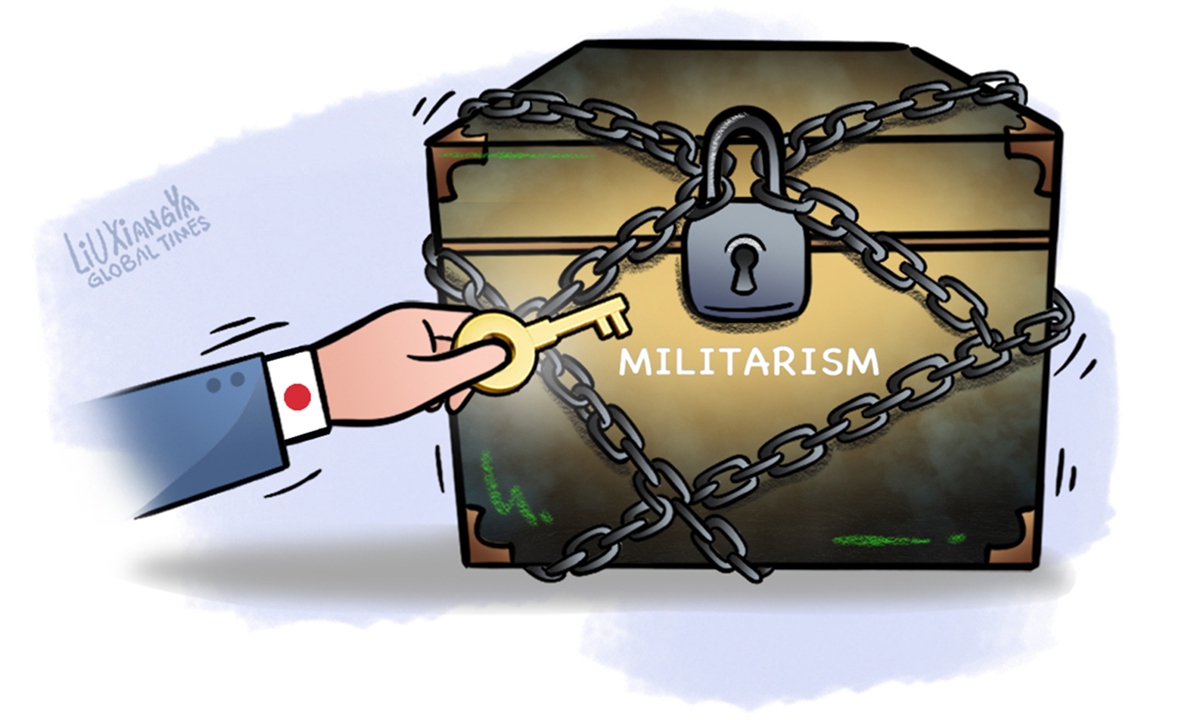
Illustration: Liu Xiangya/GT
What Japan has not calculated or does not dare to calculate is its historical responsibility and international obligations as a war aggressor and a defeated nation, as well as its government's neglect of its own people's livelihood.
In late November, Japan's cabinet approved a supplementary budget for fiscal year 2025 (April 2025-March 2026), adding 1.1 trillion yen ($7.04 billion) in defense spending. This raises the total annual defense expenditure to a record high of nearly 11 trillion yen - a move that has sparked broad concern. In response, Japanese Defense Minister Shinjiro Koizumi, during a Diet session on December 16, attempted to justify the budget increase by making unfounded accusations against China's legitimate defense modernization. Japan's maneuver on defense spending is both misguided and dangerous, reflecting a disregard for historical responsibility and the conscience of the public.
Japan's baseless accusations against China constitute a blatant distortion of facts and an attempt to shift blame. In matters of peace and security, China maintains an exemplary record among major powers. The increase in China's defense budget is both justified and lawful, aimed at addressing security challenges, safeguarding its legitimate national interests and enhancing its capacity to fulfill international responsibilities as a major country. In contrast, in fiscal year 2025, Japan's defense spending per capita and spending per defense personnel are three times and more than twice those of China, respectively. With this supplementary allocation, Japan's defense spending will reach 2 percent of its GDP this fiscal year - a move that has prompted the Japanese media to question whether "Japan's identity as a peaceful nation is further eroding." Japan's relentless drive toward military expansion and its undermining of regional peace and stability are undeniable. Smearing other nations cannot disguise Japan's rush down the path of militarization, nor can it alleviate the profound concerns of regional countries regarding its dangerous course.
Since Japan's right-wing politicians are so keen on "maneuvering the defense bill," it is only fair to help them figure it out.
First and foremost, what Japan has failed - and does not dare - to calculate is its historical responsibility as an aggressor in war and the international obligations it bears as a defeated nation in World War II. Having committed heinous crimes during WWII, Japan should strictly abide by the postwar international order and its own pacifist constitution, exercising particular restraint on military and security matters. Yet, Japan's defense budget has increased for 13 consecutive years, surging by approximately 60 percent over the past five years. Simultaneously, Japan has also unilaterally loosened restrictions on the exercise of collective self-defense, developed the "enemy base strike capability," revised its principles on arms exports, strengthened extended deterrence cooperation and plotted to amend its Three Non-Nuclear Principles, marking a major shift in its strategic direction. While paying lip service to uphold the exclusively defense-oriented principle and the passive defense strategy, Japan has repeatedly violated the obligations of a defeated nation as defined by the Cairo Declaration and the Potsdam Proclamation and betrayed the pacifist commitments enshrined in its own constitution. This evasion of historical culpability and challenge to the postwar order represent Japan's selective amnesia and dereliction of duty when it comes to "maneuvering."
Japan has yet to settle another weighty "bill of public conscience." While right-wing politicians in the Diet devise justifications for drastic increases in military expenditure, they ignore the broad public anxiety and opposition within Japan. Amid mounting social security pressures and persistently high prices, a surge in defense spending will inevitably be funded either through tax increases or by redirecting resources from essential areas such as education, healthcare and infrastructure - ultimately placing the burden on ordinary citizens. Recent protests across Japan have expressed strong resistance to the government's shift toward military expansion. As one Japanese scholar noted, defense spending exceeding 10 trillion yen is an extremely heavy burden, and this approach disregards the people's livelihood. With the country facing multiple challenges, including sluggish growth and constrained fiscal capacity, there is widespread public expectation for the government to prioritize economic revitalization, social welfare and other pressing issues.
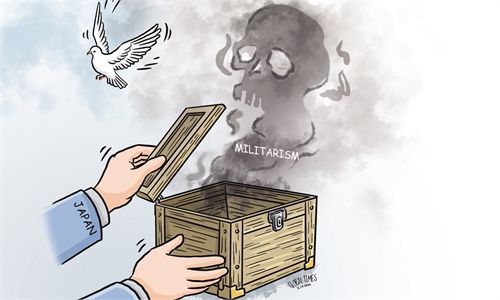
The account of history keeps a clear record of every nation's journey. Japan must squarely address its historical debts, confront its past with honesty and commit itself to a path of peaceful development, so as to win trust from its Asian neighbors with these tangible actions. Should Japan instead cling to obstinacy and seek to revive the ghost of militarism, it will only weigh itself down further with the burden of history and meet resolute opposition from all nations and peoples who cherish peace.
Zhong Sheng is the People's Daily international news commentary column. opinion@globaltimes.com.cn
RELATED ARTICLES