Nvidia reportedly seeks to begin H200 chip shipments to China in mid-February; experts say move reflects firm’s urgency to re-enter Chinese market
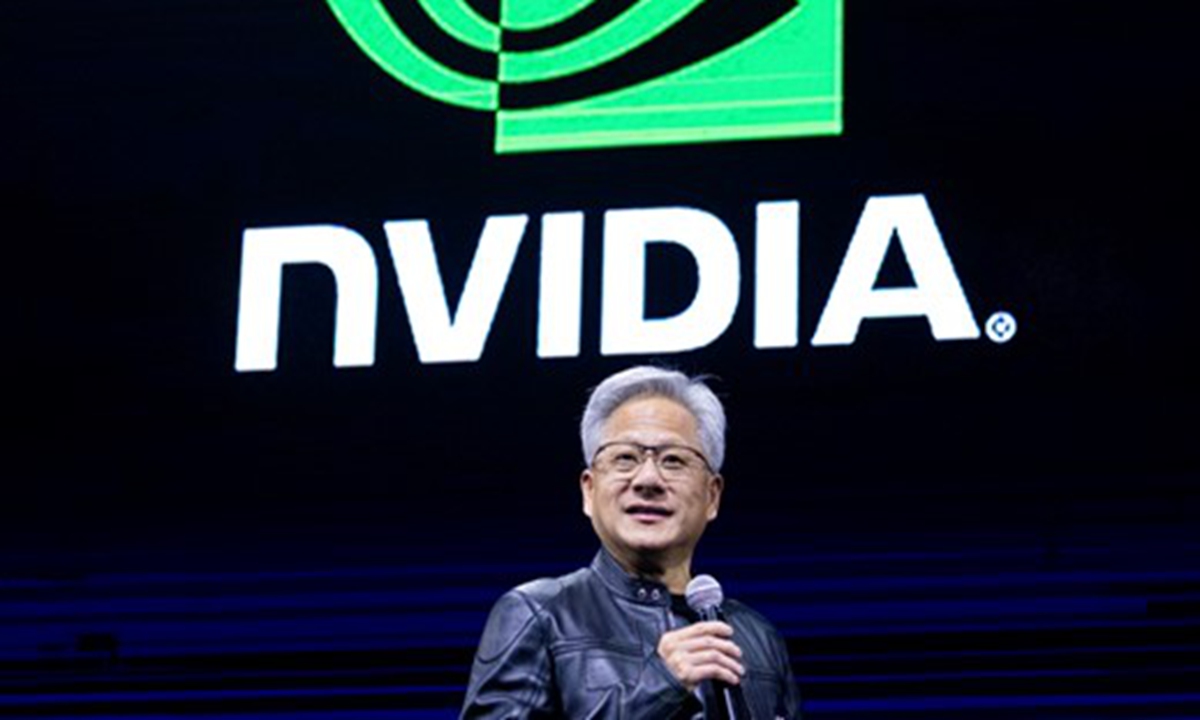
NVIDIA CEO Jensen Huang Photo: VCG
Nvidia has told Chinese clients it aims to start shipping its second-most powerful AI chips H200 to China before the Chinese New Year holidays in mid-February, three people familiar with the matter said, according to a Reuters report on Monday local time.
Chinese experts said that if confirmed, the move reflects both the current US administration's and Nvidia's urgency to re-enter the Chinese chip market, warning that as the performance of China's homegrown chips continues to improve, Nvidia's competitive edge could erode rapidly, leaving the company with diminishing room in the market.
The US chipmaker plans to fulfil initial orders from existing stock, with shipments expected to total 5,000 to 10,000 chip modules - equivalent to about 40,000 to 80,000 H200 AI chips, Reuters reported, citing the first and second sources.
Nvidia has also told Chinese clients that it plans to add new production capacity for the chips, with orders for that capacity opening in the second quarter of 2026, the third source said, Reuters reported.
According to Reuters, significant uncertainty remains, as China has yet to approve any H200 purchases and the timeline could shift depending on government decisions, the sources said. "The whole plan is contingent on government approval," the third source said. "Nothing is certain until we get the official go-ahead."
Reuters' report also noted that the planned shipment would mark the first deliveries of H200 chips to China after US President Donald Trump said this month that Washington would allow such sales with a 25 percent fee.
Ma Jihua, a veteran industry analyst told the Global Times that Nvidia is eager to re-enter the Chinese chip market because time is running out. As the performance of China's domestically developed chips continues to improve, Nvidia's competitive advantage could decline rapidly, leaving the company with shrinking room in the market.
Ma added that the rapid, large-scale construction of artificial intelligence computing infrastructure is proceeding at a fast pace, and missing this critical window could significantly weaken future demand for Nvidia's chips.
Xiang Ligang, director-general of the Beijing-based Information Consumption Alliance, told the Global Times that Nvidia is under growing pressure from unsold inventory, and failure to offload these chips to the Chinese market in time could make it difficult for the company to sustain revenue growth next year, potentially weighing on its share price. As a result, Nvidia is keen to push for Chinese orders as quickly as possible.
From China's side, Xiang said any decision on purchases should be guided by actual demand. The initiative, he noted, remains in China's hands, while Nvidia's priority is simply to ship products swiftly and maximize profits.
The Global Times sought confirmation from Nvidia on the matter, and the NVIDIA spokesperson said in a statement on Tuesday that "we continuously manage our supply chain. Licensed sales of the H200 to authorized customers in China will have no impact on our ability to supply global customers."
However, Nvidia's reported push to resume chip shipments to China has triggered fresh scrutiny in Washington lawmakers.
Two senior Democratic lawmakers on Monday local time asked the US Commerce Department to disclose details and any approvals of ongoing license reviews for potential sales to Chinese firms of Nvidia's second-most powerful AI chips, Reuters reported.
US Senator Elizabeth Warren and Representative Gregory Meeks in a letter asked the Commerce Department to disclose all license applications for the H200 chips for Chinese companies and disclose any approved licenses within 48 hours of the approval date. The lawmakers also want a briefing on the issue before approvals are issued, including "an assessment of the military potential of the chips approved for export and the reaction of allies and partners to the decision to export these chips," according to the letter, which was seen by Reuters.
Xiang said the issue reflects divisions within the US over Nvidia's chip sales to China, with some lawmakers reluctant to see the H200 chip enter the Chinese market and instead favoring continued technology restrictions, based on the belief that China must rely on US advanced chips.
Ma said the push by some US Democratic lawmakers to disclose information reflects a mindset of politicizing economic and trade activities, which runs counter to the principles of a free market. He noted that such moves amount to political interference in normal commercial behavior.
Experts added that against the backdrop of declining competitiveness among some US companies, certain politicians are resorting to political means to impose unfair treatment, disrupting normal trade in the technology sector.
Previously, Chinese government has responded to the H200 chips' import issue.
In response to questions over Trump administration's decision to allow Nvidia to export its H200 chips to China, and whether China will allow these H200 chips to be purchased and also whether and when did the leaders of the two countries communicate the decision, Chinese Foreign Ministry spokesperson Guo Jiakun said on December 9 at a press conference that "we have noticed the reports. China always advocates that China and the United States achieve mutual benefit through cooperation."
RELATED ARTICLES