2025 Yearender: China shares opportunities, growth dividends as an empowering country
Tech-driven, people-centered among features of China's cooperation with others
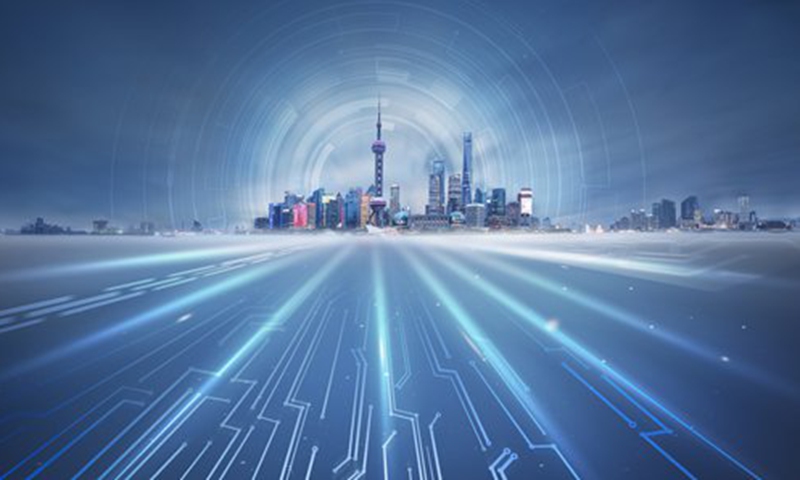
Illustration: VCG
In a large private hospital in Al-Ahsa, Saudi Arabia, Chinese-made service robots have been introduced to handle routine delivery tasks — such as transporting medicines, lab samples, and documents between pharmacy, labs, and wards. The robots navigate autonomously, call elevators, and integrate with the hospital's IT systems so that nurses can request deliveries through a simple interface, according to Mohammed Alsolami, a robotics and AI developer from Saudi Arabia, giving us a vivid example illustrating how Chinese robots are actually working in the country.
"In Saudi Arabia's digital transformation, Chinese robots are already supporting high-tech sectors such as logistics, smart manufacturing, healthcare, and smart city services. They allow local companies and government entities to experiment, pilot, and scale automation solutions in months instead of years, which is exactly what Saudi Vision 2030 requires," Mohammed Alsolami told the Global Times. "I believe Chinese robotics is playing a clear role in narrowing the technology gap globally."
The Global Times Annual Conference 2026 took place in Beijing on December 20, under the theme of "Trust in China: New Journey, New Opportunities." Warwick Powell, an adjunct professor at the Queensland University of Technology and former advisor to former Australian prime minister Kevin Rudd, stated at the event that China is a "great enabling power," creating conditions in which others can thrive alongside China.
China is a country that enables common prosperity and modernization internationally as opposed to the early Western powers that had followed a predatory path that is based on colonialism and imperialism. The latter mode had imposed political and economic conditions while exporting systems and ideologies and led to imbalances in the global economic structure, unfair national development, and even conflicts, said Zheng Yongnian, a professor at the Chinese University of Hong Kong, Shenzhen and president of The Institute for International Affairs, Qianhai.
Zheng told the Global Times that as an enabling country, China, through initiatives such as the Belt and Road Initiative (BRI), the Asian Infrastructure Investment Bank, and the BRICS mechanism, focuses on development cooperation, shares the fruits of development, and drives joint progress for other countries.
It is for sure that China's high quality development has been and will continue to share growth dividends with the world, observers said, noting that its capacity as "an empowering country" to inspire and vitalize others lies in China's unwavering practices in opening-up and cooperation, as well as its vision of building a community with a shared future for humanity.
Closing the gap
Empowerment comes from cooperation. China, in pursuit of high quality development driven by new quality productive forces, stands ready to join hands with other countries and share tech-driven new development opportunities, analysts said.
Chinese President Xi Jinping, in his congratulatory letter to the World Smart Industry Expo 2025 in September this year, stressed that Artificial Intelligence (AI) should be an international public good that benefits humanity. Xi said China is willing to engage in extensive international cooperation with countries around the world in this field, the Xinhua News Agency reported.
"Advanced AI technology, under China's leadership and support, can play a significant role in strengthening interconnectedness among countries in the Global South," Nadia Helmy, associate professor of Political Science, Faculty of Politics and Economics of the Beni Suef University in Egypt, wrote in her article published in the Modern Diplomacy in September.
The importance of China's support for developing countries in the Global South in advanced AI technology and techniques comes after the global AI race witnessed a remarkable shift in recent years, particularly with China's significant progress, represented by companies such as DeepSeek and Alibaba developing advanced and highly efficient open-source systems, read the article.
China's technological achievements are good news for developing countries that look to China for development support and tech access, Josef Gregory Mahoney, a professor of politics and international relations and director of the Center for Ecological Civilization at East China Normal University in Shanghai, told the Global Times.
Chinese manufacturers have made advanced robots more affordable, more standardized, and faster to deploy. For countries like Saudi Arabia — where there is strong political will and investment, as well as a need to rapidly scale skills and infrastructure — this collaboration is very powerful, Alsolami said. "Instead of waiting years to build everything from scratch, we can bring in mature Chinese platforms and focus our local effort on integration, localization (Arabic language, local workflows, regulations), and new services on top," he said.
Together to the space
In addition sharing China's development momentum to others, China has also upheld an open attitude toward humanity's quest of the unknown.
China's robust space development in both deep space exploration field and manned space spaceflight have been widely lauded as providing precious opportunities for developing countries to pursuit their own space dreams. China's space station was completed during the 14th Five-Year Plan period (2020-25), becoming one of two space stations currently in orbit. During the 14th Five-Year Plan period, China's space exploration quest also reached the far side of the moon.
The China Manned Space Agency announced in late October that two Pakistani astronauts will undergo training alongside taikonauts, and one of them will be selected to participate in a short-duration spaceflight mission as a payload specialist.
Amjad Ali, deputy director general of SUPARCO, Pakistan's national space agency, told the Global Times that the Pakistani agency remains committed to deepening its collaboration with the China National Space Administration (CNSA) and other global partners as we collectively push the boundaries of what is possible in space.
Speaking to the Global Times, Ali said that our ongoing cooperation with China, including contributions to Chang'e-6 via the ICUBE-Q cubesat and the development of a lunar rover for Chang'e-8, highlights a shared commitment to peaceful space exploration and scientific discovery. These partnerships demonstrate how pooling knowledge and resources can yield powerful results in tackling the many challenges of space.
China will pursue the goal of boosting its strength in aerospacein the 15th Five-Year Plan period, according to Recommendations of the Central Committee of the Communist Party of China for Formulating the 15th Five-Year Plan for National Economic and Social Development, that was adopted at the Fourth Plenary Session of the 20th Central Committee of the Communist Party of China on October 23, 2025.
John Ross, former director of Economic and Business Policy for the Mayor of London, stated at the Global Times Annual Conference that China left the 14th Five-Year Plan as the technological leader in a growing series of economic sectors, and the same macroeconomic processes mean this will expand further during the 15th Five-Year Plan.
Joint prosperity
Observers noted that when development can be seen in economic data or grand projects, it should bring tangible benefits to common people; that is China's people-centered philosophy in its own development, which also guides China's principle in international cooperation.
The Hanoi Light Rail Line 2A in Vietnam, or Cat Linh-Ha Dong Line, is a main line in the urban rail network of Hanoi, which also served as a vivid example of China's efforts to boost connectivity has substantially benefited the local people on a daily basis.
About 13 kilometers long with 12 stations, the line was constructed by China Railway Sixth Group Viet Nam Co., Ltd. As Vietnam's first urban light rail, it stands as a testament to the deepening friendship between Chinese and Vietnamese people.
This light rail in Hanoi has significantly improved the lives of Hanoi residents. The most practical change is the convenience of travel - it took more than one or even two hours to travel the approximately 13-kilometer journey during the morning and evening rush hours, but now it only takes 20 minutes. Many residents have purchased monthly passes, and the commuting time from the suburbs to the city center has been cut by more than half.
Nguyen Thanh Ha, a Vietnamese employee who has been working for China Railway Sixth Group Viet Nam Co., Ltd for 10 years, said that with the light rail, the surrounding commercial and residential areas saw rapid development, and the living standards of her family have improved accordingly. "We can get various services and goods more conveniently, and it has also brought more job opportunities."
Projects like transport corridors linking multiple countries are designed not as unilateral investments, but as partnerships. They provide shared economic benefits, create jobs, and improve connectivity. This is mutual benefit in action, Warwick Powell the Australian scholar said at the Global Times annual conference.
This is what I mean when I describe China as a "great enabling power." It's a persona built on enabling neighbors and regional stability, creating conditions in which others can thrive alongside China, he added.
China's globally enabling approach is further evident in China's global vision. The Global Development Initiative, Global Security Initiative, Global Civilization Initiative, and Global Governance Initiative put forward by China form an integrated and progressively advancing framework, Zheng said.
These initiatives underscore independent development for all nations and reject the imposition of any country's own system or order on others. In essence, this enabling approach fully respects the sovereignty and agency of other nations, rather than constituting a forceful overlay, Zheng said.
RELATED ARTICLES