China's space station carries out 31 new science and application projects in 2025: media report
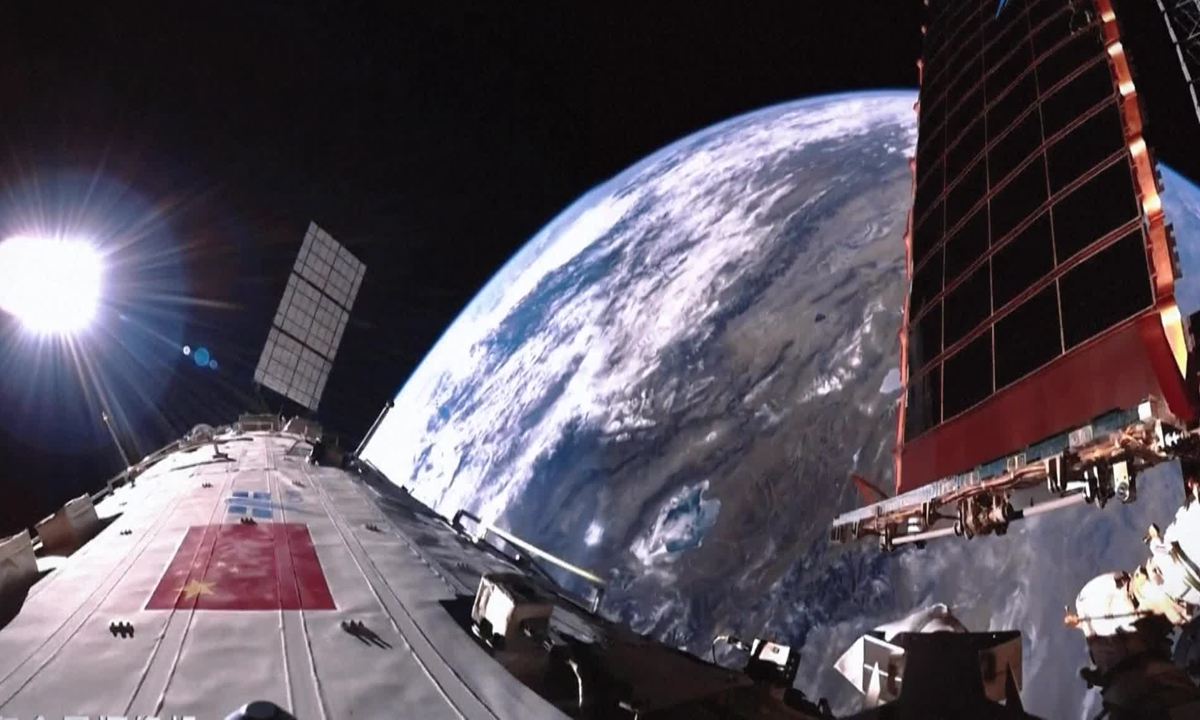
China's Shenzhou-21 and the Tiangong space station in the orbit Photo: IC
China carried out 31 new space science and application projects to its space station in 2025, covering fields including life sciences, microgravity physics and space technologies, China Central Television (CCTV News) reported on Wednesday, citing the Technology and Engineering Center for Space Utilization of the Chinese Academy of Sciences.In 2025, China's space application system carried out 31 new science and application projects in orbit, delivering about 867.5 kilograms of experimental modules, units and samples to the China Space Station, while returning 83.92 kilograms of space science samples to Earth. The projects generated more than 150 terabytes of scientific data and resulted in over 50 authorized patents, CCTV News reported.
In the field of space life sciences, China successfully conducted its first mouse space science experiment aboard the China Space Station, establishing a full-process experimental and life-support system covering ground-based selection, in-orbit breeding and live return.
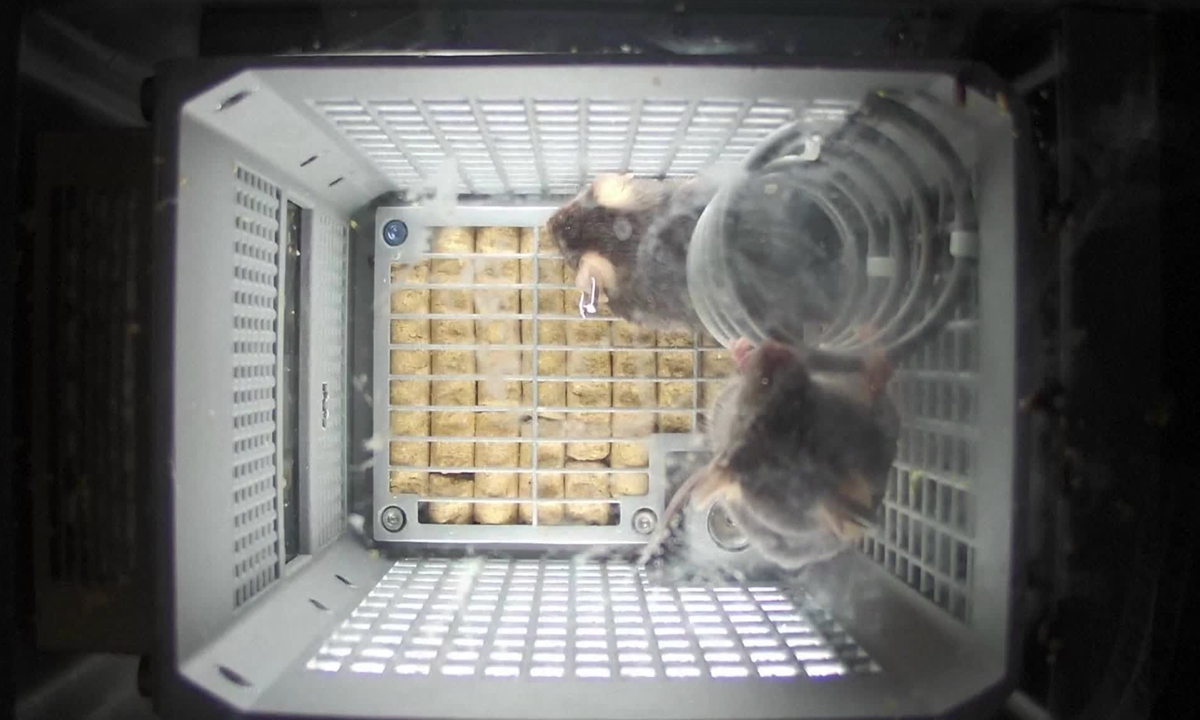
The mouse experiment module aboard the China Space Station Photo: IC
China has, for the first time in the world, carried out biological research aboard a space station under a combined sub-magnetic and microgravity environment, revealing patterns of behavioral and genetic changes in animals under such conditions and providing experimental evidence relevant to life and health support in future deep-space exploration, CCTV News reported.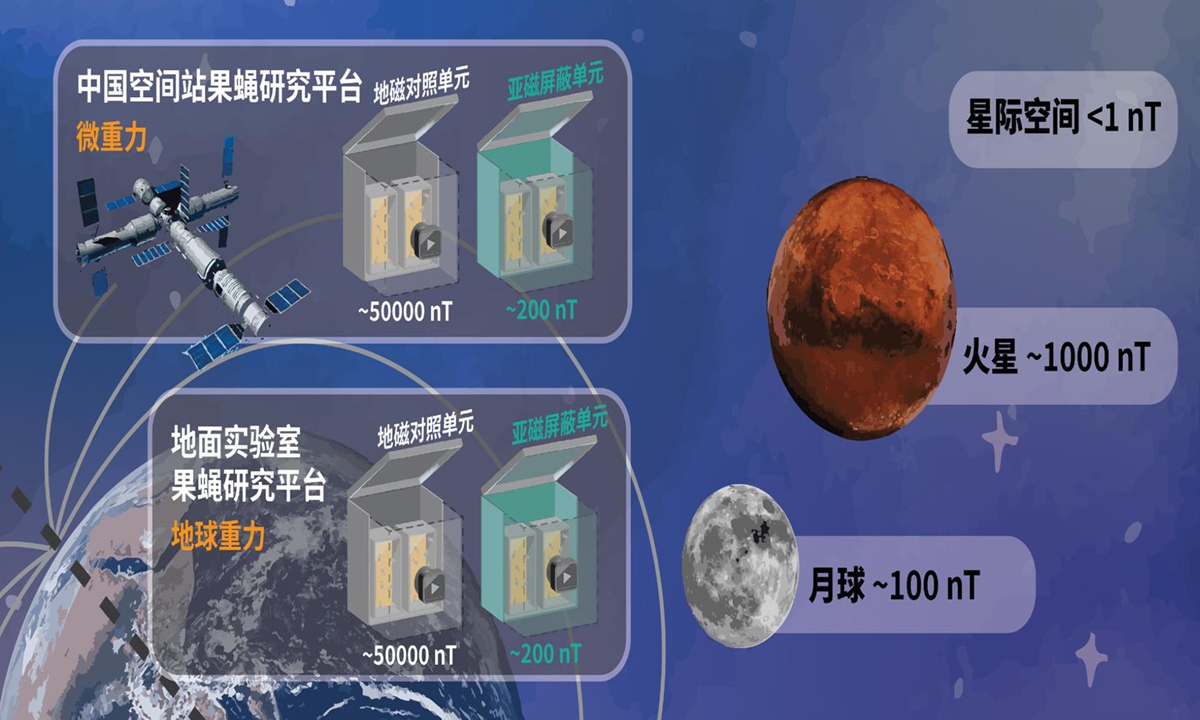
A research system for fruit fly cultivation and biological effects under a combined sub-magnetic and microgravity environment in space Photo: CCTV News
The China Space Station has also carried out a novel experiment on the fundamental science of lithium-ion batteries for space applications, Xinhua News Agency reported on Wednesday.According to Xinhua, the experiment leverages the microgravity environment of the space station to study internal battery processes that are difficult to observe on Earth, particularly the behavior of chemicals within the electrolyte, which directly affects battery performance and lifespan. The findings are expected to help further improve existing in-orbit battery systems and support the development of safer, higher-energy-density space batteries.
Ba Jin, a senior engineer at the Technology and Engineering Center for Space Utilization under the Chinese Academy of Sciences, said that the space application system will also launch two flagship astronomical facilities, according to CCTV News. One is a survey space telescope designed to conduct studies in cosmology, nearby galaxies and the Milky Way, and the other is a high-energy cosmic radiation detection facility aimed at observing cosmic rays and advancing research on dark matter and other extreme cosmic phenomena.
Global Times
RELATED ARTICLES