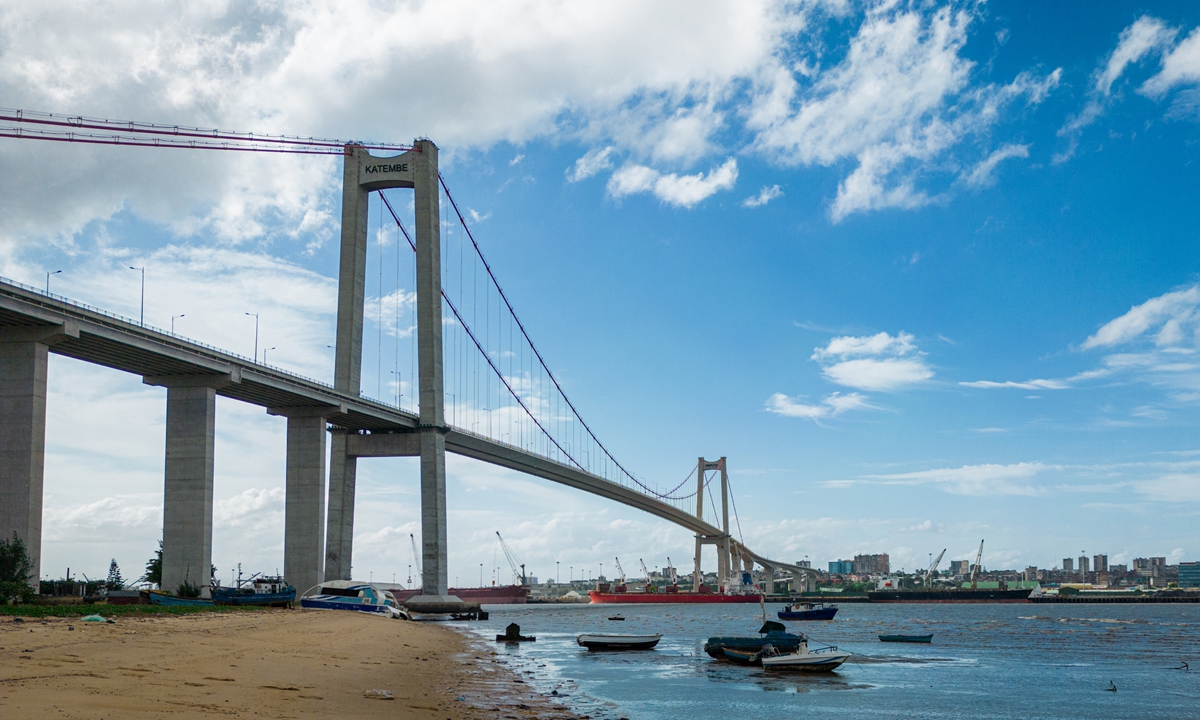
A view of the Maputo-Katembe bridge, a key Chinese-built infrastructure project in Mozambique. Photo: VCG
Editor's Note:
As 2026 marks the Year of China-Africa People-to-People Exchanges, the friendship between the people forms the vital cornerstone of China-Africa ties, and cultural and people-to-people exchanges serve as the enduring engine of intergenerational friendship between China and Africa. The Global Times, in collaboration with South Africa's Independent Media, has launched a series titled "Global South Dialogue." We have invited Chinese and African experts and scholars to engage in in-depth discussions on a wide range of topics related to China-Africa relations and their international context. The seventh installment of the series features discussions on the theme of "deepening experience exchange to help China and Africa chase dream of modernization."
Time to shatter the myth that 'modernization equals Westernization'
Ma Hanzhi (scholar at the Department for Developing Countries Studies, China Institute of International Studies): Emphasizing that every country has an inalienable right to modernization is a fundamental foundation for building a better world and advancing a shared future for humanity. Conversely, if only a handful of countries achieve high-level modernization while others remain chronically underdeveloped, a true shared future for humanity will remain out of reach.
In the pursuit of modernization, it is essential to shatter the myth that "modernization equals Westernization" and to explore development paths that suit each country's specific national conditions. The historical modernization of Western developed countries was often accompanied by colonial plunder and war - making that path unsuitable as a universal model for today's world. Moreover, a modernization process aligned with one's own national realities has become an integral part of each country's identity.
Jesse Wilson (research and development officer at the Foreign Service Academy of the Ministry of Foreign Affairs and International Cooperation of Sierra Leone): The idea that development is synonymous with Westernization has always been a myth perpetuated by the West. When we travel to Western countries, we often view them as embodiments of highly advanced civilizations, but this perception is not entirely accurate.
If we delve deeper into history, we discover that many societies now labeled "second" or "third world" by the West were once advanced civilizations. During the Roman era, the senator Cato the Elder visited Carthage, a major North African civilization. He found it to be an advanced culture - culturally, economically and technologically - that could rival the Roman Empire itself. Struck by its prosperity and potential threat, Cato famously declared in Latin, "Carthago delenda est." ("Carthage must be destroyed.") The West has inherited this Roman ideology: the imperative to always remain No.1 and never allow another nation to surpass it.
Balew Demissie Kebede (communication and publication consultant at Ethiopian Policy Studies Institute): Debunking the long-standing assumption that modernization necessarily equals Westernization is therefore essential. For decades, a dominant narrative has suggested that progress could only be achieved by adopting Western political systems, cultural norms and social values. This view not only narrows the meaning of modernity but also undermines the richness of global diversity. When modernization is equated with Westernization, development risks becoming a process of cultural erosion, where local traditions, languages and social institutions are devalued or discarded. By separating the two, nations can modernize their economies and infrastructures while preserving and revitalizing their cultural identities, as demonstrated by China, which has achieved high levels of development without abandoning its social ethics.
Why China-Africa modernization cooperation matters
Balew Demissie Kebede: Together, China and Africa account for more than 2.8 billion people - nearly one-third of humanity - making their development central to the future of the international system. Closing the development gap between the Global North and the Global South is not only a moral aspiration but also a structural necessity.
Economically, Africa represents the last major frontier for large-scale industrialization, urbanization and digital expansion, while China remains a core engine of global manufacturing, technological advancement and innovation. Their combined success is indispensable for sustaining global demand, stabilizing supply chains and preventing systemic economic fragmentation.
The partnership is equally critical to the global green transition. Africa possesses vast reserves of critical minerals such as cobalt and lithium, which are essential for renewable energy technologies, electric vehicles and energy storage systems. China, in turn, leads in green manufacturing, solar and wind technologies, and electric mobility. Without close cooperation between African resource producers and Chinese technology providers, global climate targets and sustainable modernization goals will remain out of reach.
Ma Hanzhi: For both China and Africa, jointly advancing modernization aligns with each side's practical needs and represents a major opportunity. The shared pursuit of the dream of modernization between China and Africa is not only the inevitable outcome of deepening mutually beneficial and win-win cooperation, but also one of its core objectives. Both sides are now entering new stages of development, with strong complementary advantages and vast opportunities in economic and trade cooperation.
Moving forward, we should seize these new opportunities to further promote connectivity between Chinese and African markets, integration of industries, mutual promotion of innovation and alignment of rules. This will continuously expand converging interests, facilitate the smooth circulation of resources and production factors, and foster a more efficient and dynamic China-Africa economic interaction as well as comprehensive cooperation. Such efforts hold great significance for China, Africa, the Global South, and the world at large.
Advancing modernization together through mutual learning
Jesse Wilson: It is the unity of oneness that will ultimately lead Africa to development. Africa possesses abundant resources, but it also has the potential to produce goods and value-added products. Rather than simply exporting raw resources, Africa can learn from China - not just by receiving help, but by actively going to China to study the key elements and mechanisms of how to create and manufacture other products. We can draw lessons from Chinese trade practices and adapt them to our own context.
We must avoid a one-sided view of cooperation. Instead, we should borrow successful approaches and thoughtfully implement them in ways that suit our own needs and realities. Such mutual learning would greatly benefit Chinese investors and businesses operating in Africa, as well as Africans themselves.
Above all, there must be a genuine sense of unity and oneness - both among Africans across the continent and between Africans and Chinese.
Balew Demissie Kebede: As the world enters 2026, officially designated the China-Africa Year of People-to-People Exchanges, the partnership between the two has evolved beyond building roads, railways and ports to constructing durable bridges of knowledge, institutional capacity and governance experience.
Central to this evolving relationship is a deepening exchange of governance experiences. China and Africa are increasingly engaged in a dialogue on development practices grounded in mutual respect and contextual adaptation. Institutionalized platforms such as the Forum on China-Africa Cooperation and the 2024 Beijing Action Plan have expanded this exchange through the establishment of China-Africa research centers and the China-Africa Network of Knowledge for Development. These initiatives facilitate joint research, policy learning and the sharing of development strategies tailored to national realities.
This exchange is further strengthened through leadership and talent training programs that bring African political leaders, civil servants and policy practitioners to China to study public administration, poverty alleviation, rural revitalization and development planning. At the same time, the growing emphasis on projects such as localized healthcare, education and livelihood initiatives has shifted cooperation to the grassroots level. These projects enable direct learning on how governance can become more responsive, inclusive and effective in improving everyday lives.
The significance of this partnership extends well beyond China and Africa. For both sides, it enhances strategic autonomy by reducing dependence on external actors and creating resilient South-South development synergies. It also enables mutual learning: African countries draw lessons from China's large-scale poverty reduction and long-term planning, while China gains insights from Africa's digital leapfrogging, youthful demographics and entrepreneurial dynamism.
For the wider Global South, the China-Africa partnership has a powerful demonstration effect. At the global level, the implications are equally profound. Development remains the most effective antidote to the root causes of forced migration, extremism and regional instability. A modernized China and Africa, therefore, serve as stabilizing anchors for the global economy and international security. More broadly, this partnership signals a shift away from a monolithic vision of modernity toward a pluralistic, multipolar world in which different civilizations contribute distinct pathways and solutions to shared human challenges.
La Chine et l'Afrique approfondissent l'échange pour faire avancer leur rêve commun de modernisation
Par Global Times
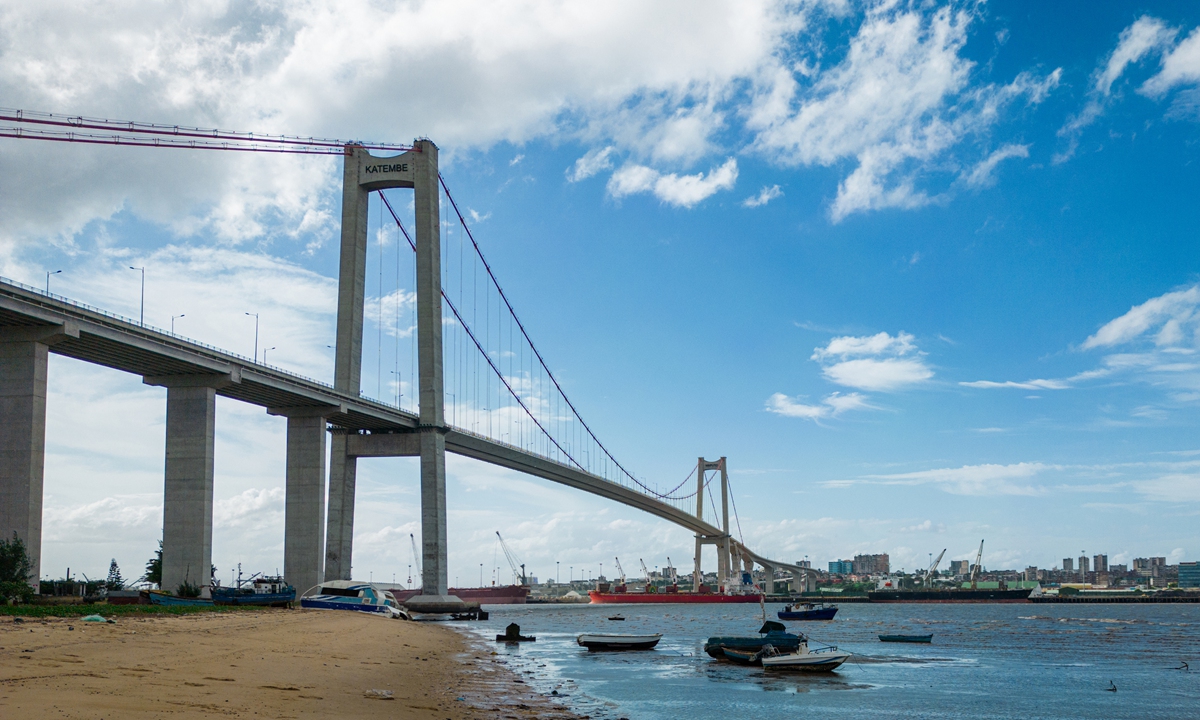
Vue du pont Maputo-Katembe, un projet d'infrastructure clé construit par la Chine au Mozambique. Photo : VCG
Note de la rédaction :
En cette année 2026, proclamée Année des échanges humains entre la Chine et l'Afrique, l'amitié entre les peuples constitue la pierre angulaire essentielle des relations sino-africaines, et les échanges culturels et interpersonnels servent de moteur durable pour l'amitié transgénérationnelle entre la Chine et l'Afrique. Le Global Times, en coopération avec Independent Media d'Afrique du Sud, a lancé une série intitulée « Dialogue du Sud Mondial. » (Global South Dialogue) Nous avons invité des experts et universitaires chinois et africains à engager des discussions approfondies sur un large éventail de sujets liés aux relations sino-africaines et à leur contexte international. Le septième volet de cette série propose des échanges autour du thème suivant : « Approfondir l'échange d'expérience pour accompagner la Chine et l'Afrique dans la réalisation de leur rêve de modernisation. »
Il est temps de briser le mythe selon lequel « la modernisation équivaut à l'occidentalisation »
Ma Hanzhi (chercheur au Département des études sur les pays en développement, Institut chinois des études internationales) : Reconnaître le droit inaliénable de tout pays à la modernisation est une condition fondamentale pour édifier un meilleur monde et pour œuvrer à un avenir commun de l'humanité. Inversement, si seule une poignée de pays parvient à une modernisation de haut niveau tandis que les autres demeurent durablement sous-développés, un véritable avenir partagé pour l'humanité restera hors d'atteinte.
Dans la quête de la modernisation, il est essentiel de briser le mythe selon lequel « la modernisation équivaut à l'occidentalisation » et d'explorer des voies de développement qui conviennent aux conditions nationales spécifiques de chaque pays. La modernisation historique des pays occidentaux développés s'est souvent accompagnée de pillage colonial et de guerres - ce qui rend cette voie inadaptée comme modèle universel pour le monde actuel. De plus, un processus de modernisation aligné sur les réalités nationales de chacun est devenu une partie intégrante de l'identité de chaque pays.
Jesse Wilson (responsable de la recherche et du développement à l'Académie du service extérieur du Ministère des Affaires étrangères et de la Coopération internationale de Sierra Leone) : L'idée selon laquelle le développement serait synonyme d'occidentalisation a toujours été un mythe entretenu par l'Occident. Lorsque nous voyageons dans les pays occidentaux, nous les voyons souvent comme des incarnations de civilisations hautement avancées, mais cette perception n'est pas entièrement exacte.
En nous penchant sur l'histoire, nous découvrons que de nombreuses sociétés aujourd'hui qualifiées de « deuxième » ou « troisième monde » par l'Occident étaient jadis des civilisations avancées. À l'époque romaine, le sénateur Caton l'Ancien a visité Carthage, une grande civilisation nord-africaine. Il y a trouvé une culture avancée - sur les plans culturel, économique et technologique - capable de rivaliser avec l'Empire romain lui-même. Frappé par sa prospérité et sa menace potentielle, Caton a prononcé sa célèbre formule latine : « Carthago delenda est. » (« Carthage doit être détruite. ») L'Occident a hérité de cette idéologie romaine : il est impératif de rester numéro un et de ne jamais permettre à une autre nation de le surpasser.
Balew Demissie Kebede (consultant en communication et publication à l'Institut éthiopien d'études politiques) : Par conséquent, il est essentiel de démystifier l'hypothèse de longue date selon laquelle la modernisation équivaut nécessairement à l'occidentalisation. Pendant des décennies, un récit dominant a suggéré que le progrès ne pouvait être atteint qu'en adoptant les systèmes politiques, les normes culturelles et les valeurs sociales occidentales. Cette vision restreint non seulement la signification de la modernité, mais elle compromet aussi la richesse de la diversité mondiale. Lorsque la modernisation est assimilée à l'occidentalisation, le développement risque de devenir un processus d'érosion culturelle, où les traditions, les langues et les institutions sociales locales sont dévalorisées ou abandonnées. En dissociant ces deux notions, les nations peuvent moderniser leurs économies et leurs infrastructures tout en préservant, et même en revitalisant, leurs identités culturelles, comme l'a démontré la Chine, parvenue à un haut niveau de développement sans renoncer à ses éthiques sociales.
Pourquoi la coopération sino-africaine en matière de modernisation compte
Balew Demissie Kebede : Ensemble, la Chine et l'Afrique représentent plus de 2,8 milliards d'habitants - près d'un tiers de l'humanité - ce qui fait de leur développement un enjeu central pour l'avenir du système international. Combler le fossé du développement entre le Nord mondial et le Sud mondial n'est pas seulement une aspiration morale mais aussi une nécessité structurelle.
Sur le plan économique, l'Afrique représente la dernière frontière majeure pour l'industrialisation à grande échelle, pour l'urbanisation et pour l'expansion numérique, tandis que la Chine demeure un moteur central de la fabrication mondiale, du progrès technologique et de l'innovation. Leur succès combiné est indispensable pour soutenir la demande mondiale, pour stabiliser les chaînes d'approvisionnement et pour prévenir une fragmentation économique systémique.
Ce partenariat est tout aussi essentiel à la transition verte mondiale. L'Afrique détient d'immenses réserves de minerais critiques - notamment le cobalt et le lithium - indispensables aux technologies d'énergie renouvelable, aux véhicules électriques et aux systèmes de stockage d'énergie. La Chine, quant à elle, est à l'avant-garde de la fabrication verte, des technologies solaires et éoliennes, ainsi que de la mobilité électrique. Sans coopération étroite entre les producteurs africains de ressources et les fournisseurs chinois de technologies, les objectifs climatiques mondiaux et les ambitions d'une modernisation durable resteront hors d'atteinte.
Ma Hanzhi : Pour la Chine comme pour l'Afrique, un effort conjoint pour la modernisation correspond aux besoins pratiques de chaque partie et représente une opportunité majeure. La quête commune du rêve de modernisation partagé par la Chine et l'Afrique constitue non seulement le fruit inévitable d'une coopération mutuellement bénéfique et gagnant-gagnant, mais aussi l'un de ses objectifs fondamentaux. Les deux parties entrent maintenant dans de nouvelles phases de développement, avec des avantages complémentaires solides et de vastes opportunités en matière de coopération économique et commerciale.
À l'avenir, il convient de saisir ces nouvelles opportunités pour renforcer encore la connectivité entre les marchés chinois et africains, intégrer nos industries, stimuler mutuellement l'innovation et harmoniser nos cadres réglementaires. Cela permettra d'élargir continuellement les intérêts convergents, de faciliter la circulation fluide des ressources et des facteurs de production, et de favoriser une interaction économique sino-africaine plus efficace et dynamique ainsi qu'une coopération intégrée. Une telle démarche revêt une importance majeure, non seulement pour la Chine et l'Afrique, mais aussi pour l'ensemble du Sud mondial et pour le monde tout entier.
Faire avancer la modernisation ensemble par l'apprentissage mutuel
Jesse Wilson : C'est l'unité dans la solidarité qui mènera finalement l'Afrique au développement. L'Afrique dispose de ressources abondantes, mais elle possède aussi le potentiel de produire des biens et des produits à valeur ajoutée. Plutôt que de se contenter d'exporter des matières premières brutes, l'Afrique peut s'inspirer de l'expérience chinoise - en plus de la réception d'aide, il faut aller activement en Chine pour étudier les éléments et les mécanismes clés en matière de la création et de la fabrication des autres produits. Nous pouvons tirer des enseignements des pratiques commerciales chinoises et les adapter à notre propre contexte.
Nous devons éviter une vision unilatérale de la coopération. Au lieu de cela, nous devons emprunter des approches éprouvées et les mettre en œuvre de manière réfléchie, en tenant compte de nos besoins et de nos propres réalités. Un tel apprentissage mutuel profiterait considérablement aux investisseurs et aux entreprises chinoises présentes en Afrique, tout autant qu'aux Africains eux-mêmes.
Mais surtout, il doit exister un véritable sentiment d'unité et de solidarité - à la fois entre les Africains à travers tout le continent, et entre des Africains et des Chinois.
Balew Demissie Kebede : Étant donné que le monde entre en 2026, officiellement désignée Année des échanges entre les peuples de la Chine et de l'Afrique, le partenariat entre les deux parties a désormais dépassé la simple construction de routes, de chemins de fer et de ports pour ériger des ponts durables de savoir, de capacités institutionnelles et d'expérience en matière de gouvernance.
Au cœur de cette relation en évolution se trouve un échange approfondi d'expériences en matière de gouvernance. La Chine et l'Afrique sont de plus en plus engagées dans un dialogue sur les pratiques de développement fondé sur le respect mutuel et sur l'adaptation contextuelle. Des plateformes institutionnalisées telles que le Forum sur la coopération sino-africaine et le Plan d'action de Beijing 2024 ont élargi cet échange grâce à la création de centres de recherche Chine-Afrique et du Réseau de connaissances Chine-Afrique pour le développement. Ces initiatives facilitent la recherche conjointe, l'apprentissage des politiques et le partage de stratégies de développement adaptées aux réalités nationales.
Cet échange est encore renforcé par des programmes de formation destinés aux dirigeants et aux talents africains, qui amènent des responsables politiques, des fonctionnaires et des praticiens des politiques publiques en Chine pour y étudier l'administration publique, la lutte contre la pauvreté, la revitalisation rurale et la planification du développement. Pendant la même période, l'accent croissant mis sur des projets tels que les initiatives localisées en matière de santé, d'éducation et de moyens d'existence a recentré la coopération au niveau des communautés. Ces projets permettent un apprentissage direct sur la manière dont la gouvernance peut devenir plus réactive, inclusive et efficace pour améliorer la vie quotidienne.
La signification de ce partenariat s'étend bien au-delà de la Chine et de l'Afrique. Pour les deux parties, il renforce l'autonomie stratégique en réduisant la dépendance à l'égard d'acteurs externes et en créant des synergies résilientes de développement Sud-Sud. Il s'agit également d'un apprentissage mutuel : les pays africains tirent des enseignements de la réduction massive de la pauvreté et de la planification à long terme menées par la Chine, tandis que la Chine s'inspire du saut numérique de l'Afrique, de sa démographie jeune et de son dynamisme entrepreneurial.
Pour l'ensemble du Sud mondial, le partenariat sino-africain exerce un puissant effet de démonstration. Au niveau mondial, les implications sont tout aussi profondes. Le développement demeure le remède le plus efficace contre les causes profondes de la migration forcée, de l'extrémisme et de l'instabilité régionale. Une Chine et une Afrique modernisées constituent ainsi des piliers stabilisateurs de l'économie mondiale et de la sécurité internationale. Plus largement, ce partenariat marque un passage d'une vision monolithique de la modernité au profit d'un monde pluriel et multipolaire, où différentes civilisations apportent des voies distinctes et des solutions diversifiées aux défis communs à l'humanité.
RELATED ARTICLES