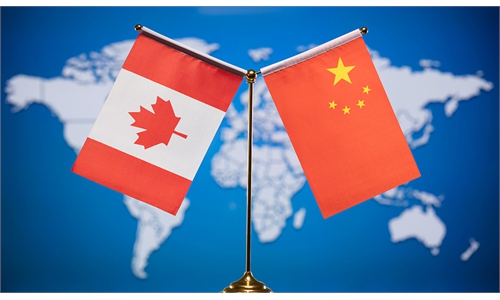
China’s commerce ministry responds to outcomes of China-Canada economic and trade consultations, including canola, EVs
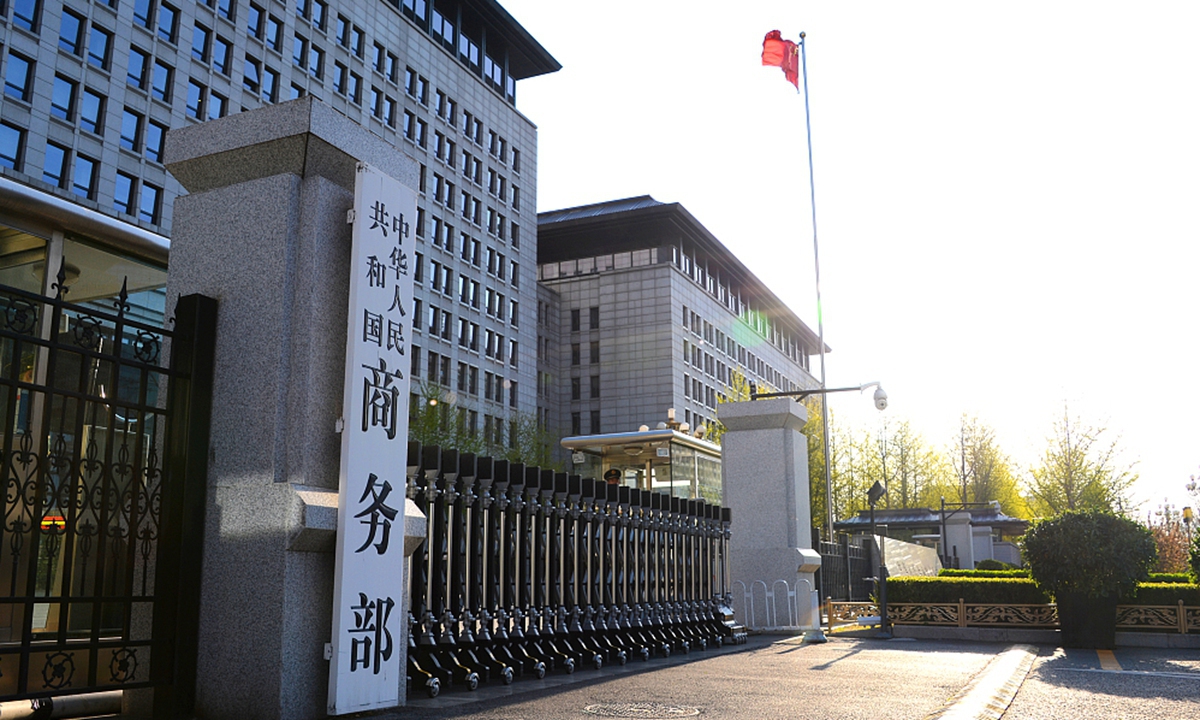
Ministry of Commerce
When asked to provide more detail on relevant statements from the Canadian side to the media regarding adjustments to measures on the export of Chinese electric vehicles (EVs) to Canada, an official from China's Ministry of Commerce said on Friday that China views this as a positive step taken by Canada in the right direction, and it is also good news for Chinese EVs to explore the Canadian market.
According to the latest adjustment plan, Canada will grant a quota of 49,000 units for Chinese EVs annually. Within this quota, vehicles will enjoy the Most Favored Nation (MFN) tariff rate of 6.1 percent, and the 100 percent supplementary tax will no longer be applied. The quota amount will increase annually according to a certain proportion.
"We hope the Canadian side will actively fulfill its commitments and continue to work with China in the same direction. Through friendly consultations, we should create a fairer, more stable, and non-discriminatory environment for further expanding trade and investment cooperation in the EV sector. We look forward to both countries' industries seizing this opportunity, strengthening coordination, and achieving mutual benefit and win-win results," said the official.
When asked about more details on that China and Canada have reached preliminary consensus on adjusting anti-dumping measures for canola, as the Canadian side has paid high attention to exports to China such as canola and agricultural aquatic products, the official said that China and Canada have conducted multiple rounds of consultations in a spirit of cooperation, striving to narrow the list of outstanding issues.
Canada will make positive adjustments regarding its unilateral measures targeting Chinese electric vehicles, steel and aluminum products, as well as specific cases involving Chinese investment and operations in Canada. Correspondingly, China will adjust its anti-dumping measures on canola and anti-discrimination measures on certain Canadian agricultural and aquatic products, in accordance with relevant laws and regulations. It is believed that these arrangements will play a positive role in deepening relevant industrial cooperation between China and Canada and enhancing the well-being of the peoples of both nations, the official noted.
Reuters reported earlier that Canadian Prime Minister Mark Carney said on Friday during his visit to China that Canada and China have struck an initial trade deal that will slash tariffs on electric vehicles and canola. According to the report, citing Carney, Canada will initially allow in up to 49,000 Chinese electric vehicles at a tariff of 6.1 percent on most-favoured nation terms.
This is a return to levels prior to recent trade frictions, Carney told reporters in Beijing, according to the report.
Under the new deal, Carney said, Canada expects China will lower tariffs on its canola.
Canada's decision sends a positive signal for bilateral economic and trade ties but the quota remains limited, with more efforts needed from the Canadian side for China-Canada cooperation in the field, Gao Lingyun, a researcher at the Chinese Academy of Social Sciences, told the Global Times on Friday.
"Chinese companies are still facing discriminatory treatment in Canada, particularly in the EV sector, and if such concerns are not properly addressed, businesses will struggle to form stable expectations, undermining confidence in bilateral economic and trade cooperation," Gao said.
"For Canada to build its own competitive EV sector, we will need to learn from innovative partners, access their supply chains, and increase local demand," Carney said, according to Reuters.
He pointed to a stronger partnership with China in clean energy storage and production, driving new investments. Carney said he expected the EV pact would drive "considerable" Chinese investment into Canada's auto sector, create good careers in Canada and speed it towards a net zero future, according to the report.
Zhou Mi, a senior researcher at the Chinese Academy of International Trade and Economic Cooperation, told the Global Times on Friday that this move announced by Carney carries symbolic importance.
"There is no fundamental trade conflict between China and Canada, and imposing tariffs on Chinese EVs is an action that runs counter to Canada's own interests, which not only harms the interests of Canadian consumers, but also adversely affects the domestic automotive industry and damages Canada's international reputation," Zhou said.
If Canada sincerely fulfills its promise to buy those EVs from China, it will help enhance Canada's competitiveness in the field of green energy transition, while opening up greater space for deeper cooperation between the two countries in other areas. This will contribute to advancing the trade liberalization and multilateralism that both sides jointly support, he said.
RELATED ARTICLES