Illustration: Liu Xidan/GT
Europe's reaction to the US operation in Venezuela has been marked by unusual caution and visible divisions. Most European leaders confined themselves to measured statements, saying they were "closely monitoring the situation," without articulating a collective position. Some leaders stressed the legal complexity of the action and the need for careful assessment, while others expressed hope for a peaceful and democratic transition. By contrast, several governments reaffirmed their attachment to international law and their opposition to any external action imposing regime change. These divergent reactions illustrate a fragmentation that is already evident across other major geopolitical dossiers.This division is not merely circumstantial. It reflects a more structural reality: the EU remains heterogeneous in its strategic cultures, security priorities, and capacity to define a common foreign policy line. In this sense, Venezuela serves less as an exception than as a revealing case. Faced with a legally sensitive and politically charged situation, each member state has responded according to its national interests and its own reading of global power balances.
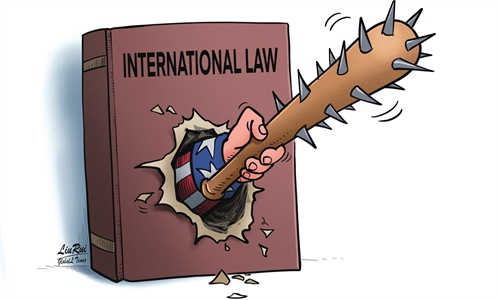
At the core of Europe's unease lies the question of method. The US action was perceived by several European countries as a departure from the multilateral frameworks traditionally favored. The absence of clearly identifiable international mechanisms and the unilateral nature of the operation raised concerns about respect for international legal norms. For a Europe that often defines itself as a normative power committed to international law, this situation creates a persistent tension between declared principles and strategic realities.
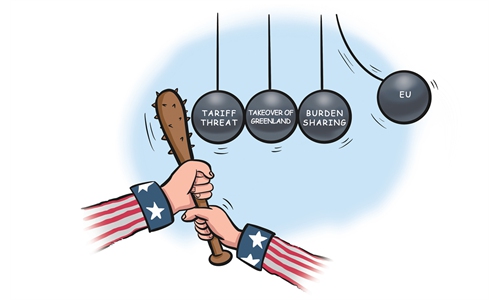
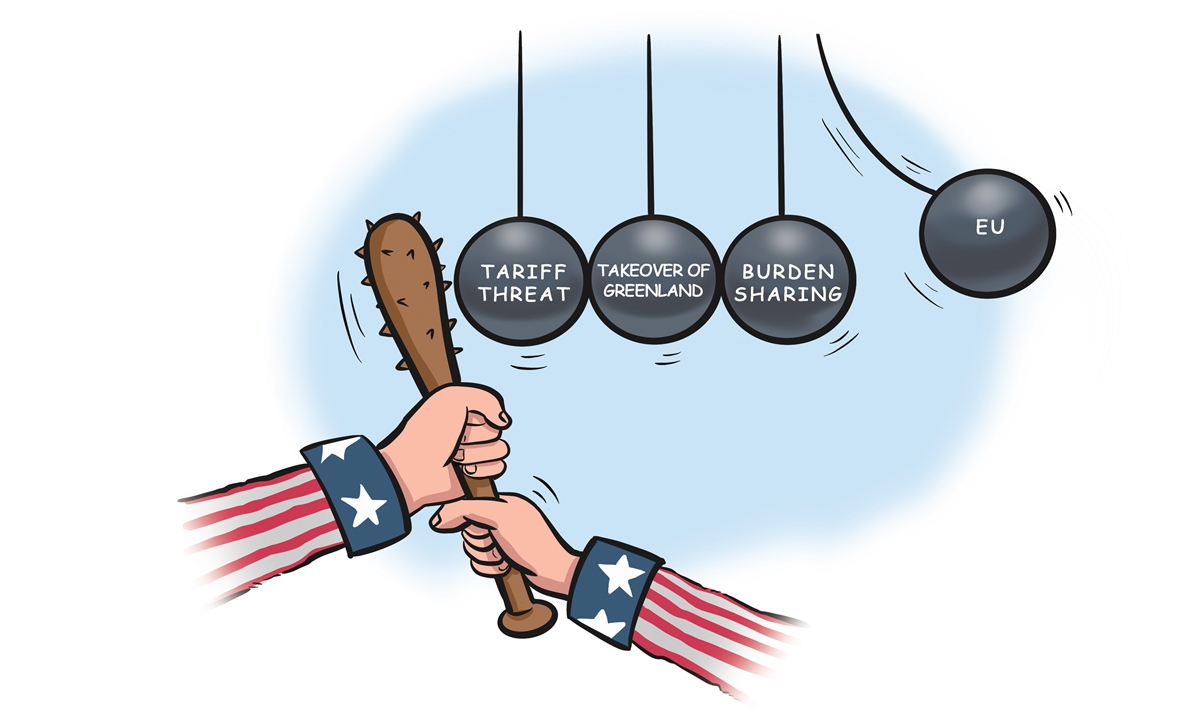
This discomfort has been reinforced by recent statements from Washington concerning Greenland, an autonomous territory belonging to the Kingdom of Denmark, a member state of NATO. Regardless of their practical implications, these remarks have revived unease in Europe by highlighting a strategic ambiguity: that of a central actor in the Atlantic Alliance, and a key guarantor of European security, publicly evoking options affecting a territory located at the heart of the Euro-Atlantic space. For several European countries, this episode underscores the ongoing tension between power politics, sovereignty frameworks, and the functioning of the alliance.
The transatlantic relationship itself remains deeply asymmetrical. European security largely depends on NATO, whose capabilities and strategic orientation continue to be dominated by the US. This structural dependence limits Europe's political room for maneuver when expressing reservations about initiatives taken by its principal security ally. This is not a hostile relationship, but an imbalance that complicates Europe's ability to articulate an autonomous and coherent position.
In this context, Venezuela goes beyond its regional framework to become a focal point for broader questions. For many European officials, the issue is not an isolated case, but one of precedents and methods. The debate is less about presumed intentions than about the long-term effects of exceptional practices that may weaken existing legal and multilateral frameworks.
How long, then, will Europe's caution and divisions over Venezuela persist? Most likely, as long as the EU has not clarified its common strategic posture. In the absence of a shared vision of its international role, Europe will continue to respond in a fragmented manner, oscillating between legal caution, transatlantic solidarity, and national sovereignty concerns.
Several trajectories remain possible. The first consists of maintaining a pragmatic approach, managing crises on a case-by-case basis, at the cost of persistent divisions but without challenging the existing security architecture. The second involves the gradual assertion of a more coherent European position, based on respect for international law, reliance on multilateral frameworks, and strengthened political coordination. This option implies neither rupture nor confrontation, but requires time and shared political will.
Ultimately, the Venezuelan crisis serves as a revealing moment for the current limits of Europe as a strategic actor. The challenge is neither automatic alignment nor systematic opposition, but Europe's capacity to transform strategic discomfort into political maturity in an increasingly unstable international environment.
The author is an expert in geopolitics and human geography from the University of Paris-VIII. opinion@globaltimes.com.cn
RELATED ARTICLES