China to weigh reasonable demands by Canada regarding canola seeds in wake of Carney’s visit
By and Zhang Weilan Published: Jan 23, 2026 12:02 AM

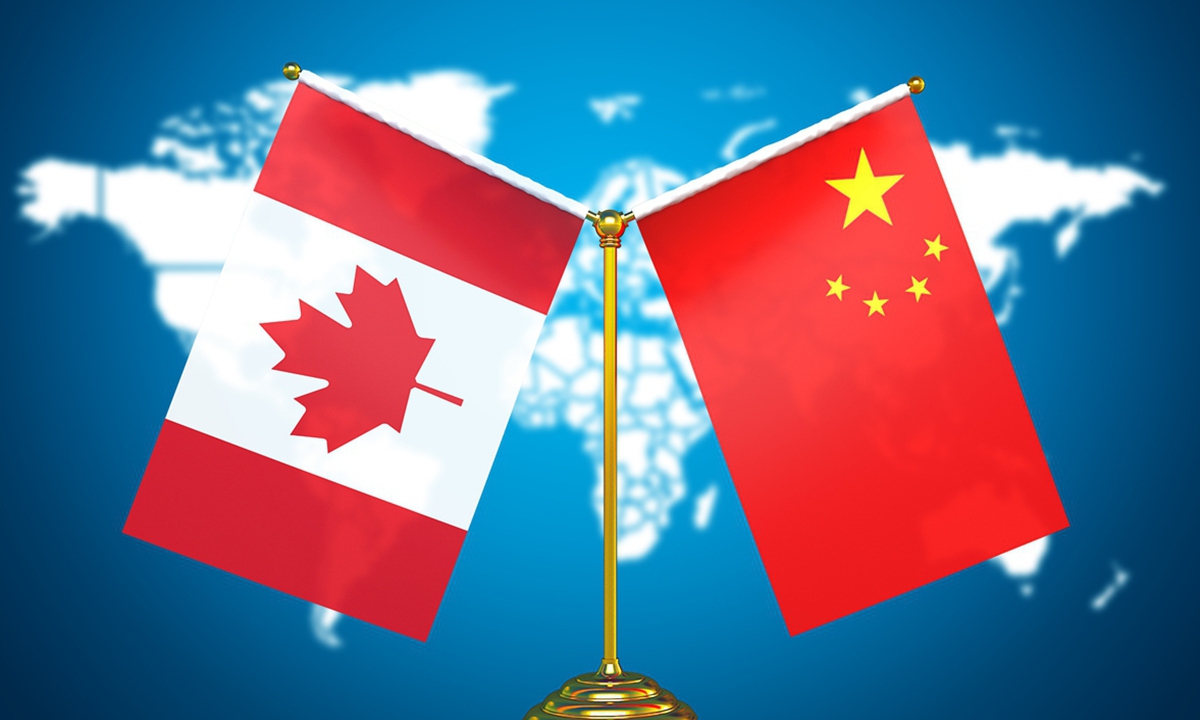
China and Canada Photo: VCG
With China's Ministry of Commerce (MOFCOM) saying that "China will fully consider Canada's reasonable demands within the framework of rules" regarding canola seeds, exports of Canadian beef to China reportedly resuming, and a federal court ruling allowing Chinese-owned social media app TikTok to continue to operate in Canada, more signs have emerged since Canadian Prime Minister Mark Carney's China visit last week that all point to a warming-up in bilateral economic and trade relations.
Observers noted that these developments indicate a fresh starting point for deepening China-Canada trade and economic cooperation, which is not only beneficial for both sides but also boosts the stability and growth of the global economy. While Canada is palpably recalibrating its trading relationship with China by shifting toward market-driven pragmatism, analysts also called on the Canadian government to take more concrete steps to strengthen this positive momentum, especially by removing discriminatory measures against Chinese enterprises.
In response to questions regarding the consensus reached between China and Canada on electric vehicles (EVs) and canola seeds, He Yongqian, a MOFCOM spokesperson, said on Thursday that according to the adjustment arrangement, Canada will grant China an annual quota of 49,000 EVs, with those within the quota enjoying the most-favored-nation tariff rate of 6.1 percent and no additional 100 percent tax. The quota will increase by a certain proportion each year. China believes that this is a positive step taken by Canada in the right direction and good news for makers of Chinese EVs aiming to explore the Canadian market.
Regarding canola seeds, China has always advocated resolving trade disputes through dialogue and consultation, said He.
"China will fully consider Canada's reasonable demands within the framework of rules and make a final ruling based on facts and evidence. It is believed that these measures will play a positive role in deepening relevant trade and industrial cooperation between China and Canada and enhancing the well-being of the people of both countries," the spokesperson said.
Canadian beef will be exported to China following the relaxation of an import suspension that had been in place since 2021, Reuters reported, citing Canadian Agriculture Minister Heath MacDonald.
"We know that there's a large company that's shipping its first load of beef to China next week," MacDonald was quoted by Reuters as saying.
He said in an earlier post on his X account that the reopening of the Chinese market would "support Canada's efforts to grow the economy, create jobs, and help Canadian producers and processors access new and expanding markets."
MacDonald told reporters in Ottawa that a Chinese importer had ordered 60,000 metric tons of canola seed, the Global News reported on Tuesday. "That's how quickly this whole process has taken place…When the door opened, it opened," MacDonald was quoted as saying in the report.
The Canadian Broadcasting Corp reported on Wednesday (local time) that Canada's federal court had overturned a government order to close Chinese-owned social media app TikTok's Canadian operations, allowing the short-form video app to continue operating for the time being.
Those reported moves came after Carney visited China last week, becoming the first Canadian prime minister visit to China since 2017. On January 15, China and Canada signed the China-Canada Economic and Trade Cooperation Roadmap, according to the MOFCOM, which analysts said lays a solid foundation for elevating bilateral economic ties.
Zhou Mi, a senior researcher at the Chinese Academy of International Trade and Economic Cooperation, told the Global Times on Thursday that the reported resumption of Canadian food exports to China, if confirmed, and the court overturning of the TikTok ban would mark another positive sign for bilateral ties and could be beneficial for both sides.
Zhang Hui, chairman of Ausca International Oils and Grains Co, based in South China's Hainan Province, told the Global Times on Thursday that the company has been closely following the situation and plans to increase procurement of Canadian canola in the first and second quarters, "to expand our international sourcing and enhance raw material diversification."
"Resuming imports of Canadian canola will enrich domestic raw material sources, stabilize price fluctuations, and strengthen supply chain resilience. Our company will seize this window to both satisfy domestic demand and actively pursue export opportunities," Zhang said.
China was once Canada's largest market for canola seeds and second-largest market for canola meal, according to a report by Northern Ontario Business. The Reuters report noted that China was Canada's fourth-largest beef market in 2021, before being suspended in December of that year.
Zhou noted that the recent warming in China-Canada cooperation highlights the strong economic complementarity of the two countries. This model of cooperation also demonstrates that respecting multilateral rules and adhering to the core principles of equality and mutual benefit remains a rational and widely preferred choice among major economies. "Such an approach fosters greater stability in the global economy and aligns with international trade norms and market expectations," he stressed.
He Weiwen, a senior fellow at the Center for China and Globalization, told the Global Times on Thursday that the US administration's policies toward Canada, including tariff measures, had seriously harmed Canada's national interests, prompting Canada to broaden cooperation with other countries, and China is an important partner.
"Whether it's the court overturning the TikTok ban or other related moves, the underlying logic is the same - replacing prior judgments with market facts and replacing 'small yard, high fences' protectionism with opportunities for cooperation," Zhou said.
He nevertheless pointed out that some restrictive and discriminatory measures imposed by the Canadian government targeting Chinese enterprises are still in place. "For example, the additional tariffs imposed on Chinese steel and aluminum imports are unreasonable. We expect more efforts from the Canadian side to address the Chinese side's concerns, enhance the momentum and expand the scope of collaboration," he added.
RELATED ARTICLES