China and UK will benefit world by stepping up exchanges and cooperation, says Chinese FM on Starmer's reported China trip
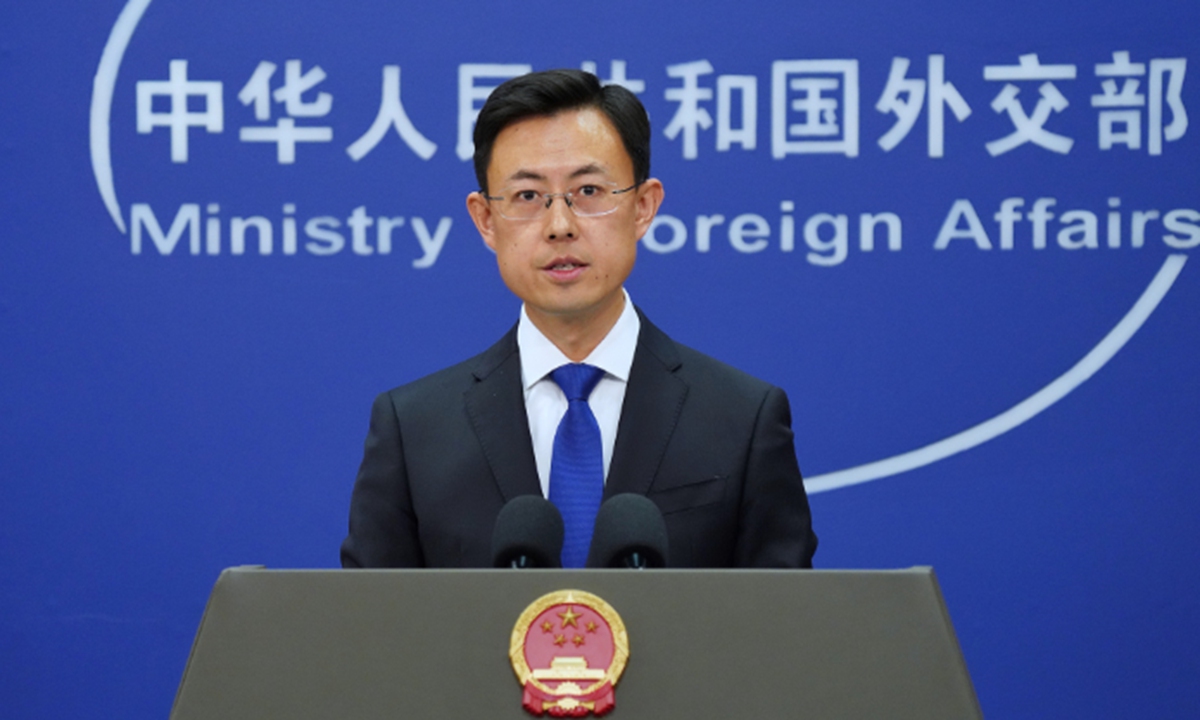
Chinese Foreign Ministry spokesperson Guo Jiakun
In response to a media inquiry about reports that UK Prime Minister Keir Starmer is set to visit China this week, Chinese Foreign Ministry spokesperson Guo Jiakun said on Tuesday that in a turbulent and volatile world, China and the UK, as permanent members of the UN Security Council, will benefit the world and the two countries themselves by stepping up exchanges and cooperation.
"On the visit you mentioned, information will be released in due course," Guo said.
Starmer will head to China and Japan late Tuesday, his spokesman confirmed, on what would be the first official visit to Beijing by a British premier since 2018, AFP reported. "He will depart for his travel to China and Japan on Tuesday night," the Downing Street spokesman told reporters on Monday.
The purpose of the trip is to drum up commercial deals, The Observer said on Sunday, noting that Starmer will be accompanied by the business secretary, Peter Kyle, the economic secretary to the Treasury, Lucy Rigby, and a business delegation including senior executives from companies including HSBC, Diageo, Octopus, Brompton and Jaguar Land Rover. Jonathan Powell, the prime minister's national security adviser, and Varun Chandra, his business guru, who has just been appointed special envoy to the US on trade, will also be part of Starmer's entourage.
As the Financial Times reported on Monday in a piece titled "Keir Starmer prepares for his Chinese charm offensive," the report said that British sectors joining the business delegation include life sciences, aerospace, financial services, the Big Four in accounting, and law firms.
"It's substantially important for businesses," said a senior business representative who requested anonymity to speak about the preparations. "In terms of conversation and talk, there's a step change under the new government," they said, arguing Labour had made swift progress since coming to office. Some firms "weren't able to engage with the Chinese government at all 12 months ago," they noted, as Politico reported.
Starmer's stance is clear. In a speech at the Lord Mayor's Banquet last month, he condemned the previous Conservative governments' colder approach toward Beijing as "staggering" and a "dereliction of duty."
Politico noted that UK-China relations cooled under Boris Johnson and his successors, as hawks within the Conservative Party pushed for a tougher line, citing so-called national security concerns and alleged human rights abuses. However, the report added that since taking office, Starmer has overseen closer engagement with Beijing, including several visits by high-profile Cabinet ministers seeking overseas investment to help boost Britain's growth.
Li Guanjie, a research fellow at the Shanghai Academy of Global Governance and Area Studies under Shanghai International Studies University, told the Global Times on Monday that the Starmer government is actively advancing cooperation with China as a key pathway to boost the UK's economy.
"Compared to the strict scrutiny on Chinese mergers, acquisitions, and investments under the previous Conservative administration, this visit could signal relaxation in certain areas or yield cooperation intentions, marking cooperation as the core element of official UK China policy," Li said.
While some media have focused on the pragmatic cooperation agenda and highlighted key initiatives such as the potential revival of a "golden era" business dialogue between the UK and China, some others have taken a contrasting tone, arguing that by "ignoring security threats," Starmer is "caving to China" and insisting that the Prime Minister "has to play it tough on China."
Commenting on these claims, Li said it is the pragmatic cooperation approach advocated by the UK's ruling Labour government under Starmer that truly shapes Britain's China policy, and that alarmist rhetoric in some outlets does not represent the core of government decision-making.
As Politico disclosed, the UK is actively pursuing several concrete outcomes in its talks with China, including a Memorandum of Understanding on services trade, mutual recognition of professional qualifications for accountants, designers, and architects, visa-free access for short-term business trips, relief on whisky tariffs, progress toward linking the London, Shanghai, and Shenzhen stock markets, and a key MoU between the FCA and China's NFRA to facilitate cross-border data sharing and supervision.
Li agreed that the next phase of China-UK cooperation will continue to prioritize trade and financial sectors. He also mentioned significant untapped potential in areas such as climate change, AI, pharmaceuticals, and automobiles — fields where British technological expertise aligns well with Chinese market demands—thereby injecting real momentum into bilateral relations rather than remaining at the level of rhetoric.
RELATED ARTICLES