China-Canada cooperation grounded in the complementary strengths, possesses strong endogenous momentum: Chinese ambassador to Canada tells GT
By Published: Jan 27, 2026 09:42 PM

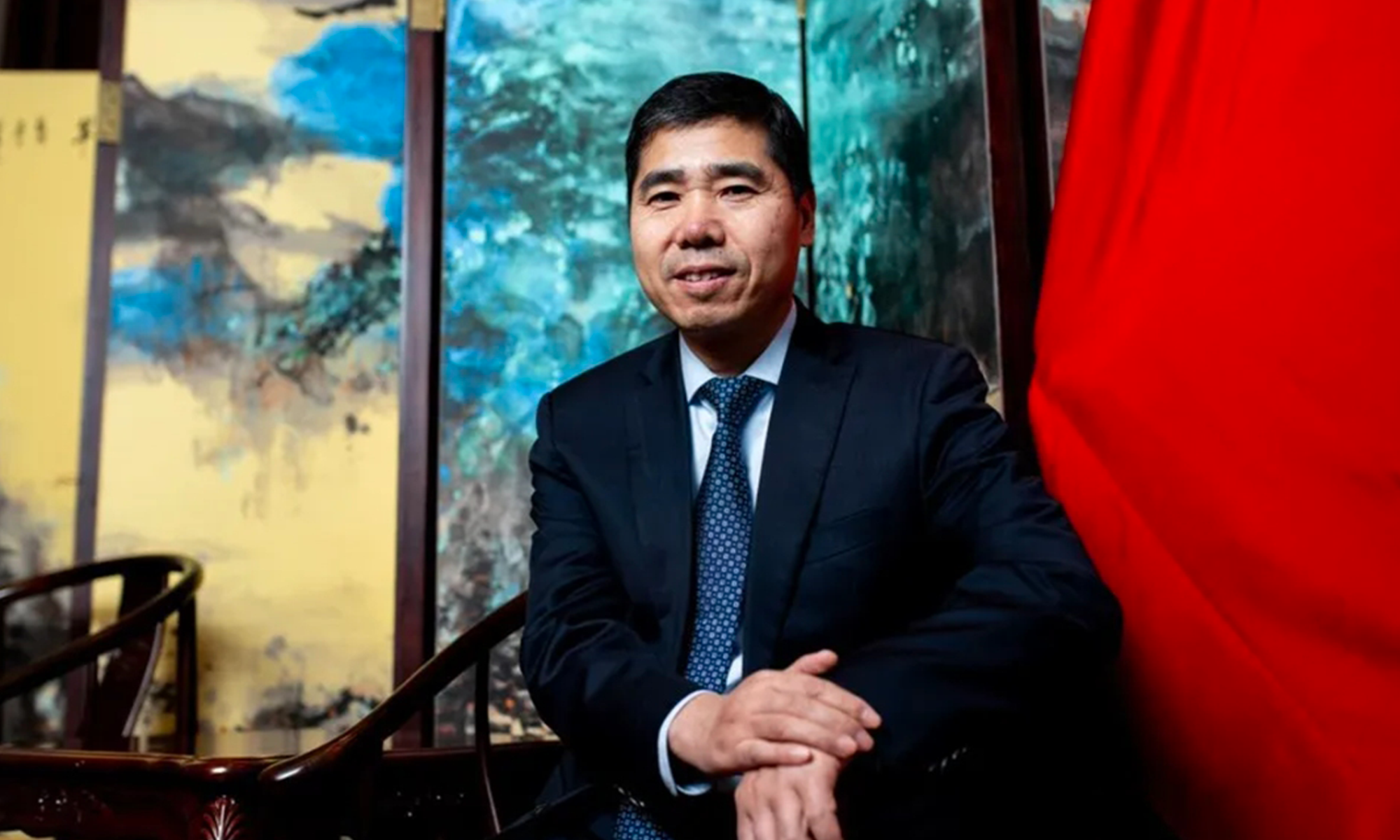
Chinese Ambassador to Canada Wang Di. Photo: Chinese Embassy in Canada
China-Canada cooperation is grounded in complementary strengths, has strong endogenous momentum, aligns with the common interests of both sides, and contributes to world peace and prosperity, Chinese Ambassador to Canada Wang Di told the Global Times in a written interview on Tuesday, following the recent official visit to China by Canadian Prime Minister Mark Carney.
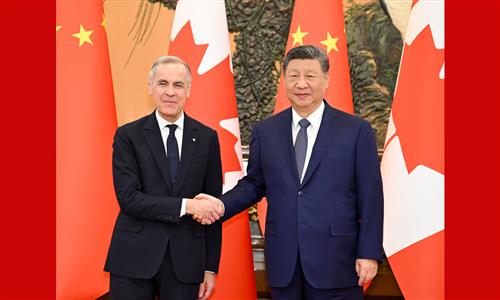
Regarding the significance of the two countries' latest high-level exchanges, Ambassador Wang said Carney's visit was the first China visit made by a Canadian Prime Minister in eight years. During the visit, the leaders of the two countries reached an important consensus on establishing a China-Canada new strategic partnership, providing strategic guidance and charting the course for the future development of bilateral relations in the new era.
He mentioned the signing of China-Canada joint statement and a series of cooperative documents during Carney's visit, which sent the positive signals in the fields of economy and trade, investment, finance, energy, agriculture, cultural and people-to-people exchanges, public security, and multilateral cooperation, have received broad welcome from all walks of life in the two countries.
As for the next step, the Chinese side will work with the Canadian side to promptly implement the important consensus reached by the leaders of the two countries, promote pragmatic cooperation across various domains, and steer bilateral relations onto a track of sound, stable, and sustainable development, delivering greater benefits to the peoples of both countries, Wang said.
During Carney's visit, the Canadian government announced that Canada will allow up to 49,000 Chinese electric vehicles (EVs) into the Canadian market, at a most-favored-nation tariff rate of 6.1 percent, which means removal of the additional 100 percent it imposed on Chinese EVs following the US move in 2024. In response to the Canadian side's announcement, an official from China's Ministry of Commerce (MOFCOM) said that China views this as a positive step taken by Canada in the right direction.
The ambassador noted that "there are no historical grievances or deep-seated conflicts of fundamental interests between China and Canada." Rather, the two countries "share broad common interests."
Wang noted that China, the world's largest trading nation with a massive market advantage, and Canada, rich in energy and mineral resources and built on trade, share strong complementarity in resources and industries. "This creates vast potential for cooperation in trade and other areas."
As long as both sides continue to move toward each other, enhance communication in a spirit of mutual understanding, mutual accommodation, and friendly consultation, appropriate solutions to issues can be found and barriers to bilateral cooperation can be eliminated, Wang stressed.
In a post on X Tuesday local time, Carney said the Canada-China relationship is "at its best" and "has created massive opportunities for both our peoples," amid pressure from a US threat to impose 100 percent tariffs on Canadian goods if the country strikes a trade deal with China.
In the statement released on January 16 by Canadian government during Carney's China visit, it said that Canada has set an ambitious goal of increasing exports to China by 50 percent by 2030. In October 2025, Carney has pledged to double the country's exports to non-US markets over the next decade to reduce its economic reliance on the US.
The China-Canada new strategic partnership offers Canada tremendous opportunities to achieve these goals. It will bring greater stability, certainty, and sustainability to both countries while delivering tangible benefits to the peoples of China and Canada, the ambassador said.
Ambassador Wang arrived in Ottawa in May 2024 to assume his duties as China's ambassador to Canada. He told the Global Times that since taking office, he has engaged in extensive exchanges with people from various sectors in Canada and has visited many regions across the country.
"My most prominent impression is that, as China-Canada relations continue to improve and bilateral exchanges gradually resume, the number of insightful individuals supporting the development of China-Canada relations is steadily increasing, calls for stronger cooperation between the two sides are growing louder, and perceptions of China across various sectors in Canada are becoming increasingly rational and pragmatic," Wang said.
This shift stems from the solid and friendly public opinion foundation between China and Canada, the mutually beneficial and win-win nature of China-Canada cooperation, and from the tangible benefits that China-Canada relations continue to deliver to the people of both countries, the ambassador said.
In the current context, as the international trade order faces disruptions and global challenges grow more acute, China and Canada—major influential actors in the Asia-Pacific region and globally, as well as committed champions of multilateralism and free trade—have both the responsibility and the imperative to enhance coordination and cooperation, jointly advance the improvement of global governance, and foster a more conducive external environment for the development of both nations, Wang said.
The ambassador said that as the China-Canada new strategic partnership continues to advance, with sustained progress in practical cooperation and people-to-people exchanges, mutual understanding and trust between the two sides will be further strengthened, and the broad consensus supporting China-Canada relations will be further consolidated.
"We also warmly welcome more Canadian friends to visit China, so they can gain a deeper, more authentic, multidimensional, and comprehensive understanding of the real China," he added.
RELATED ARTICLES