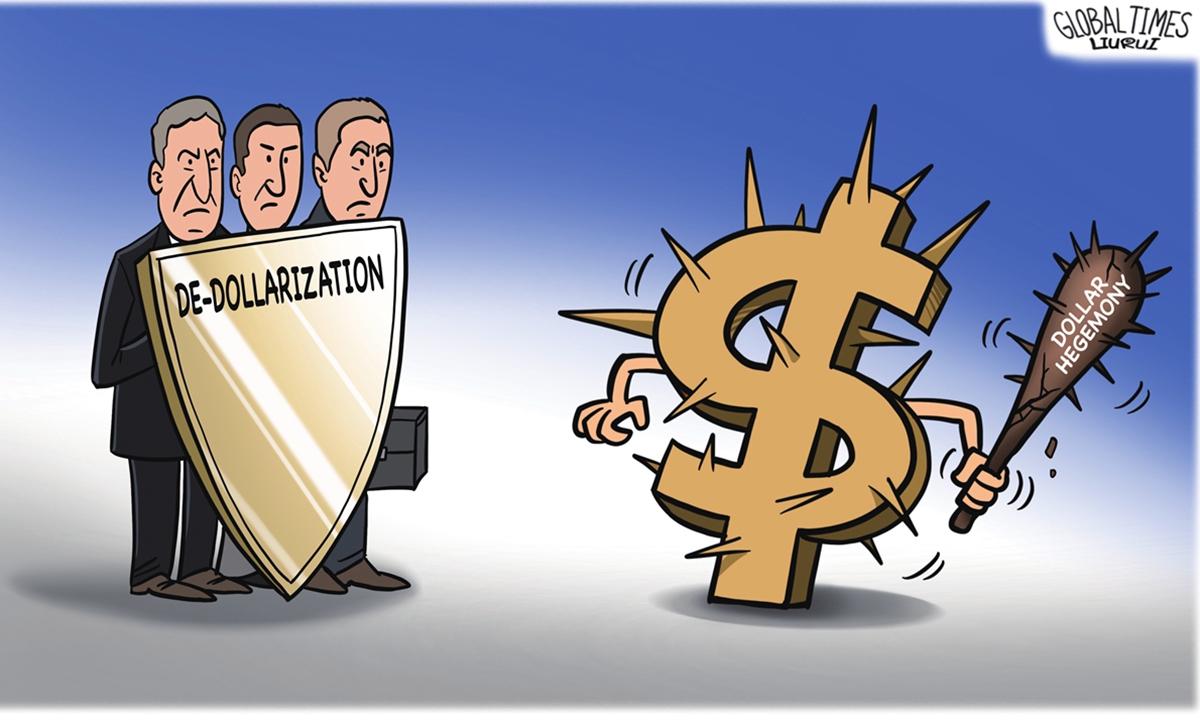
Crumbling dollar hegemony.Illustration: Liu Rui/GT
Few ideas in global finance generate as much anxiety as de-dollarization. To some Western observers, any attempt to reduce reliance on the US dollar is automatically framed as a political challenge to American power. Yet for much of the developing world, the conversation is far less ideological and far more practical.
The push to diversify global payment systems and promote the use of local currencies is not about confrontation; it is a response to economic realities that many countries have lived with for decades. The dominance of the dollar has long brought stability to global markets, but it has also created vulnerabilities. When global shocks occur - whether through financial crises, pandemics or geopolitical tensions - countries that rely heavily on the dollar often find themselves exposed to forces they cannot control.
Exchange rate volatility, rising debt servicing costs and capital flight tend to hit developing economies hardest. For them, the dollar is not just a currency; it is a source of risk. China's experience has shaped its perspective. As a major trading nation deeply embedded in global supply chains, it has seen how disruptions in dollar liquidity can ripple across economies. By encouraging trade settlements in local currencies and expanding alternative payment mechanisms, Beijing is advocating diversification, not abandonment. The aim is to reduce systemic fragility; similar to how investors spread risk rather than bet everything on a single asset.
For the Global South, this approach is appealing. Many countries conduct significant trade with China, but before transactions can occur, they must first convert local currencies into dollars. This adds costs, delays and exposure to exchange fluctuations. Local-currency trade arrangements, supported by China, offer a way to simplify transactions and retain more value within domestic economies. The motivation is efficiency, not ideology.
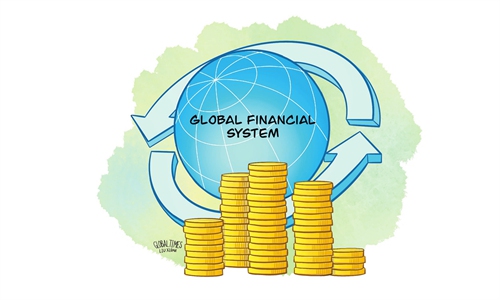
Sanctions have also reshaped the financial landscape. The increasing use of financial restrictions as a foreign policy tool has heightened awareness of how centralized the global financial system remains. Even countries with no direct involvement in geopolitical disputes have found themselves affected by secondary consequences. In this environment, China's call for diversified financial channels resonates as a form of insurance rather than defiance.
Critics often portray de-dollarization as destabilizing, and over-reliance on any single currency carries risks. A more plural financial system could distribute pressure more evenly and reduce the shockwaves that follow policy changes in one country. From this perspective, China's position aligns with long-term stability rather than disruption.
China has not sought to impose its currency on others. The internationalization of Renminbi has been gradual and largely demand-driven. Countries adopt it where it makes sense for trade and reserves, not because of political pressure. This cautious approach reflects an understanding that trust in currency is built over time, through consistent economic performance and credible institutions.
For developing economies, the debate is less about replacing the dollar and more about choice. Having options enhances resilience. It allows governments to manage debt more effectively, stabilize trade and plan with greater certainty. China's advocacy for a multipolar currency environment acknowledges these needs without forcing alignment.
In reality, de-dollarization is not a revolution, but an evolution. The dollar will remain central to global finance for the foreseeable future. What is changing is the recognition that the system works best when it is flexible enough to accommodate diversity. China's role in this shift reflects a pragmatic reading of global economics rather than a desire to upend it. Countries will continue to seek mechanisms that reduce vulnerability.
The author is a journalist and communications consultant based in Nairobi, Kenya. opinion@globaltimes.com.cn
RELATED ARTICLES