Argentine FM reportedly says trade deals with US do not exclude China; remarks show recognition of China’s vital role: expert
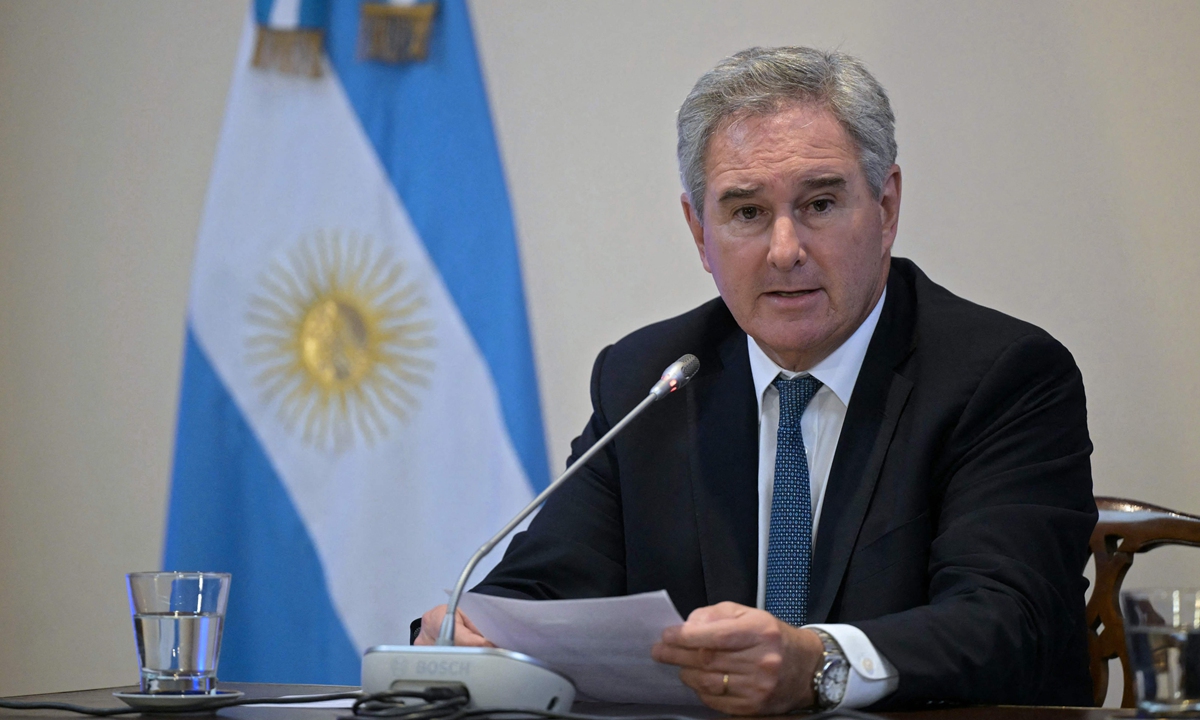
Argentine Foreign Minister Pablo Quirno File photo: VCG
Argentine Foreign Minister Pablo Quirno has said that a deal on critical minerals between Argentina and the US signed last week does not rule out Chinese investment in the country's mining sector, according to media reports. A Chinese expert said on Sunday that the remarks showed that Argentina clearly understands the vital role of China's open market in providing fair opportunities for countries and enterprises, including those in South America.
"This, as of today, does not imply that China cannot participate or will not participate in investments in Argentina. In fact, it has investments in Argentina, in minerals," Quirno was quoted by Reuters as saying.
The agreement between the Latin American country and the US was announced after a meeting of a group of countries in Washington last week where the US proposed a trading bloc for critical minerals, with the US establishing a system creating price floors for the commodities, according to Reuters.
Zhou Mi, a senior research fellow at the Chinese Academy of International Trade and Economic Cooperation, told the Global Times on Sunday that the latest remarks by the top Argentine official came as the US attempts to rally other countries to challenge China's long-held advantages in the field of critical minerals amid increasingly fierce competition in the global supply chain in the sector.
Argentina's statement indicates that the key minerals supply chain cooperation agreement signed with the US does not legally or contractually exclude Chinese participation in Argentina's mining sector, meaning that Chinese companies can continue operating and expand existing cooperation, Zhou said.
"In today's era of growing unilateralism and protectionism, the facts show that industrial cooperation must remain open and diversified, rather than politicized or exclusionary... Otherwise, it would not only undermine healthy industry development but also pose risks to global supply chain stability," Zhou noted.
Notably, at the recently concluded World Economic Forum in Davos, Argentine President Javier Milei said that his country does not have to choose between the US and China, according to the Telegraph.
"I want an open economy. And if you look at the weight of China in the world economy, you will understand that I need to trade with China," he told a Bloomberg event at a summit on Thursday.
The report cited him as saying that his responsibility was to act in the best interests of the 47.5 million Argentines. "My plan is to open up to the EU, to the US, to China... The US does trade with China. The way we see it, China is a great trading partner," per the report.
Zhou said that China has long accumulated deep technical and industrial expertise in the global minerals supply chain, particularly in investment and supply chain management for critical minerals such as lithium and copper.
China's long-term cooperation model covers capital investment, technical support, and localized industrial chain development, Zhou said, noting that this level of engagement not only improves project efficiency but also helps resource-rich countries enhance their industrial base and export capacity, which "sharply contrasts with mechanisms proposed by certain countries that focus solely on price floors and priority rights."
Last week, the US State Department also hosted the first so-called Critical Minerals Ministerial event, which was attended by countries and organizations including the UK, the EU, Japan, South Korea, Mexico, and Australia, according to US media reports.
Following the event, Washington claimed that it had signed bilateral critical minerals agreements with 11 countries. Negotiations were also completed with an additional 17 nations, CNBC claimed.
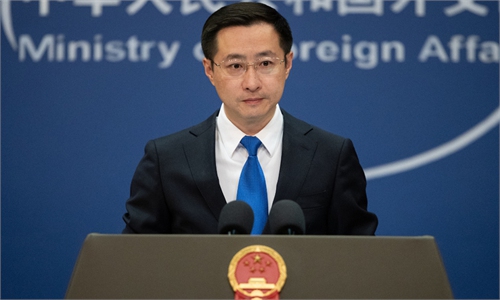
Asked to comment on reports that the US was creating a new critical mineral trading bloc and coordinating pricing floors, Lin Jian, a Chinese Foreign Ministry spokesperson, said on Thursday that China opposes any country setting up exclusive blocs to disrupt international economic and trade order.
Lin said that an open, inclusive international trade environment beneficial to all serves the common interests of all countries. All parties have the responsibility to play a constructive role in keeping the global industrial and supply chains for critical minerals stable and secure, the spokesperson said.
RELATED ARTICLES