Japan’ s LDP backs eased weapons exports proposal despite backlash, a pretext for military intervention and expansion: expert
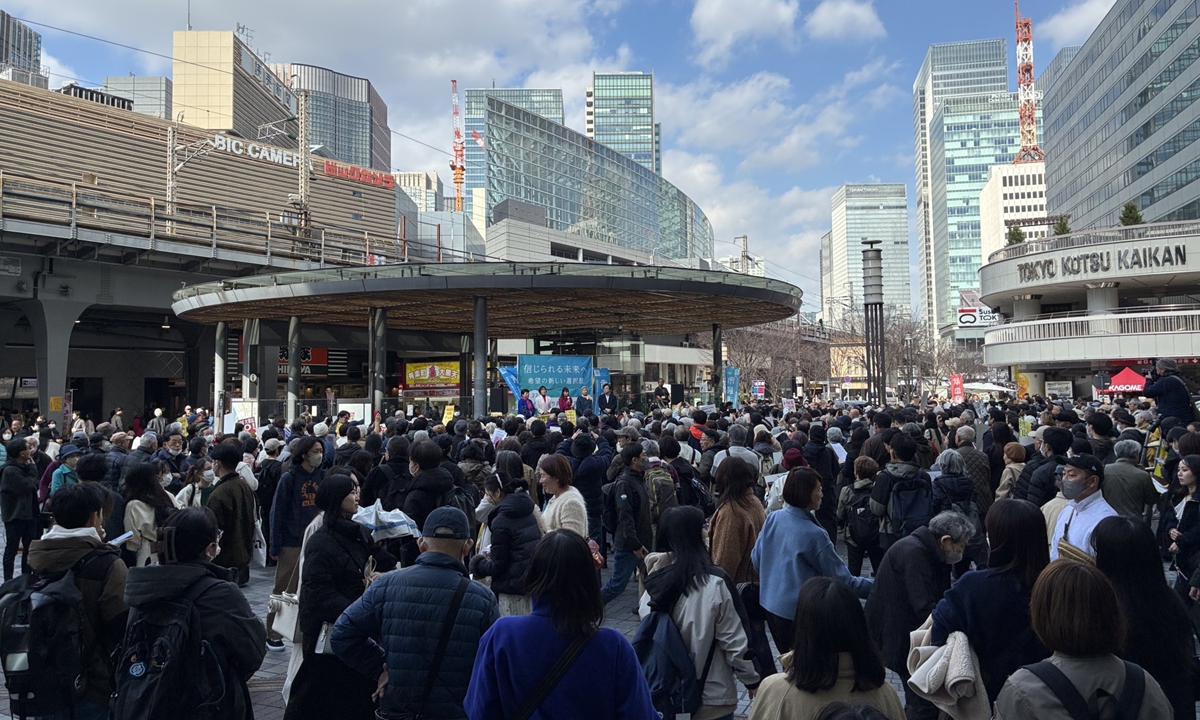
Representatives of Citizens' Alliance, the Japanese Communist Party, the Constitutional Democratic Party, the Social Democratic Party and the New Socialist Party hold a street rally and press conference in Tokyo, Japan, on February 22, opposing the Sanae Takaichi administration's push to revise Article 9 of the Constitution. Photo: Screenshot from website
Japan's ruling Liberal Democratic Party on Wednesday approved a draft proposal to ease restrictions on defense equipment exports, allowing in principle the shipment of weapons such as fighter jets and destroyers, including to countries engaged in active conflict under so-called "special circumstances," Kyodo News reported.
Regarding the proposal that has long faced domestic opposition, a Chinese expert noted on Wednesday that by placing arms export approvals under political discretion, Sanae Takaichi administration's claim of "security necessity" is merely a pretext for intervening in regional conflicts and pursuing defense industry interests, exposing ambitions to revitalize Japan's military-industrial base and expand its overseas military influence.
Based on the proposal, the government plans to revise the operational guidelines of the Three Principles on Transfer of Defense Equipment and Technology as early as this spring, abolishing the current "five categories" framework that limits exports to non-combat purposes.
More ironically, the proposal also leaves a so-called exception, creating a potential loophole for future arms exports to countries at war: while exports to countries engaged in combat would in principle be prohibited, exceptions could be made "in cases where special circumstances exist, taking into consideration Japan's security needs."
Voices of opposition had already emerged in Japan during the proposal' s deliberation stage. On February 22, representatives of Citizens' Alliance, the Japanese Communist Party, the Constitutional Democratic Party, the Social Democratic Party and the New Socialist Party held a street rally and press conference in Tokyo, opposing the Sanae Takaichi administration' s push to revise Article 9 of the Constitution,enact an anti-espionage law, and expand arms exports. Article 9 prohibits Japan from waging war and maintaining military forces, and the administration's move to ease arms export restrictions has been widely criticized as violating this core principle of the pacifist constitution.
They called for the resignation of the Takaichi administration, and asked rhetorically: even among Takaichi's supporters, how many truly want to change the constitution, pursue a militaristic path, export weapons and become a nation of merchants of death, or become a nuclear-armed country?
The Japanese Communist Party voiced fierce criticism. In its January 2026 party policy document ("85: arms exports"), under the heading "We will not let Japan fall into a 'merchant of death' state," the party repeatedly criticized the Takaichi administration and the Liberal Democratic Party, accusing them of "paving the way for unlimited exports of lethal weapons" and abandoning the ideal of a pacifist nation.
Kyodo News also noted in the Wednesday report that opposition parties argue that the proposal would allow exports to countries engaged in combat based on political judgment and called for cautious deliberation.
Xiang Haoyu, a distinguished research fellow at the China Institute of International Studies, told the Global Times on Wednesday that the Takaichi administration's push to ease arms export restrictions and lift the ban on lethal weapons not only abandons Japan's pacifist constitution and overturns its postwar peace path, but also turns the country into a disruptor of global stability.
"By seeking profit from weapons exports while pretending to promote regional security, Japan exposes its hypocrisy and selfishness," the expert stressed.
Looking back at history, Japan's status as a defeated country in World War II was conclusively established. "History shows that profiting from arms exports and seeking security through military expansion only backfires. If Japan defies the tide of peace, it will pay a heavy price and face international opposition," Xiang added.
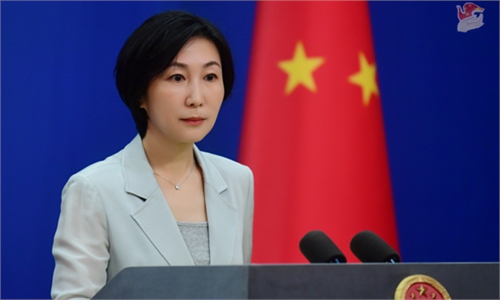
Japan's quickened remilitarization threatens regional peace and stability and has put the international community and regional countries on high alert, Chinese Foreign Ministry spokesperson Lin Jian said on February 3, when asked to comment on Russian Federation Security Council member Sergei Shoigu's statement that Russia firmly opposes Japan's attempts to accelerate remilitarization.
Regarding Japan' s faster moves to remilitarize itself, some basic facts need to be stressed, Lin said, noting that Japan has accelerated its military buildup. Japan' s defense budget has increased for 14 consecutive years up by over 60 percent in the past five years, reaching US$58 billion. The defense expenditure accounts for two percent of GDP. Japan has kept advancing the conversion of its frigates into aircraft carriers, developed and purchased intermediate-range missiles with a range of over 1,000 km, and built a combat system covering land, sea, aerial, space, cyber and electromagnetic domains. In 2025, Japan exported Patriot missiles and frigates for the first time and broke through the restrictions on deadly weapons exports. Japanese officials even clamored for the possession of nuclear weapons and sought to revise the three Non-Nuclear Principles, said Lin.
"These facts demonstrate that Japan has been pushing for remilitarization with an actual roadmap and concrete steps. The lessons of the history are still fresh in memory. China and all other peace-loving countries must jointly reject the Japanese right-wing forces' ambitions to remilitarize Japan and defend the outcomes of the WWII victory and hard-won peace in the world," the spokesperson stressed.
RELATED ARTICLES