IN-DEPTH / IN-DEPTH
The strength of China’s system ‘lies not only in central planning, but in the quality and commitment of its officials at local level’: Argentine diplomat
Deeds done and seen
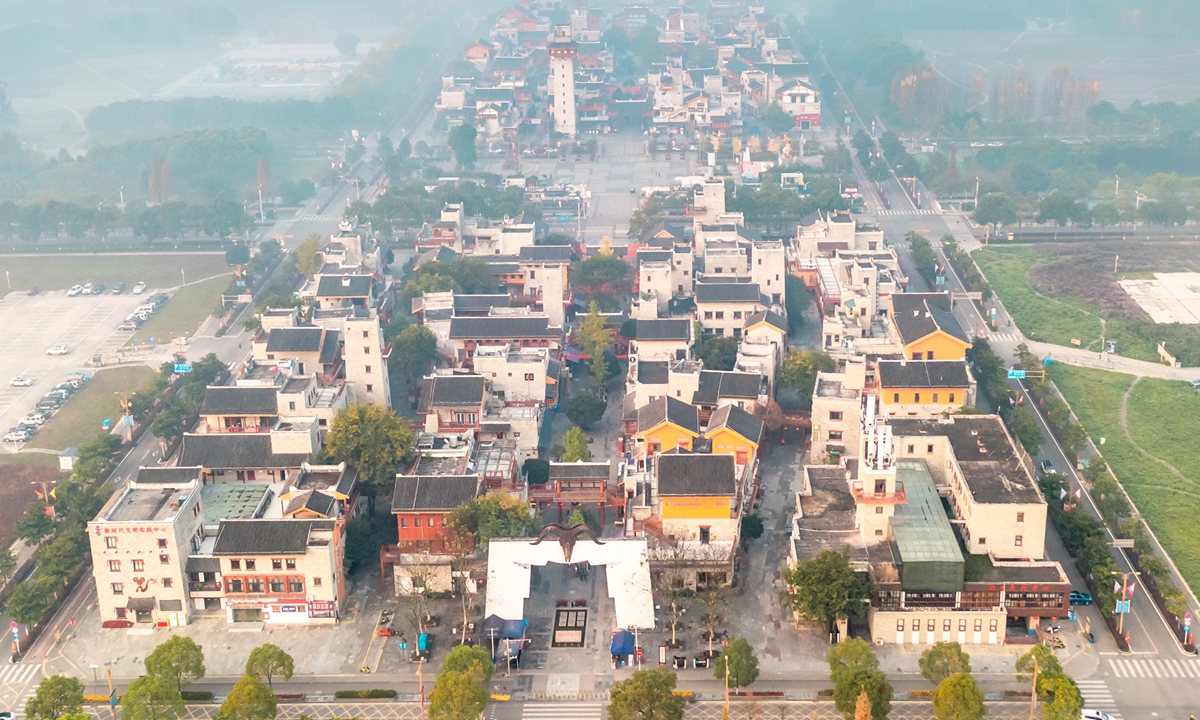
A view of the Beichuan Qiang Autonomous County, Southwest China's Sichuan Province Photo: VCG
Editor's Note:Chinese President Xi Jinping has pointed out, "to understand China today, one must learn to understand the Communist Party of China (CPC)." With the rapid development of China's economy and society, and the steady advancement of the Chinese path to modernization, the notable achievements of the CPC have drawn extensive international attention and scholarly interest. Against this backdrop, the Global Times has launched the "CPC in Global Eyes" column, focusing on the feelings, perspectives, and insights of international friends from various fields regarding the CPC's historical path and achievements.
They include those who have toured China; deeply study the CPC in academic fields; work, live, study, or do business in various fields in China; and who, though they have not visited China in person, pay close attention to the CPC's policies and developments. Through their vivid personal experiences, we aim to present a multifaceted overseas view of the CPC.
In the seventh installment of this series, we interviewed former Argentine ambassador to China, Sabino Vaca Narvaja, who has traveled extensively across vast regions of China's rural areas and held discussions with grass-roots officials as well as local villagers. He shared with the Global Times how these encounters helped him understand the "nailing spirit" of "carrying the blueprint through to the end" and his perspective on the significance of the ongoing education campaign to guide CPC members, especially officials, in establishing and practicing a correct understanding of what it means to perform well.
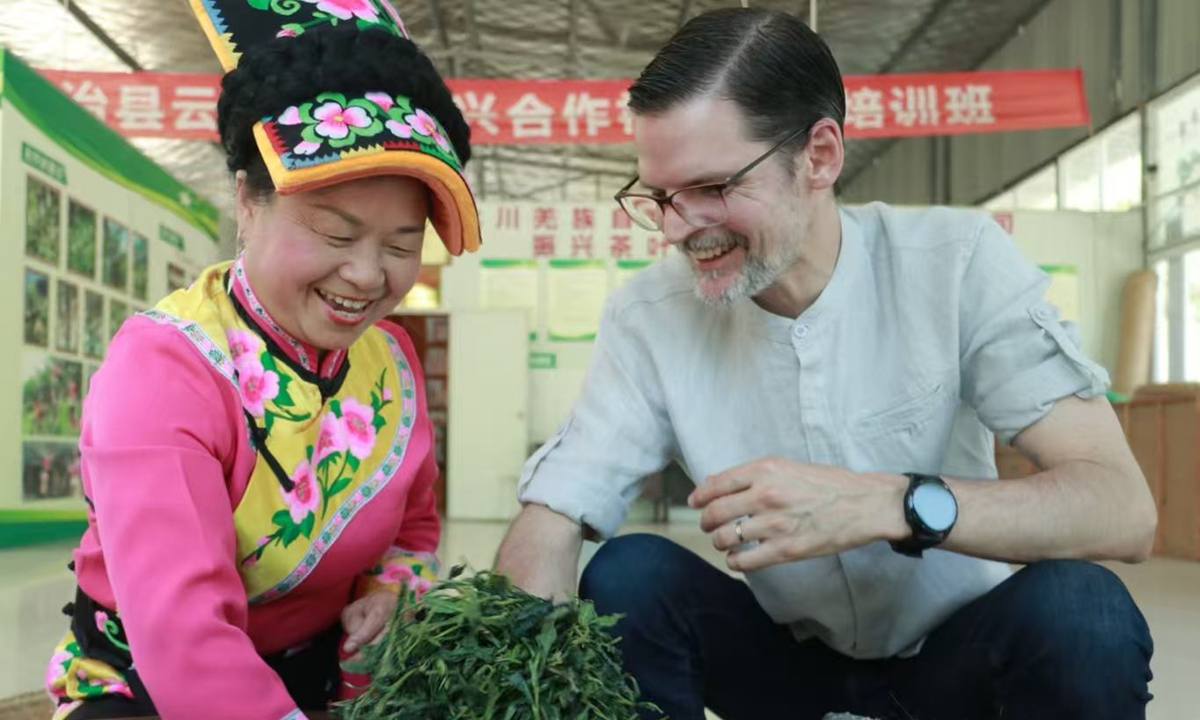
Sabino Vaca Narvaja talks to a woman of the Qiang ethnic group in Beichuan Qiang Autonomous County, Southwest China's Sichuan Province, in 2022. Photo: Courtesy of Narvaja
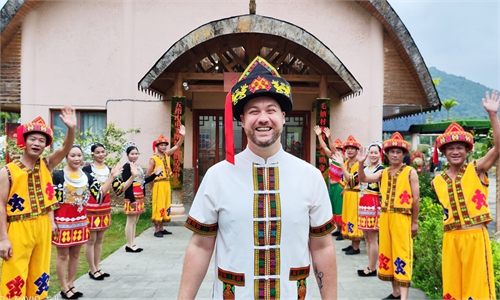
The air in Tianba village in Beichuan Qiang Autonomous County, Southwest China's Sichuan Province, carries the crisp scent of pine and earth, a reminder of the rugged mountains that cradle this village. When Sabino Vaca Narvaja, former Argentine ambassador to China, first set foot in the village, the land beneath his feet, as he put it, felt like a bridge between catastrophe and rebirth.It was here, in a place once shattered by the 8.0-magnitude earthquake in 2008, that Narvaja encountered not ruins, but a living mosaic of rebuilt homes, winding roads, and verdant fields. "What I felt most strongly was the profound sense of resilience," he recalled to the Global Times his first impression of the village back in 2022. Villagers tended to crops under mountain peaks, while children played in newly constructed schools with the hum of daily life echoing against the hills.
This vitality is no accident. This wasn't just reconstruction; it was a deliberate act of renewal, emblematic of what Narvaja calls the way grass-roots officials practice "a correct understanding of what it means to perform well." This represents a governance philosophy that measures success not in grand pronouncements, but in tangible, sustained improvements for ordinary people, he said.
What he observed in Beichuan, as the Argentine diplomat pointed out, also demonstrates one of the core elements of the correct view of political achievement: Carrying the blueprint through to the end.
Recently, the General Office of the Communist Party of China (CPC) Central Committee issued a circular to launch a Party-wide campaign, running from February to July, to guide CPC members, especially officials, in establishing and practicing a correct understanding of what it means to perform well. The campaign will emphasize guiding CPC members to maintain a people-centered approach and take concrete action to meet public needs, the Xinhua News Agency reported.
"Over the past decade, I have witnessed a profound evolution in China's governance model: A transition from growth-centered metrics toward a people-centered development paradigm grounded in tangible outcomes. Through my travels in China, I observed that this principle is not rhetorical but deeply operational," Narvaja told the Global Times.
Beichuan: Story of rebirth
Beichuan Qiang Autonomous County is located in the northwest of the Sichuan Basin and is the only Qiang autonomous county in the country.
One afternoon, amid the Tianba village's terraced landscapes, Narvaja sat with a grass-roots village official whose hands bore the calluses of years spent in the fields and boardrooms alike. The man, deeply embedded in the community's fabric, recounted the painstaking process of rebuilding after the quake. He spoke of knowing every family by name - the elderly widow who now had a sturdy home, or the young couple who stayed to start a tourism venture rather than migrate to the cities.
"He knew every family, every senior resident, and every young person who had decided to stay," Narvaja told the Global Times, painting a picture of village leadership not as a distant directive but as a daily presence.
Later, over steaming cups of tea in a local people's modest home, Narvaja listened as villagers shared stories of transformation. The Qiang ethnic group, with their embroidered robes and ancient traditions, described to him how their lives had evolved: Earthquake-ravaged huts replaced by earthquake-resistant houses, schools equipped with modern classrooms, and new livelihoods in rural tourism that wove their cultural heritage into economic opportunity. One woman, her face weathered by the sun, gestured to a loom in the corner where she crafted traditional textiles that were now sold to visitors.
"What moved me most was their pride," Narvaja reflected, "not only in the improvements in their living conditions, but in the preservation of their traditions and culture."
Beichuan county was once plunged into poverty due to disaster devastation and geographical constraints. In 2014, the county identified 93 registered impoverished villages, 6,929 impoverished households, and 20,384 impoverished people, with a poverty incidence rate of 14.08 percent, according to local newspaper Mianyang Daily.
Now leveraging local resources, Beichuan has implemented an innovative "government support + enterprise operation + resource integration" tripartite development model. This approach effectively activated rural resource elements and provided new ideas for revitalization and development in mountainous areas. According to the local government website, from January to May 2025, it achieved revenue of 1 million yuan ($144,980), representing an 18 percent year-on-year increase. It has also hosted multiple study-tour groups, boosting tea sales in villages.
Policies treated 'like complex systems'
Narvaja traversed China's regions extensively, from the misty highlands of Southwest China's Guizhou Province to the plateaus of Northwest China's Qinghai Province. Drawing from his travels across provinces like Sichuan, Yunnan, and Hebei, he observes that what is important is a rigorous system where CPC members undergo dual training in technical fields like engineering and sciences, alongside Marxist theory and public ethics. The outcome? As Narvaja put it, leaders who are "both technically capable and socially oriented," fostering a culture of precise planning and execution.
Central to this is the "nailing spirit" - a term he uses to describe the dogged persistence of officials in hammering policies into reality, much like driving a nail until it's firmly set. It's the practical manifestation of carrying a blueprint through to the end, ensuring that grand visions don't fade, but endure through iteration and adjustment, according to him.
In Beichuan county, this spirit was evident in the local officials' unwavering follow-through: Projects weren't abandoned after ribbon-cuttings but monitored and refined, from initial quake recovery to integrating digital tools for sustainable farming.
Narvaja told the Global Times that he saw similar tenacity in Guizhou's remote villages, where county-level officials, often with engineering backgrounds, oversaw the construction of roads that linked isolated hamlets to markets. "They were present on the ground, ensuring that projects were not only launched, but completed and sustained," he said, recalling dusty construction sites where officials rolled up sleeves alongside workers, troubleshooting delays in real time.
In Yunnan, amid lush tea plantations, he witnessed this hands-on approach in action. Local directors adapted poverty alleviation strategies to cultural contexts, promoting agro-ecology and handicrafts rather than one-size-fits-all models.
One visit took him to a cooperative where villagers, guided by a CPC official, had transformed a barren hillside into a thriving eco-tourism spot. The official, a former engineer, explained how they incorporated local knowledge - indigenous planting techniques blended with modern irrigation - to address immediate needs like income generation while building long-term sustainability through renewable energy systems.
"Policies are treated almost like complex systems that must be tested, refined, and optimized," Narvaja noted, highlighting how this iterative mindset turns central directives into lasting change.
Building a bridge of understanding
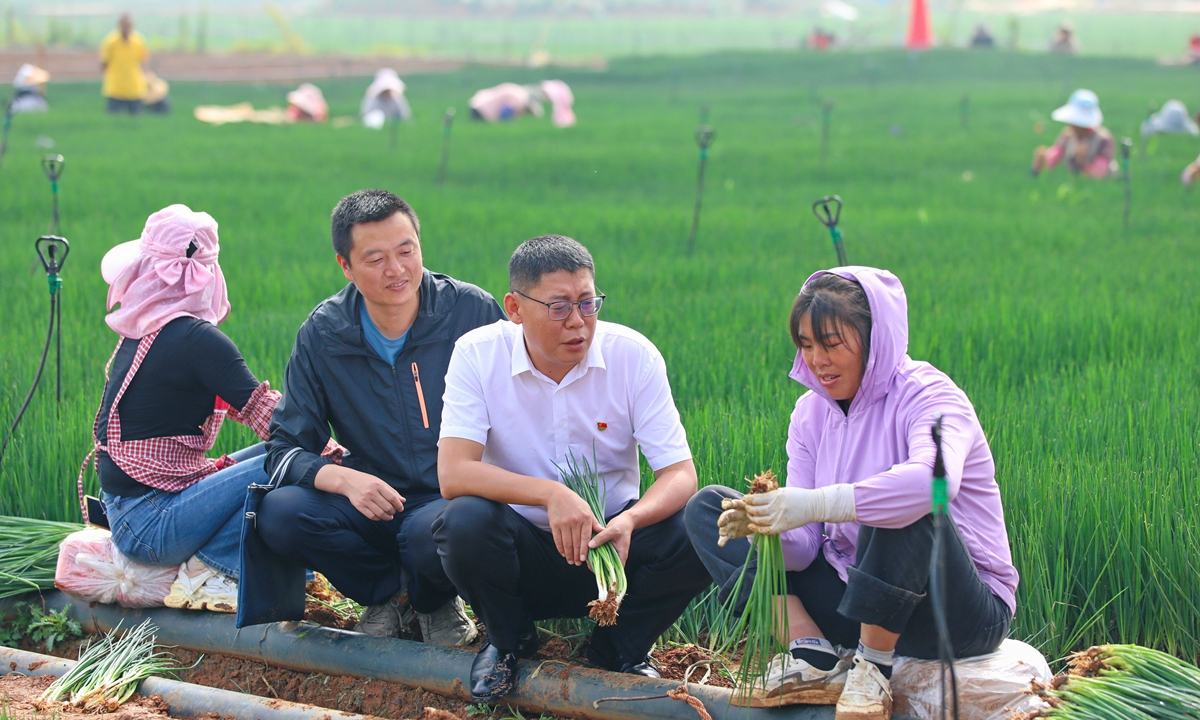
Discipline inspection and supervision officials from Luliang County visit local residents in Damogu Township, Southwest China's Yunnan Province, to learn about the implementation of farmer-benefiting policies and the work style of village officials on August 1, 2025. Photo: VCG
What impressed the seasoned diplomat from a region long plagued by political volatility most, according to him, was the stark contrast between his visits and close encounters in China and the development models prevalent in Latin America. In Argentina and neighboring countries, he pointed out, many strategies often falter due to electoral cycles that disrupt continuity. "Development strategies [in Latin America] are often interrupted by political cycles, which weaken implementation," he observed.During high-level delegations and solo grass-roots trips, Narvaja saw China's edge in its "highly trained and disciplined cadre base," where advancement hinges on proven results and experience, not just credentials. For Argentine policymakers, he believed the lesson is clear: Invest in continuous training for officials, linking promotions to measurable public service outcomes.
In Qinghai's high-altitude pastures, he met officials who lived among Tibetan herders, blending technical expertise with cultural sensitivity to enhance livelihoods without eroding traditions. "The strength of China's system lies not only in central planning, but in the quality and commitment of its officials at the local level," he said.
However, challenges persist. Narvaja acknowledged that such challenges include guarding against bureaucratic inertia in a vast system.
From an international vantage point, Narvaja views China's model as a blueprint for global governance, especially for developing nations. "It demonstrates that modernization can be both efficient and inclusive," he said, pointing to initiatives like the Belt and Road Initiative as extensions of this philosophy - shared development rooted in mutual progress.
As China gears up for its 15th Five-Year Plan starting in 2026, Narvaja sees the ongoing campaign against empty formalities as pivotal. By reinforcing a "correct performance outlook," it ensures modernization stays people-centered, preparing the ground for innovations in AI, quantum computing, and green energy, he said.
Narvaja has produced a documentary showing stories from Beichuan and shared them with audiences in Argentina through media platforms and cultural exchanges. Many Argentines are familiar with China's economic rise, but what they rarely see is the human dimension of that transformation at the local level. The documentary allowed them to see the faces, voices, and everyday experiences of villagers and grass-roots leaders who are part of this process. What touched Argentine audiences most was the authenticity of the stories.
"Many viewers told me that they were surprised by the level of organization and dedication shown by local leaders who work closely with villagers to improve their living conditions," he said.
For Narvaja, the most important result of sharing this documentary was that it helped build a bridge of understanding between two distant societies. "Through these stories, Argentine audiences could see that development is ultimately about people: about communities rebuilding their lives, about leaders committed to serving the public, and about the hope of future generations. The experience of Beichuan shows that when leadership is rooted in society and guided by the principle of serving the people, transformation becomes something tangible in everyday life," he said.
RELATED ARTICLES