Wang Shuang, an NPC deputy and chairwoman of Kaifeng Millennium City Park Co., Ltd. Photo: Courtesy of Wang Shuang
As China's economy shifts from robust recovery to high-quality development, the cultural tourism industry is poised for a significant transformation in 2026. This year marks a critical juncture for the sector to leap from scale recovery to quality advancement, said Wang Shuang, a deputy to the 14th National People's Congress (NPC) and chairwoman of Kaifeng Millennium City Park Co., Ltd. in Central China's Henan Province.
Wang's remarks come as the 14th National People's Congress holds its fourth session, with spokesman Lou Qinjian emphasizing the strategic focus on expanding domestic demand and boosting consumption at a press briefing. The Recommendations of the Central Committee of the Communist Party of China (CPC) for Formulating the 15th Five-Year Plan for National Economic and Social Development explicitly advocate for "boosting China's tourism sector, developing a broader range of high-grade tourism products and improving the quality of tourism services."
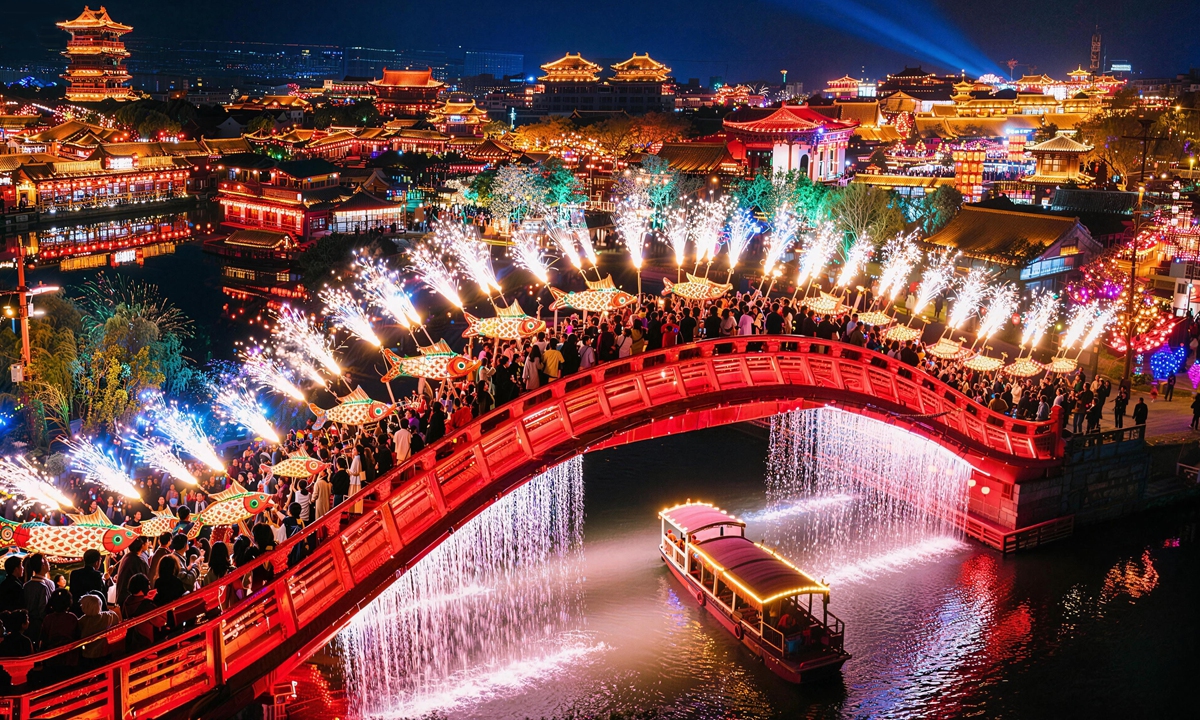
Kaifeng's Millennium City Park Photo: Courtesy of the Millennium City Park
A veteran cultural tourism operator, Wang underscored the sector's crucial role in driving domestic demand, citing its long industrial chain, strong driving force, and significant multiplier effect. "Fostering new consumption growth drivers through tourism has become a shared vision at both national and industrial levels," she noted.
Despite rapid progress, the industry faces mounting challenges, Wang pointed out. Many enterprises still grapple with capital shortages and financing difficulties, leading to weaker investment and project delays. Concurrently, while market demand is increasingly personalized and quality-oriented, some regions still face problems such as oversimplified and homogenous service offerings, as well as inadequate management and service standards, creating a supply-demand mismatch. Furthermore, the sector faces multiple challenges, including a lagging legal and regulatory system and a lack of institutional constraints for new business forms and emerging issues.
To tackle these hurdles, Wang put forth a set of concrete proposals during the two sessions. She called for targeted tax incentives to invigorate market entities, and deeper capital market reforms to broaden financing channels for cultural tourism enterprises. Additionally, she suggested clarifying rules for "unregulated tourism" behaviors and rescue responsibilities to ensure safety and accountability. Wang also advocated for stronger standardization for integrating intangible cultural heritage with tourism to better protect and utilize cultural resources. These proposals aim to promote high-quality development in cultural tourism, enabling the sector to overcome involution (excessive competition) and forge new development paths.
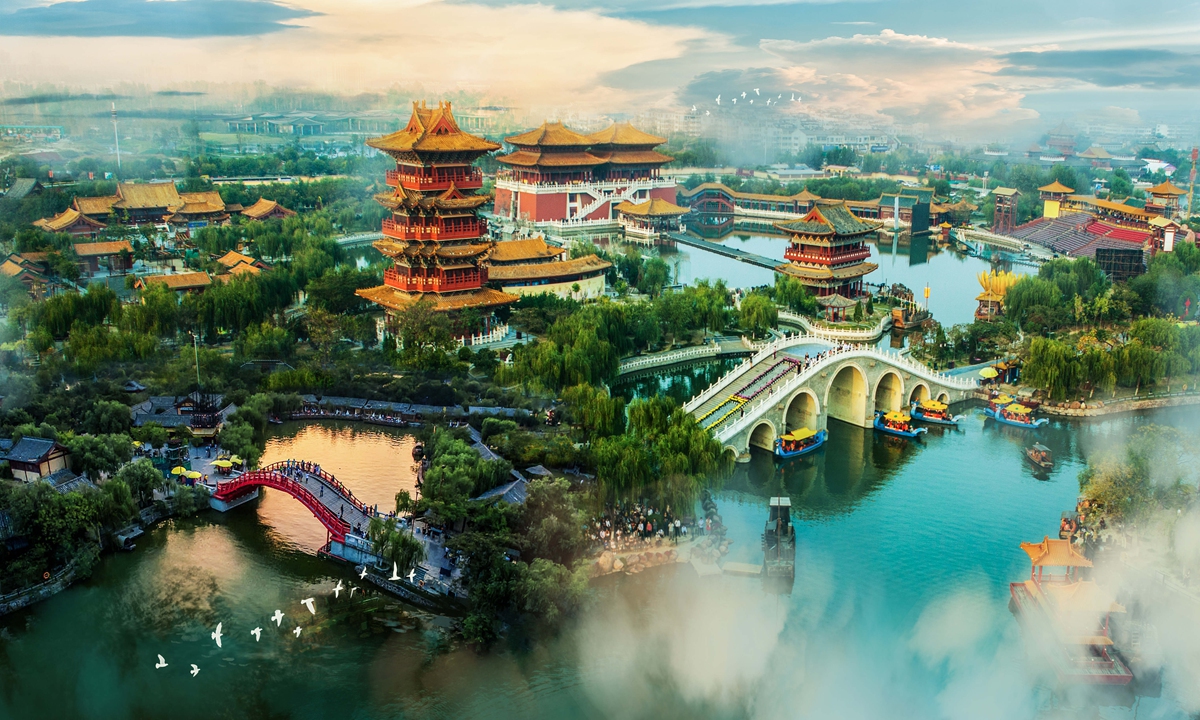
Kaifeng's Millennium City Park Photo: Courtesy of the Millennium City Park
"The year 2026 is a critical year for the cultural tourism industry to transition from scale recovery to quality improvement," Wang reiterated. "Only by pursuing a two‑wheel drive with policy innovation as the guidance and market dynamics as the core, by precisely tackling the three core industry bottlenecks - segmented consumption versus lagging supply, restructured investment logic versus inadequate efficiency, and industrial transformation amid development pressure, and by fully delivering a package of policies including targeted tax incentives, capital market liberalization, and institutional innovation to reduce unhealthy competition can we advance the industry into a new stage of development centered on quality, innovation, and value."
Wang's company, Millennium City Park, stands as a fine example of successful cultural tourism development. Located in Kaifeng, the ancient capital of eight dynasties, the park recreates the historical and cultural landscape of the Song Dynasty based on the renowned painting Along the River During the Qingming Festival. It features a rich variety of performances, among which the large‑scale outdoor water show The Great Song Dynasty-Reminiscences of the Eastern Capital is extremely popular and regularly sells out. Highly favored by both domestic and international tourists, the scenic area ranks among China's top cultural tourism attractions, with visitor numbers repeatedly hitting new highs.
RELATED ARTICLES