Illustration: Chen Xia/GT
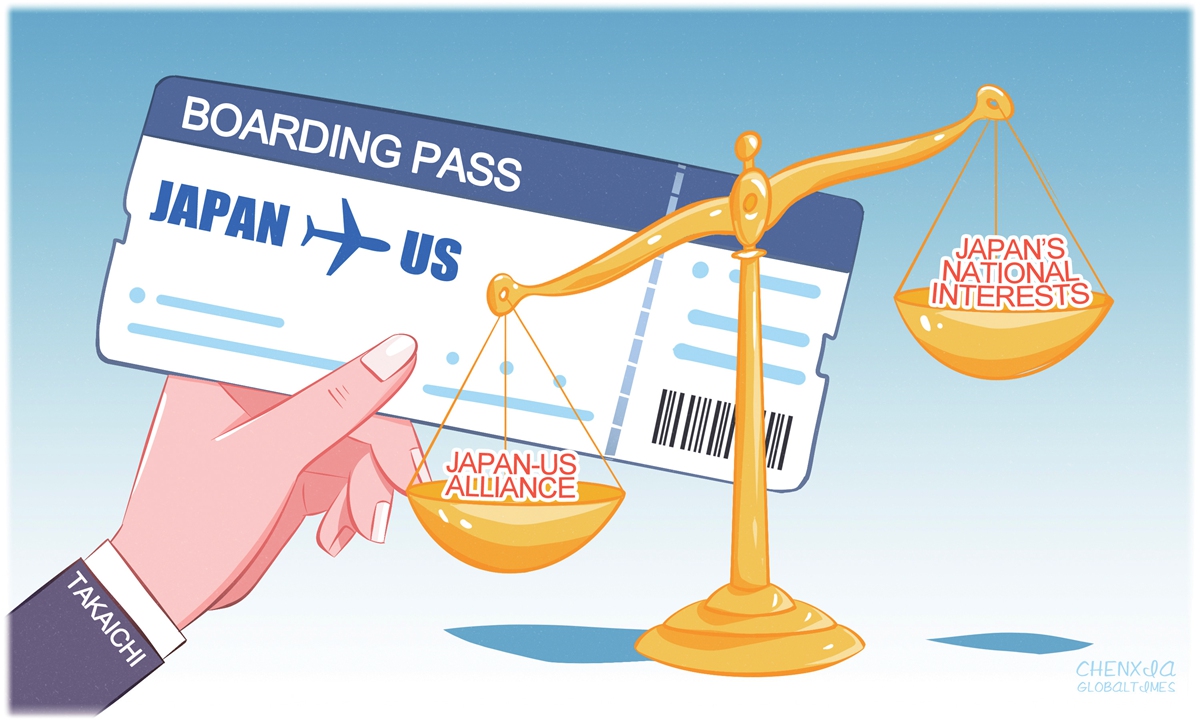
Japan is facing a storm: hit with US tariffs, bound by a $550 billion investment pledge to the US, watching the yen plummet, and grappling with backlash over sanctions against Russia... Just when it seemed things couldn't get worse, shipping through the Strait of Hormuz has been crippled, triggering energy supply alarms across Japan. Under these pressures, Japanese Prime Minister Sanae Takaichi is preparing to board a plane for Washington.
Reports show that Takaichi is set to depart on Wednesday for a four-day visit to the US, where she will meet US President Donald Trump on Thursday local time. The talks are anticipated to cover strengthening the bilateral alliance, Japan's potential participation in US' "Golden Dome" missile defense project, joint rare earth development, and the implementation of the $550 billion investment commitment.
The stark reality for Japan is clear: The country is in deep trouble, both at home and abroad. Domestically, growth remains sluggish, inflation is stubbornly high, public debt is soaring and now an energy crisis is adding to the burden. Externally, Japan's accelerating militarization is alarming its neighbors, relations with China stay tense and the US president is preparing for his own visit to Beijing.
At this delicate moment, Japan is urgently seeking to reinforce its alliance with the US, align on China policy, secure fresh reaffirmations for security guarantees, and potentially gain some economic support. In plain terms, Japan is fearful of being sidelined or abandoned by Washington.
But will Japan get what it's hoping for? The costs it may incur could far outweigh any benefits it secures. How exactly will that $550 billion investment materialize? Will Washington leverage this situation to impose even stricter conditions? These are the questions observers are asking.
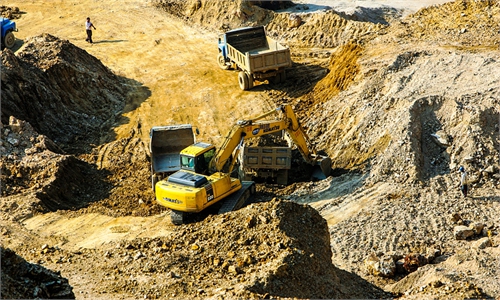
Japan is proposing to cooperate with the US regarding rare earth-rich mud off its coast. Yet researchers have pointed out that "excavating mud from the ocean floor off Minami-Torishima is estimated to cost at least two to 20 times more than mining rare earths elsewhere." So the real question is: Who's going to foot the bill and do the actual heavy lifting on this one? This move is partly about reducing reliance on Chinese critical minerals, but it also reveals Japan's deeper anxiety in seeking something that might persuade the US to remain fully committed and not drift away from the alliance.
Joining "Golden Dome" sounds like a smart "alliance booster," but US media have already called it a "gilded money pit" and "boondoggle" that devours budgets.
More fundamentally, no country can find true security by forever sheltering under the US umbrella. The ongoing war in Iran illustrates this point: US bases, weapons and defense systems don't reliably prevent attacks - in fact, they often become the most tempting and high-value targets for adversaries.
Before Takaichi's plane takes off, the US has upped the ante: pressing Japan and other countries to dispatch warships to keep the Strait of Hormuz open. The question now looming over her is: Should Japan follow the US into the Middle East quagmire? So far, Japan's public stance appears cautious.
Japan doesn't dare openly defy the US. But Japan must soberly recognize that dispatching Self-Defense Forces ships to the Strait of Hormuz would face legal restrictions and serious risks.
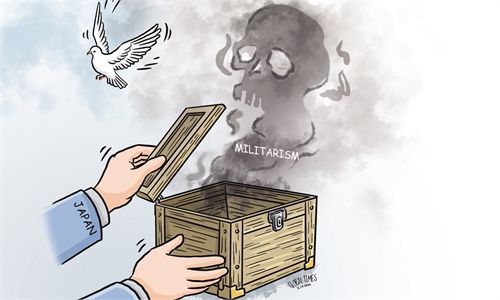
Even more troubling is the following question: Will Japan take advantage of the world's focus on the Middle East chaos to quietly accelerate its own aggressive military steps - slowly loosening the postwar constraints it has lived under for decades and inching toward a revival of its old militarist ambitions? Remilitarization - this could be the ultimate reward Japan has long hoped for in exchange for its unwavering loyalty to Washington.
Japan is currently deploying offensive weapons at an unprecedented pace, with missiles whose ranges extend far beyond what's needed to defend its own territory. This marks the latest and clearest breach of the core promises in Article 9 of its "pacifist constitution," which renounces "war as a sovereign right of the nation and the threat or use of force."
However, Asia today is not the Asia of 80 years ago, when militarism could run rampant. Regional countries are far more determined - and far better prepared - to defend peace than they were back then. If Japan drifts back toward militarization, it will only deepen its regional isolation and provoke even sharper backlash from its neighbors.
Takaichi's upcoming trip to Washington is a high-stakes diplomatic gamble for Japan - putting national interests on the line in hopes of securing a firmer place at the US table. What Japan still hasn't fully grasped is that its long-term future isn't found in Washington's promises. It depends on confronting history honestly, respecting its neighbors and truly committing to the path of peaceful development. Otherwise, Japan risks repeating its past - sharp on schemes, but strategically almost blind. Is that familiar path to crisis unfolding again?
The author is a reporter with the Global Times. opinion@globaltimes.com.cn