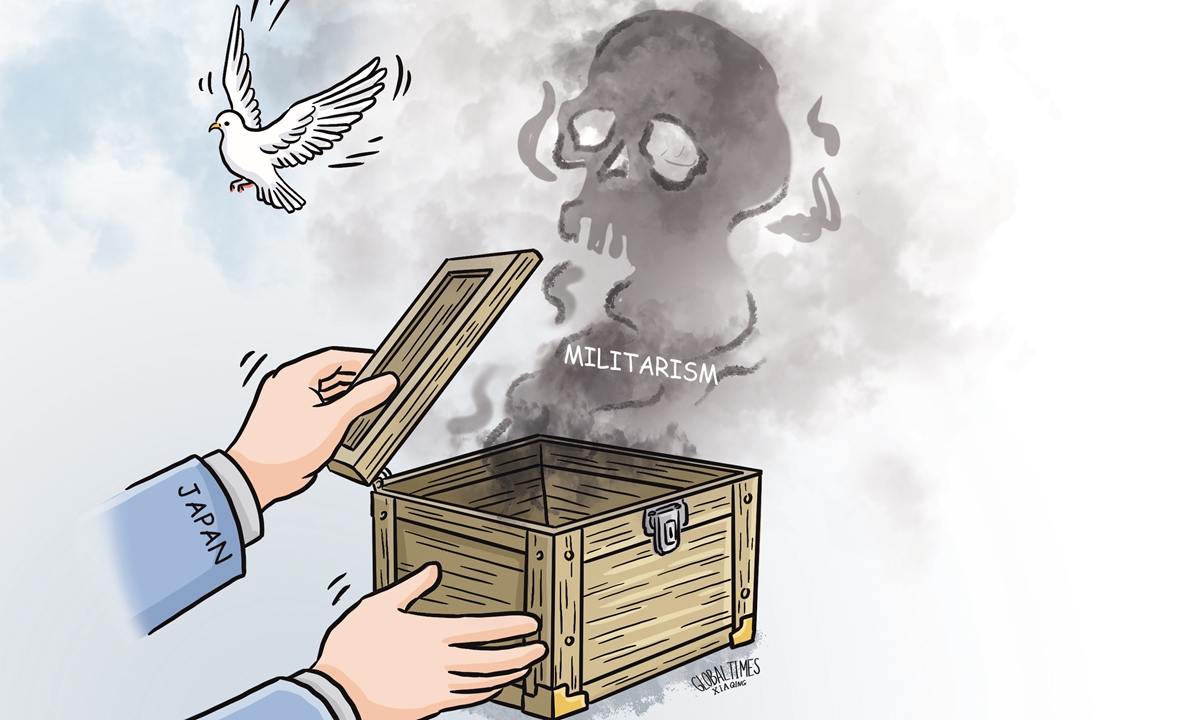
Illustration: Xia Qing/GT
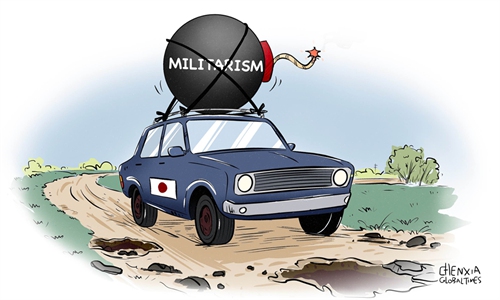
Since November 2025, Japan's militaristic tendencies have become increasingly evident. This has sparked serious worries that the postwar international order could be threatened, and that Japan might once again become the main trigger for military conflicts in the Asia-Pacific region.Japan once inflicted unimaginable massacres on East Asia. During World War II, Japan was the originator of the war in Asia, using military force to occupy territories of China and Southeast Asian countries.
Although over 80 years have passed since the end of WWII, the trauma and painful memories remain indelible. Yet, even so, Japan has long been gearing up for a new round of military expansion.
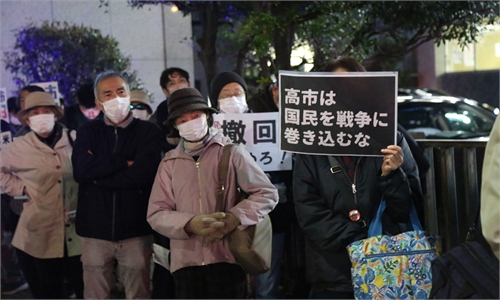
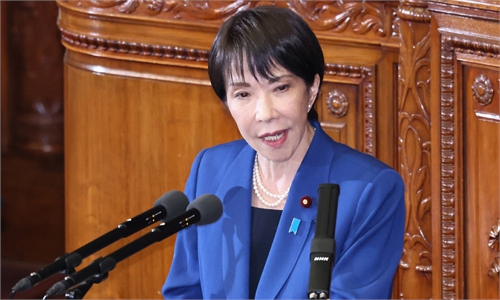
Since Sanae Takaichi assumed office as prime minister in October 2025, Japan's militaristic leanings have become even more pronounced.
First, Japan is accelerating its break from the postwar order to become a military power. Since taking office last year, the Takaichi cabinet has initiated a second revision of Japan's three key security documents, with key tasks including amending the Three Non-Nuclear Principles and effectively abandoning the principle of "not allowing the introduction of nuclear weapons." In February this year, Takaichi openly signaled plans to revise the constitution and reorganize the Self-Defense Forces into a regular military. Japan has continuously hollowed out its "exclusively defense-oriented" posture, undermining the postwar international order and positioning itself as a "normal" military power.
Second, Japan is increasing the deployment of offensive weapons in key areas and improving its preparations for potential battlefield. Reports show that the domestically developed and upgraded Type 12 missiles are set for deployment in Kumamoto Prefecture on the southwestern island of Kyushu by the end of March. Japan also plans to deploy the Type 03 missile on Yonaguni Island, which lies only about 110 kilometers from China's Taiwan island. These moves have clear targets: Japan seeks to enhance its offensive and strategic weaponry, complementing its sea, land and air combat systems to build a battlefield readiness framework suited to new forms of warfare.
Third, Japan is expanding its strategic depth southward and eastward, constructing a geopolitical layout oriented toward confrontation and war. Takaichi's erroneous remarks on the Taiwan question shortly after taking office, along with Japan's deepening military ties with the Philippines, have outlined Japan's emerging geopolitical strategy. Through close "diplomatic" and military coordination with the island of Taiwan and the Philippines, Japan is effectively extending its strategic depth into the Taiwan Straits and the South China Sea. In peacetime, the coordination acts as a check or deterrent; in wartime, Japan would become a military partner fighting alongside them.
In February this year, to consolidate its governing position and pave the way for breaking through postwar constraints, the Takaichi cabinet called an early election for the House of Representatives. The Liberal Democratic Party under Takaichi's leadership swept to a landslide victory in it, laying the foundation for constitutional revision and military expansion. Even though China protested and the international community raised concerns, Japan completely ignored them and never took back Takaichi's wrong statements about Taiwan. All of this clearly shows that right-wing groups and right-leaning ideas now dominate Japanese politics - and they are likely to stay in control for the foreseeable future.
The impulsiveness of right-wing forces represented by Takaichi, the proliferation of right-leaning thinking within Japan and the ongoing support from successive US governments - these factors combined appear to indicate that Japan's "remilitarization" is now inevitable. Based on current trends, Japan remains the most likely source of conflict in Asia.
As stated in Article 6 of the Potsdam Declaration, there must be eliminated for all time the authority and influence of those who have deceived and misled the people of Japan into embarking on world conquest, for we insist that a new order of peace, security and justice will be impossible until irresponsible militarism is driven from the world. The postwar peace order was hard-won. The international community, especially Asian nations, must remain especially vigilant against Japan once again becoming a source of regional conflict or even war.
The author is a research fellow at the National Institute for South China Sea Studies. opinion@globaltimes.com.cn
RELATED ARTICLES