Addressing the shortage of China experts requires a rational mind-set from the US
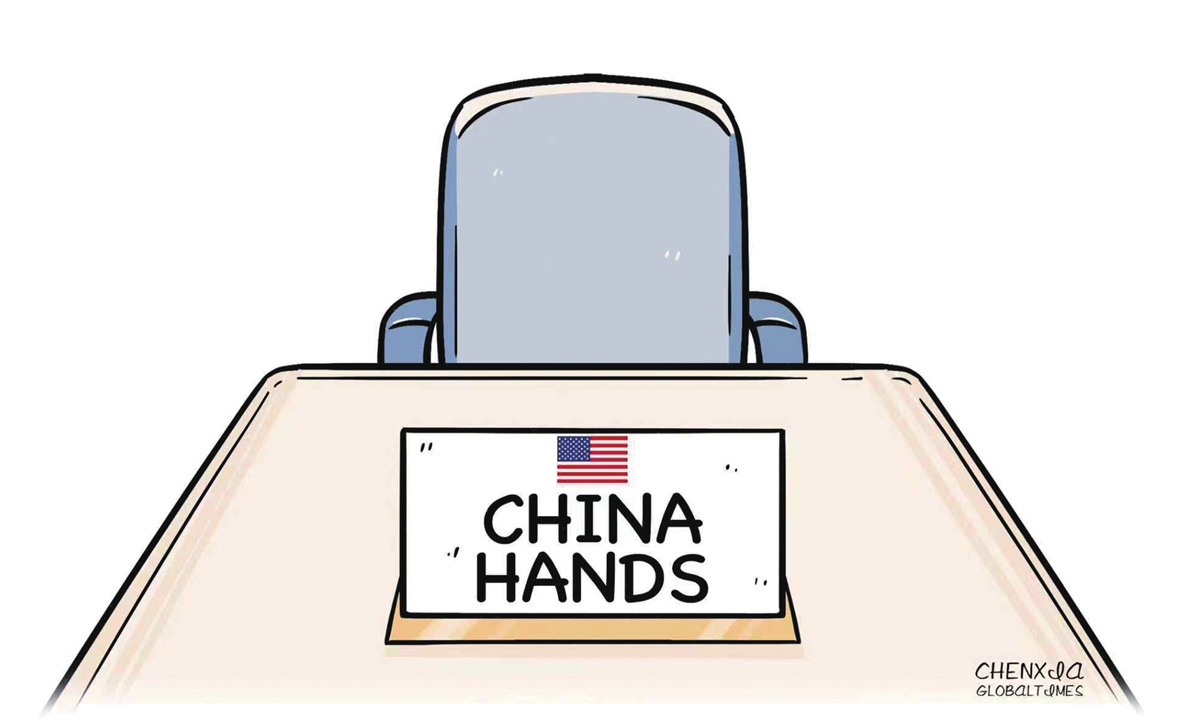
Illustration: Chen Xia/GT
Where have all the American China experts gone? This question surfaced in The Washington Post in early 2024, and two years later, it remains unanswered as the issue intensifies.A report by an expert working group of the US-based NGO US-China Education Trust published on Monday noted that the US will face a critical shortage of grounded China expertise within a decade, as the older-generation China experts retire and the number of Americans studying in China sharply declines, which will present "a national security and an economic competitiveness challenge" for America.
Zhang Tengjun, deputy director of the Department for American Studies at the China Institute of International Studies, told the Global Times that this "critical shortage" mainly stems from the chilling effect of a toxic political atmosphere in the US toward China. This environment, characterized by anxiety and psychological unease regarding China's rise, has severely impacted the field of China studies.
Historically, China experts - often referred to as "China hands" - have played an indispensable role in shaping China-US relations. From the behind-the-scenes assessments leading up to Henry Kissinger's secret visit to China, to the establishment of diplomatic ties, and the decades of cooperation in trade, climate, and cultural exchanges, their contributions have been crucial. These experts provide US policymakers with an understanding of the complexities of China's political, economic, and social landscape, ensuring that the US does not operate in ignorance when navigating differences with China. Many of these seasoned experts have openly acknowledged their role in serving American interests.
However, as China continues to rise, the US has increasingly viewed it through a lens of anxiety, fearing its global dominance challenged. In recent years, amid a backdrop of containment and suppression, any engagement with China - be it academic research, educational exchanges, or even basic interpersonal contact - has become stigmatized as politically suspect. Within Washington's policy circles, adopting a tough stance on China has become a form of political correctness, marginalizing voices that advocate for dialogue or mutual understanding as naive or disloyal.
Moreover, the US government has repeatedly interfered with normal educational and academic exchanges under the guise of "national security." Collaborative efforts between US and Chinese universities, once foundational to mutual understanding, have been curtailed or completely severed.
Against the backdrop of the US obsession of seeking decoupling from China, the pursuit of studying China - understanding its language, history, politics, and society - has become fraught with suspicion. Those who choose this path often encounter a minefield of political scrutiny, complicating an already challenging academic endeavor. As the report warns, this environment is leading to a rapidly shrinking pipeline of China expertise at the moment when such expertise is most urgently needed.
It is essential to recognize that even in periods of more normalized engagement, some US "China experts" have displayed a limited and sometimes biased understanding of China. When the US erects barriers and restricts exchanges, it only exacerbates its flawed perceptions of the country.
Ironically, while the US has invested considerable effort in containing and suppressing China to protect its own competitiveness, the resulting shortage of informed China experts may ultimately undermine the very competitiveness it seeks to maintain. This represents a profound strategic short-sightedness.
The decline of America's China expertise is not an inevitable consequence; rather, it is a self-inflicted wound. As competition between China and the US intensifies, the urgency of managing differences and preventing conflicts has never been greater. Addressing the shortage of China experts requires more than merely filling positions; it necessitates a fundamental shift in the US government's approach, adopting a more rational and constructive mind-set toward China itself.
RELATED ARTICLES