Escort or not? The distortion and fragility of Japan‑US alliance seen through Takaichi’s US visit
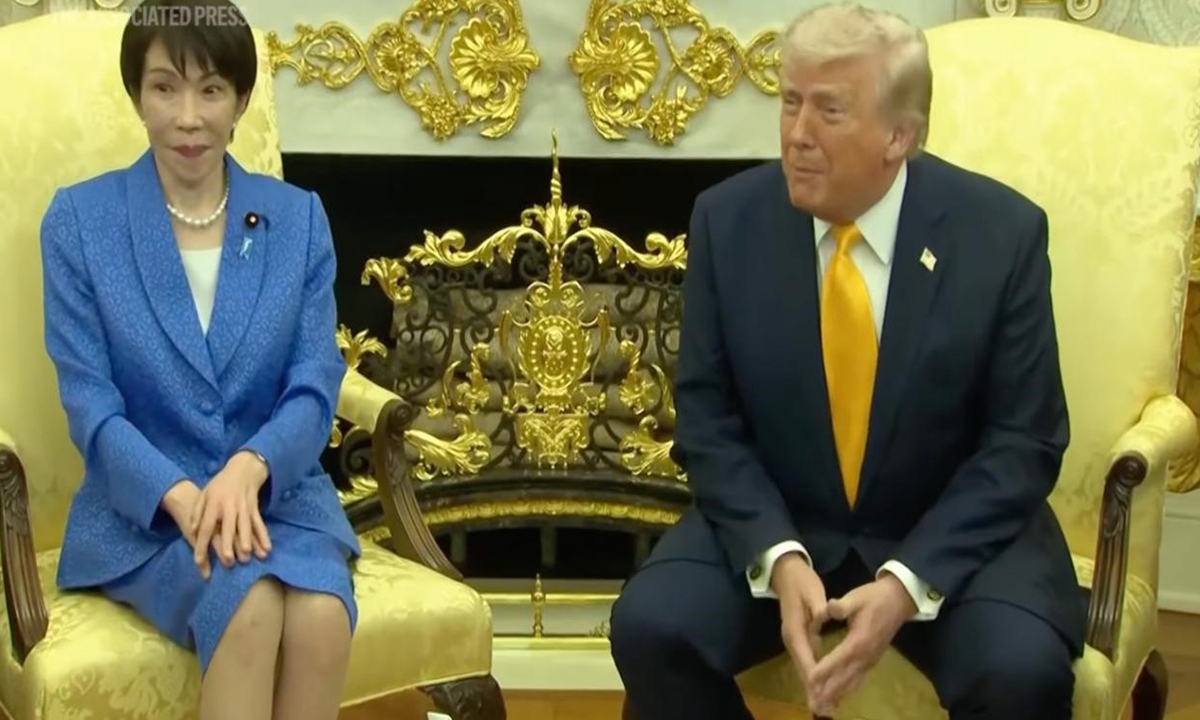
Screenshot from a video clip released by the Associated Press over US President Donald Trump and Japanese Prime Minister Sanae Takaichi in the Oval Office on March 19, 2026 local time.
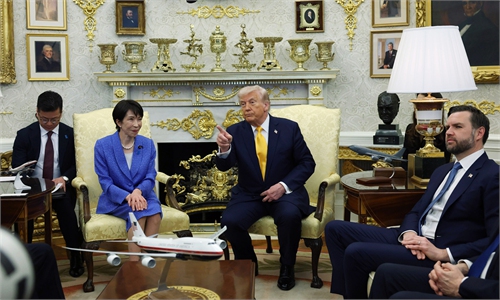
The Strait of Hormuz has recently become a global focal point. US President Donald Trump has called on allies, including Japan, to send warships to help secure the safe passage of commercial vessels there. While some allies have rejected the request either explicitly or implicitly, Japan has appeared particularly ambivalent, revealing the complexity of the cobweb of interests and conflicts between Tokyo and Washington. At this critical juncture, Japanese Prime Minister Sanae Takaichi embarked on her first official visit to the US on March 19.
Takaichi's trip was carefully orchestrated. She deliberately chose the timing: just ahead of the US president's potential visit to China. The aim is to align with Washington on China policy in advance, consolidate the Japan‑US alliance through economic investment and defense cooperation, and bolster her domestic political standing with a high‑profile US debut. However, the US‑Israeli strikes on Iran and Trump's call for allies to provide escorts upended Takaichi's agenda, entirely shifting the focus of the visit. The choice of "escort or not" has become an unsolvable diplomatic challenge, reflecting Japan's awkward position in the alliance.
Japan's dilemma
For Japan, the Strait of Hormuz is a lifeline for energy supplies, with approximately 90 percent of its imported oil passing through this waterway. The war has already forced Japan to release strategic oil reserves, and companies like Mitsubishi Chemical to suspend production or reduce output. Japan has an incentive to escort ships to safeguard its energy supplies, yet it faces multiple constraints in terms of legal frameworks, public opinion, diplomatic policy, and military risks.
In terms of legal constraints, to dispatch the Self‑Defense Forces (SDF) for escort duty under the 2015 new security legislation, Japan needs to identify Iran's blockade of the strait as an "existential crisis situation." The Japanese government, however, has yet to make such a determination. Moreover, as the US‑Israeli strikes lack UN authorization and violate international law, sending Japanese troops has no legal basis and would come under fierce criticism within Japan.
In terms of public opinion, Japanese media polls show that 82 percent of the Japanese public oppose the US‑Israeli strikes, and only nine percent support them. Any agreement by the Takaichi administration to escort vessels would run counter to public sentiments and risk undermining political support at home.
In terms of diplomatic risks, Japan has maintained long-standing friendly relations with Iran. In 2019, former prime minister Shinzo Abe visited Tehran to mediate between the US and Iran. Cooperating with the US on escort duty now would be no different from treating Iran as an adversary, marking a major shift in Japan's diplomatic strategy. Iran has explicitly warned that if US military bases in Japan are used to launch attacks on Iran, it will consider Japan as a target. A strained relationship with Iran would drastically shrink Japan's diplomatic space in the Middle East and even expose it to retaliation.
In terms of military risks, the Strait of Hormuz is a narrow waterway, where Iran has the capability to deploy mines, drones and missiles for counterattacks. Sending the SDF for escort duty is a "suicide mission." Even with Japan's advanced mine‑sweeping technology, it will still be difficult to ensure the safety of personnel and vessels. Any casualties would plunge Takaichi into a full‑blown political crisis.
The awkward moment of "Pearl Harbor surprise attack"
The March 19 White House meeting turned into a diplomatic embarrassment for Takaichi. When responding to a question from a Japanese journalist, Trump drew an analogy between the US strikes on Iran and Japan's surprise attack on Pearl Harbor during World War II. He shot back directly: "We wanted a surprise. Who knows better about surprise than Japan? Why didn't you tell me about Pearl Harbor?"
Amid laughter from the audience, Takaichi fidgeted uneasily and forced a strained smile. For Japan, this is a humiliation on the global stage, laying bare the inherently unequal nature of the Japan‑US alliance. For the US, Pearl Harbor remains a "national humiliation." Trump's remarks, though delivered in jest, were in fact a pointed reminder to Japan that it is a subordinate ally with an "inglorious past" in Washington's eyes, and that the US has never fully trusted it.
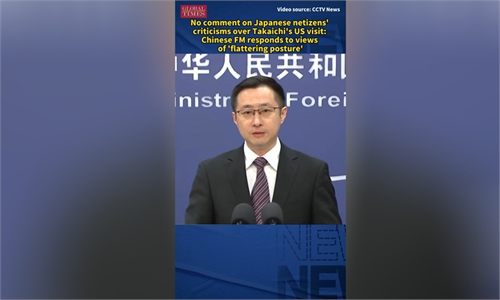
During the visit, Takaichi addressed Trump by his first name and publicly praised him that "only Donald can bring peace and prosperity to the world." These remarks sparked an uproar back home. Takaichi's exaggerated expressions and deferential posture as shown in photos released by the White House were widely criticized as damaging to national dignity, and indicative of sycophantic diplomacy. Japanese netizens denounced her demeanor as a "national disgrace," lamenting that the Japanese government had abandoned diplomatic dignity, ignored economic and livelihood issues, and blindly followed the US - only to be met with contempt and humiliation.
Can ambiguity work?
On the escort issue - the one Trump cares about the most - domestic opposition has been mounting in Japan. Shortly after Takaichi departed for the US, the leaders of Japan's three major opposition parties jointly submitted a proposal to the Chief Cabinet Secretary, demanding that Takaichi clearly state during her US visit that Japan will not send warships for escort duty. More than 10,000 people staged a large‑scale protest in front of the National Diet.
After the talks, Takaichi stated that she had explained in detail to Trump what Japan can and cannot do under its legal framework, to the relief of those at home who had feared that she might make impulsive or radical statements. However, while Trump publicly praised Japan's efforts, he also left the door open, saying he expected Japan to step up. This appears to be more of a temporary reprieve. Trump is seemingly satisfied with the "grand package" Takaichi brought to the US - but whether he will continue to apply pressure remains to be seen.
US media said Japan fudged the escort issue tactically but has not fundamentally shed the pressure. Its subordinate position in the Japan‑US alliance remains unchanged, and Trump is unlikely to give up on drawing Japan into the Middle East conundrum. The escort issue may well continue to be a flashpoint of diplomatic friction between the two countries.
Notably, Japan's official stance remains ambiguous and contradictory. On March 22, the US Representative to the United Nations claimed that Takaichi had committed to deploying the SDF to support safe navigation in the Strait of Hormuz. The very next day, Japanese Chief Cabinet Secretary Minoru Kihara denied this at a press conference, stating that Japan had made no specific commitments. Japanese Foreign Minister Toshimitsu Motegi later said in a television interview that Japan possessed leading mine‑sweeping technology and would consider deploying the SDF to clear mines in the strait if the US, Israel, and Iran reach a cease‑fire agreement. Kihara once again rushed to clarify that no specific measures were planned at this stage. Does this self-contradictory stance stem from strategic pressure by the US, or did Takaichi make some secret commitments while deceiving the Japanese public? Does it reflect poor coordination within the Japanese government, or is it a deliberate attempt to test the waters? But one thing is certain: The Japanese people need to keep their eyes wide open.
Where is Japan headed amid "triple diplomatic challenges"?
The escort dispute has once again exposed the strategic divergence between Japan and the US. The so‑called alliance and international rules are manipulated in the face of hegemony. Japan finds itself trapped in a triple diplomatic predicament:
First, a failure of conscience. Japan knows full well that US actions violate international law but dare not speak out. It can do nothing but acquiesce, connive, and even abet.
Second, a failure of reciprocity. Japan is forced to make one‑sided sacrifices and contribution within the alliance, making unconditional compromises to the US in disregard of national interests and the will of its people.
Third, a failure of judgment. Japan has tied itself to a declining, self‑serving hegemon while alienating its largest neighbor and biggest trading partner, thereby ruining its own long‑term development prospects.
If Japan continues along this path, it will have to face more predicaments like the one about escort duty.
The author is a commentator on international affairs. opinion@globaltimes.com.cn
RELATED ARTICLES