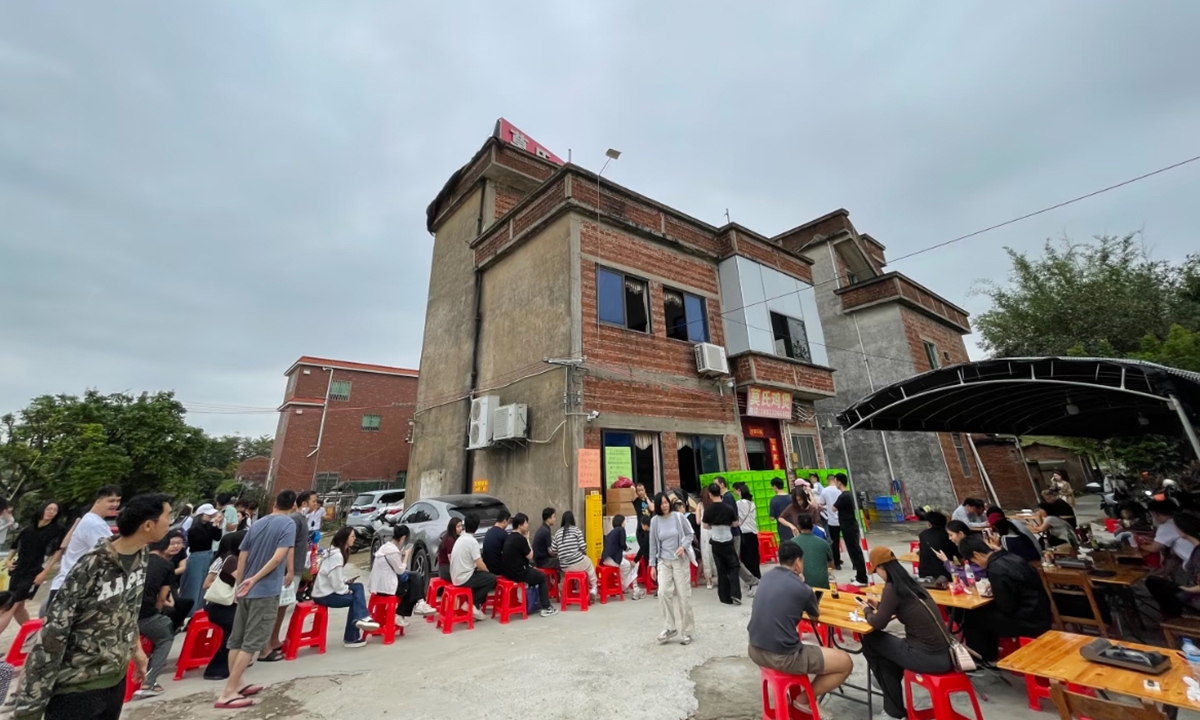
Visitors line up at Mo's restaurant in Shunde, South China's Guangdong Province, on April 4, 2026. Photos: Courtesy of Wu
At the first glance, the Mo's Chicken Hot Pot restaurant originally appeared no different from other neighborhood eateries in Shunde, South China's Guangdong Province, with just over a dozen tables and a steady flow of regular customers.That changed rapidly after a short food vlog went viral at the start of April, drawing more than 900,000 likes and turning the previously low-key eatery into a trending destination. Crowds soon gathered, with long queues forming outside the restaurant.
The owner's remark in the video - saying he was "unwilling to continue operating" and advising customers not to come - unexpectedly amplified public attention, further fueling the surge in visitors. Meanwhile, it once again turned dampness-dispelling chicken hot pot into a trendy form of dietary therapy.
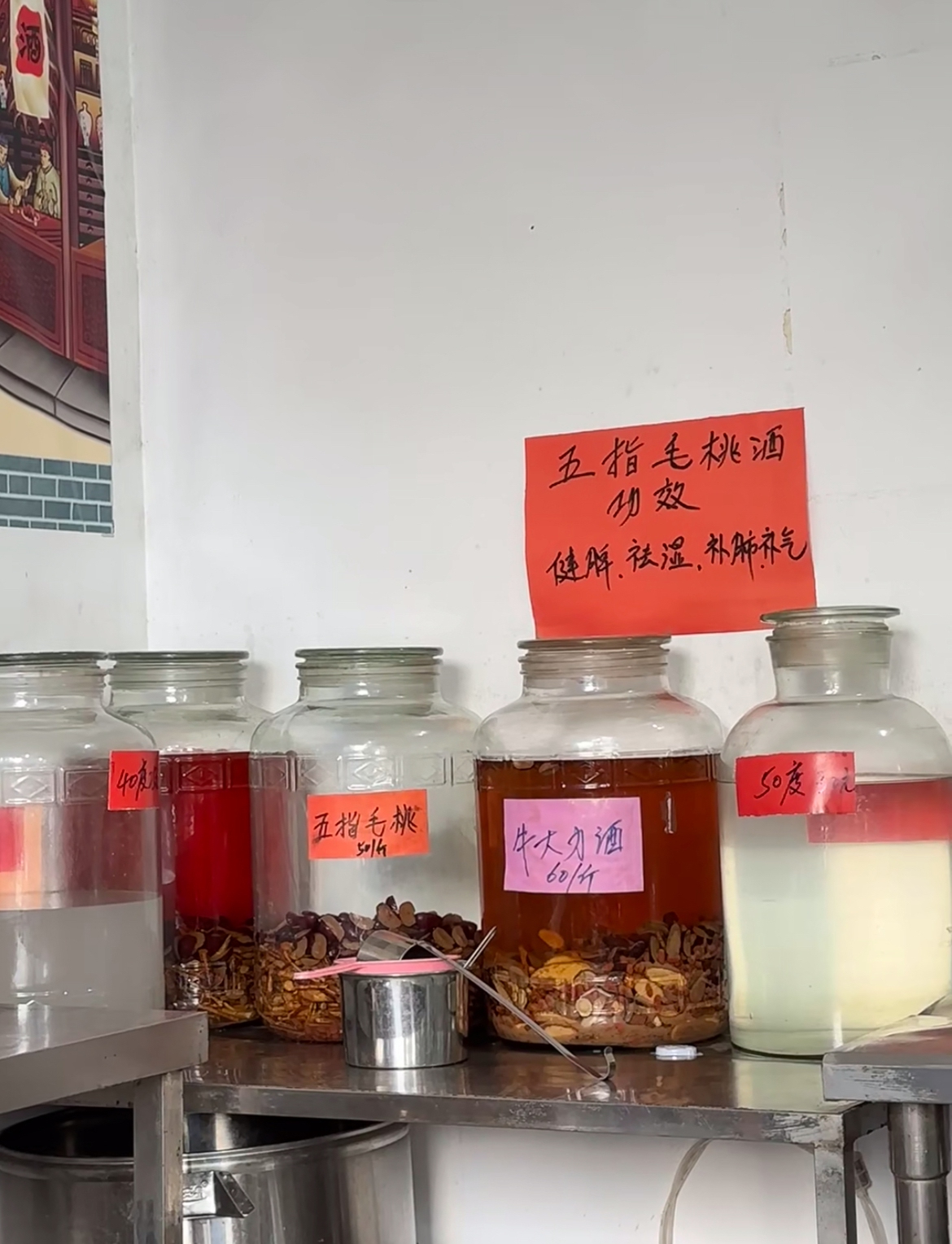
A liquor made of five-finger peach root, a plant used in traditional Chinese medicine, served at Mo's Chicken Hot Pot restaurant
Viral pot, reluctant hostFollowing the viral spread of the food vlog, the restaurant quickly saw a surge in customers, with the owner, known locally as Lao Mo, preparing up to 70 to 80 chickens per day - far exceeding his previous workload. He told reporters that the intensity has left him exhausted and even considering retirement.
The sharp increase in foot traffic prompted local authorities to introduce crowd-control measures starting on Saturday, including a numbering system that limits both lunch and dinner services to 100 parties each, while encouraging residents to dine during off-peak hours and adding temporary parking spaces to ease congestion.
Despite these measures, demand has remained high, with some customers arriving early in the morning or traveling long distances to visit the restaurant, and the waiting time extending to several hours.
A visitor from Central China's Hunan Province, surnamed Wu, told the Global Times that her family collected a queue number at 9 am and were not able to dine until around 8 pm, noting that signage had been placed near parking areas to indicate whether tickets for the day were still available.
So what exactly has drawn people from across the country to a single pot of chicken?
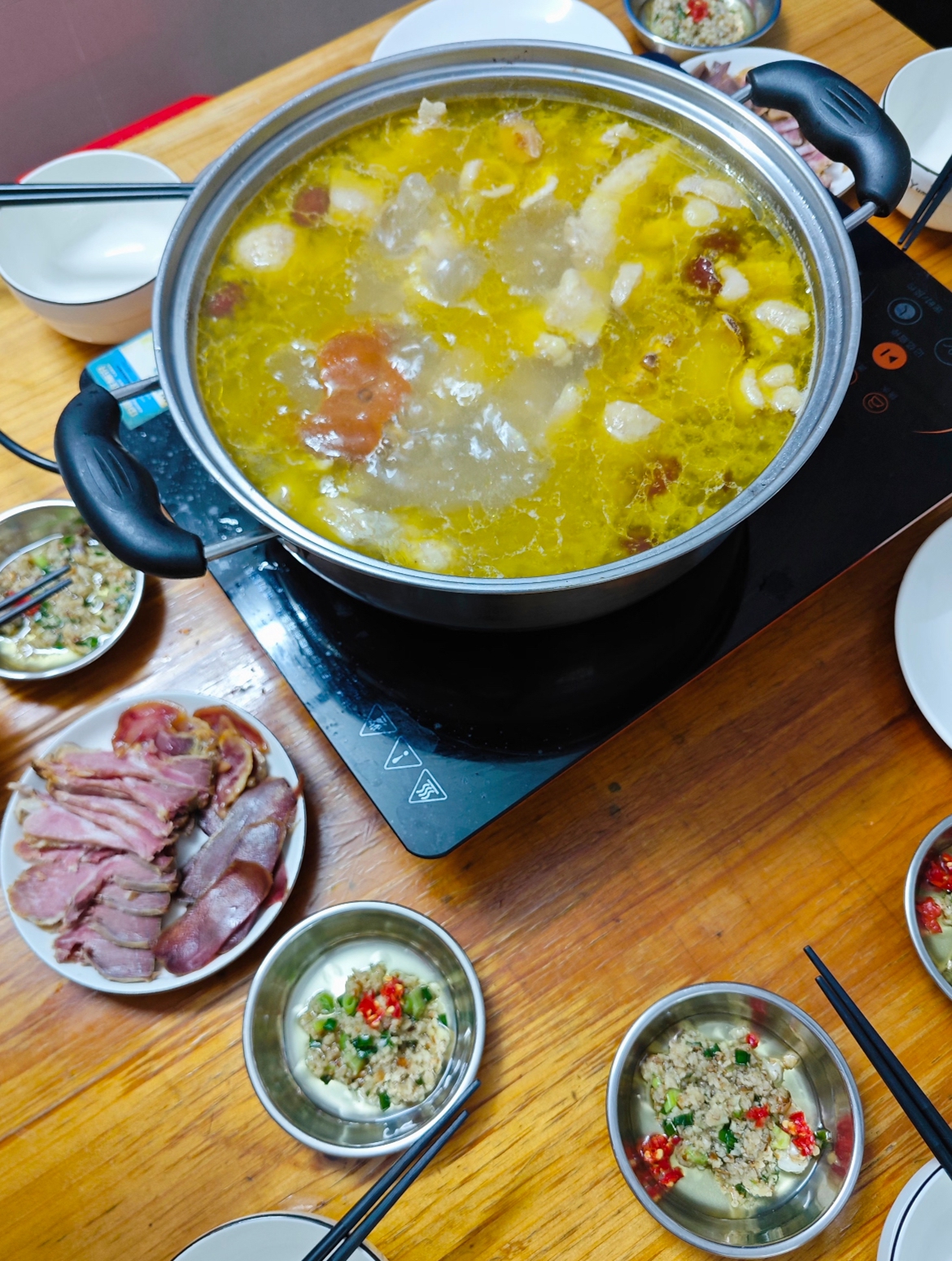
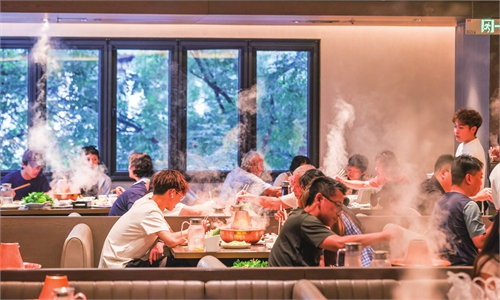
The Shunde chicken hot pot at Mo's restaurant
TCM tasteBehind the surge in online attention, what has truly driven the restaurant's popularity is its signature broth, marketed for its ability to "dispel internal dampness," a concept rooted in traditional Chinese dietary therapy.
While some visitors from outside the region have described the experience as being "more about the atmosphere," others noted that the taste was comparable to ordinary chicken hot pot, albeit at a reasonable price. Wu said that, in addition to the buzz, the appeal lay in the use of fresh chicken and the perceived health benefits of the dish, which uses traditional Chinese medicine (TCM) as a soup base.
According to local media reports, the hot pot features locally raised free-range chicken paired with wild medicinal herbs, forming a herbal chicken dish that has long been part of Lingnan food traditions. Priced at 38 yuan ($5.54) per catty (0.6 kilograms) of chicken, with the broth at the same price, the restaurant had previously relied on consistent flavor and affordability to attract nearby regular customers.
A "friendly reminder" posted inside the restaurant has also drawn widespread online attention. It states that frequent restroom use after enjoying the hot pot soup is normal and may indicate excessive "dampness" and "coldness" in the body, suggesting that continued consumption could help expel toxins and restore balance. It concludes with the phrase: "All illnesses stem from dampness."
Ingredients shared by diners show that the soup commonly includes five-fingered peach root, tuckahoe, dried tangerine peel and coix seeds: items widely used in southern China's food-medicine tradition. As the dish has gained popularity, many who were unable to visit in person have begun recreating it at home and sharing their versions on social media.
Ai Han, a doctor at the Beijing-based Guang'anmen Hospital of the China Academy of Chinese Medical Sciences, told the Global Times that such combinations are typical in Lingnan dietary therapy. Five-fingered peach root, or Wuzhi Maotao, is considered mild in nature and is believed to help strengthen the spleen and dispel dampness without causing dryness, while tuckahoe is often used to promote diuresis and detoxification, particularly in relation to joints and meridians. Dried tangerine peel aids digestion and coix seeds help drain dampness. For individuals with symptoms such as a thick tongue coating or a sense of heaviness - conditions associated in TCM with internal dampness - an increase in urination after consumption may be interpreted as the body expelling excess moisture.
"The use of medicinal herbs in cooking has long been part of daily life, especially in southern China where the climate is relatively humid," Ai said, adding that ingredients such as lotus seeds, perilla leaves and cinnamon are also commonly used for both flavor and health purposes.
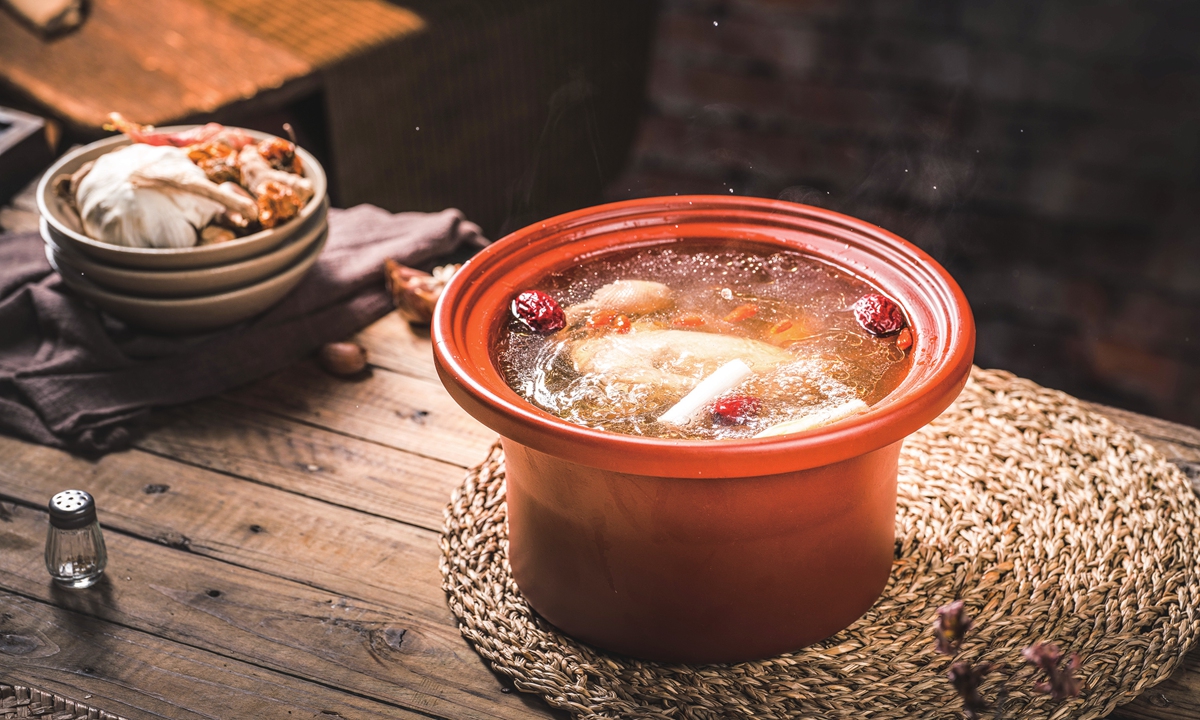
The five-fingered peach root chicken soup Photo: VCG
As the concept of dietary therapy has gained increasing popularity in recent years, many young people have also begun to develop an interest in TCM and wellness practices. A 2023 report by the China Youth Daily noted that 48.6 percent of surveyed young people were familiar with the concept of balanced eating - neither overeating nor undereating - while many were also aware of traditional health principles outlined in classical texts such as the Huangdi Neijing, (The Yellow Emperor's Classic of Internal Medicine) including "nourishing yang in spring and summer, and yin in autumn and winter."As dietary therapy becomes increasingly integrated into daily routines, experts have cautioned against blindly replicating such recipes at home. Ai noted that the use and dosage of ingredients, including five-fingered peach root, require careful control to ensure safety and effectiveness.
With the restaurant's growing popularity, the owner has also encouraged visitors to explore other local specialties, noting that Shunde offers a wide range of culinary options. To ease pressure on the single venue and provide alternatives, a "chicken cuisine map" highlighting representative dishes and recommended restaurants across Guangdong has been promoted.
From the "friendly reminder" displayed at the entrance to the owner's repeated attempts to discourage excessive crowds, the restaurant's rise has reflected a paradox of the digital age: While Mo's expressions of reluctance have become a catalyst for further attention, the enduring appeal lies in the wisdom of dietary therapy and the freshness of the ingredients, which continue to attract customers over time.
RELATED ARTICLES