Illustration: Liu Rui/GT
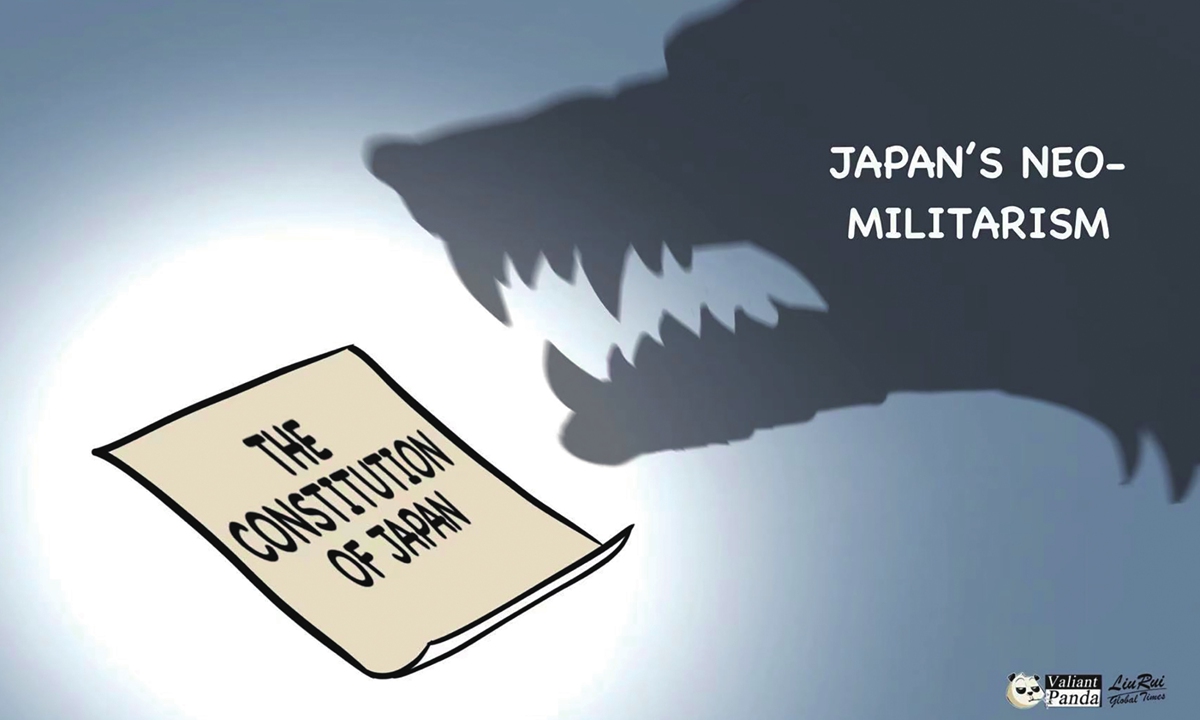
On April 12, Japan's ruling Liberal Democratic Party adopted its 2026 policies at the 93rd regular party convention, including a goal to submit a draft constitutional amendment to the Diet, Japan's parliament. Just on April 10, Japan released its 2026 Diplomatic Bluebook. In this policy-signaling document, Japan formally "downgraded" its description of China-Japan relations.These two developments are not isolated incidents, but rather a reflection of the Takaichi administration's increasingly right-leaning and radical policy trajectory. Domestically, it seeks to break free from the constraints of the pacifist constitution; externally, it stokes geopolitical tensions and amplifies the narrative of "external threats" to serve its pursuit of "normal country" status. In the absence of genuine historical reflection, Japan's right-wing leadership is advancing a "beggar-thy-neighbor" foreign policy that deviates from the path of peaceful development. This constitutes a blatant challenge to the post-World War II international order, posing a serious latent threat to peace and stability in the Asia-Pacific region.
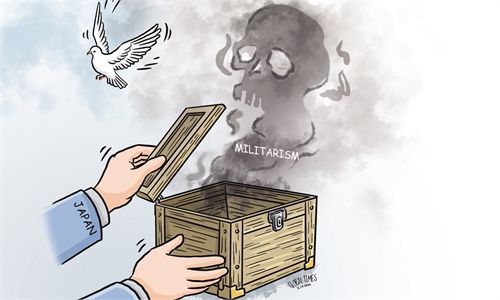
Article 9 of the Japanese Constitution, which renounces the right to wage war, stands as a cornerstone of the postwar international order and a solemn commitment made by Japan, as a defeated nation, to all Asian countries that suffered under its wartime aggression. The reason why constitutional revision in Japan arouses high vigilance in the international community lies fundamentally in Japan's long-standing ambiguity and regression on issues of historical memory. The right-wing conservative forces represented by Takaichi have not only failed to engage in deep reflection on past aggression, but have also actively promoted revisionist historical narratives, pushing Japan's remilitarization with an unprecedented level of assertiveness in the postwar era. In this context, the true intent behind constitutional revision is to remove legal obstacles for Japan to abandon its exclusively defense-oriented policy and once again become a military power.
While vigorously promoting constitutional amendments, the Takaichi administration's foreign policy has also revealed its dangers. The most notable regression in its 2026 diplomatic bluebook is the abrupt change in how Japan characterizes its relationship with China, downgrading it from "one of the most important bilateral relations" to simply "an important neighboring country." This shift is far from a mere semantic adjustment; it signals a clear shift in Japan's diplomatic priorities. The trigger for this change was Takaichi's erroneous remarks on Taiwan made in the Diet last November. These comments directly contributed to the ongoing deterioration of China-Japan relations. Yet, instead of making efforts to mend the rift through diplomatic means, Japan chose to cement and institutionalize this confrontational stance in its official documents. This approach exposes the shortsightedness and paranoia of Takaichi's diplomacy, which can be described as "beggaring-thy-neighbor."
To bolster its tough stance toward China, the Takaichi administration in the bluebook attempts to blame China for the worsening of China-Japan relations. Such resentful accusations are riddled with double standards. It was Takaichi's own remarks on Taiwan that worsened relations. China's response was a necessary move to defend its sovereignty and dignity. However, Japan seeks to portray itself as a "victim."
While criticizing China, Japan also claims in the bluebook that its channels for dialogue remain open and that it has not adopted a policy of "closing the door." This contradictory stance - maintaining superficial contact while adopting an adversarial posture - exposes the utilitarian and hypocritical nature of the Takaichi cabinet's approach toward China.
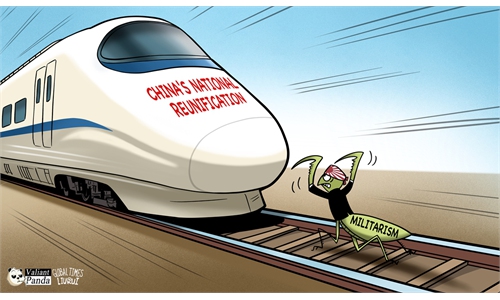
Right-wing forces in Japan have long sought to legitimize constitutional reform and military expansion by exaggerating the "China threat." The Takaichi administration has gone even further down this path, deviating from a peaceful approach and harming its neighbors. Nonetheless, Japan's knowledgeable individuals are well aware that the country can neither sever its economic and trade ties with China, nor can it achieve true national security by confronting China. Ultimately, Japanese right-wing forces will not only fail to realize their illusions of turning Japan into a "great power," but will also trap the country in diplomatic isolation and erode trust within the international community.
The author is a distinguished research fellow at the China Institute of International Studies. opinion@globaltimes.com.cn
RELATED ARTICLES