China launches Kinetica-1 carrier rocket, sending 8 satellites into orbit; multi-satellite separation technology ensures safe, precise deployment: deputy chief designer
By and Li Yu Published: Apr 14, 2026 03:48 PM

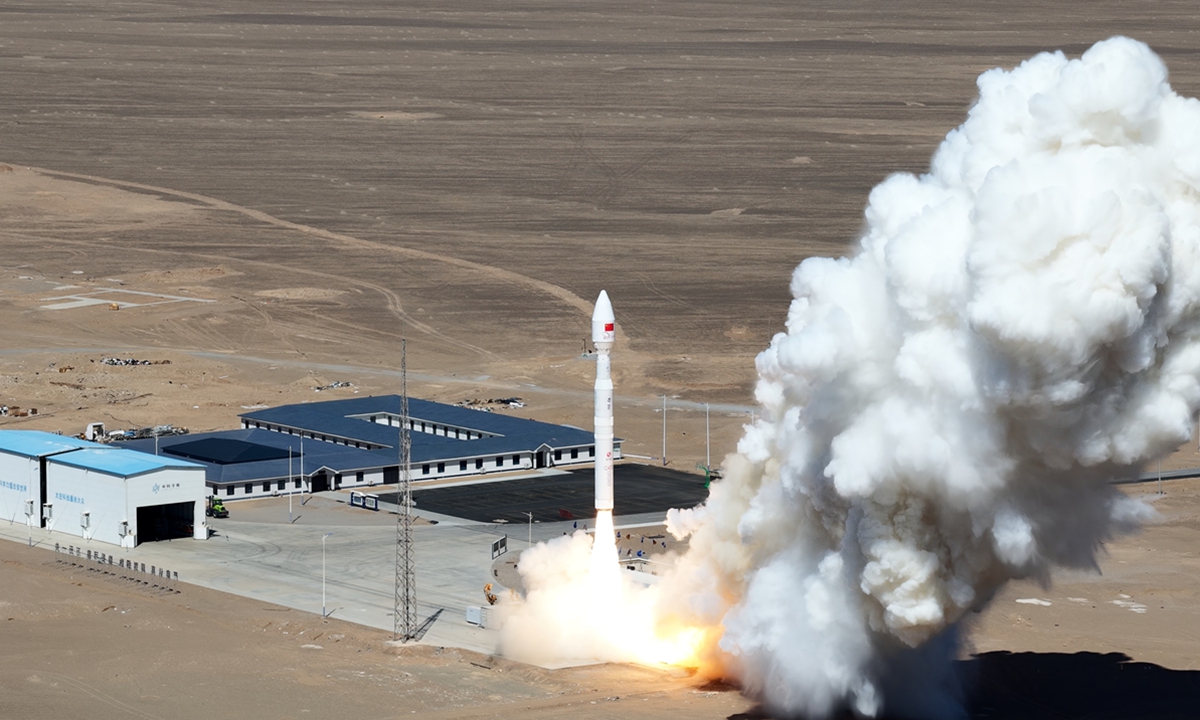
The Kinetica-1 Y12 carrier rocket carrying 8 satellites takes off from the Dongfeng commercial space innovation pilot zone in Northwest China on April 14, 2026. Photo: Courtesy of the CAS Space
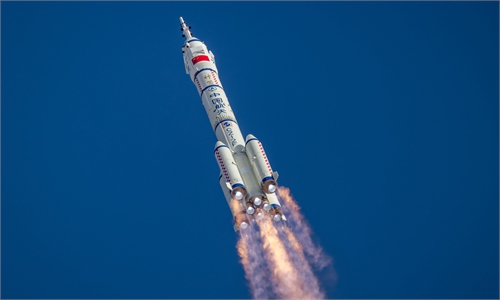
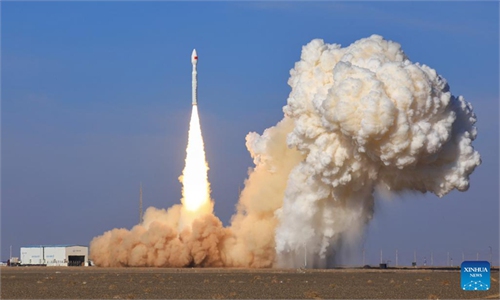
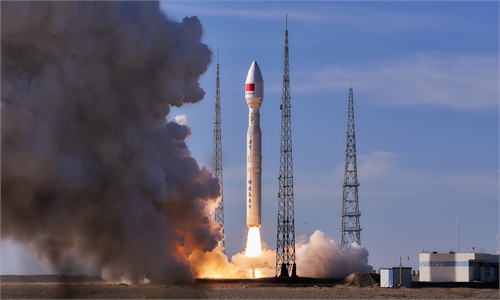
China's Kinetica-1 carrier rocket on Tuesday again successfully blasted off from the Dongfeng commercial space innovation pilot zone in Northwest China, successfully sending eight satellites into their designated orbits in a single launch, marking a complete success of the mission, according to an official release on CAS Space's WeChat account.This mission marked the 12th flight of the Kinetica-1 rocket. The eight satellites launched are all high-resolution optical remote sensing satellites, featuring ultra-high resolution, high integration, and intelligent capabilities.
The Kinetica-1 rocket is primarily designed for the small and micro-satellite launch market, offering diversified launch services including dedicated launches, rideshare launches, and piggyback launches, and etc.
To date, it has successfully sent a total of 92 satellites into space, with a cumulative payload mass exceeding 12 tons. Backed by a mature and reliable multi-satellite deployment configuration and precise separation technology, the Kinetica-1 rocket holds the record among China's commercial rockets for launching the most satellites in a single mission, with 26 satellites sent into orbit on one rocket in a previous mission.
To ensure that multiple satellites carried by the Kinetica-1 rocket can separate safely and precisely within a very short time after the rocket reaches its designated orbit, CAS Space has developed an efficient, integrated design approach that coordinates separation sequencing, attitude adjustment calculations, and control schemes. CAS Space has also designed a range of flexible deployment configurations and electrical interface solutions to accommodate diverse satellite requirements, Sun Liangjie, deputy chief designer of the Kinetica-1 rocket, told the Global Times.
Once a rideshare launch mission profile is confirmed, a feasible separation plan can be quickly generated, with repeated flight tests verifying its reliability and safety, Sun said.
Sun noted that multi-satellite separation is also a system challenge, involving satellite arrangement, separation timing, and attitude control. The ultimate goal is to ensure both near-field and long-distance safety after separation, preventing collisions and maintaining sufficient spacing between satellites, since satellites continue traveling at high speed along their respective orbits after separation.
Over more than 10 missions, the Kinetica-1 rocket has successfully completed multi-satellite deployments ranging from three to 26 satellites in a single launch, demonstrating its ability to adapt to satellites with different configurations, shapes, and mission requirements, Sun said.
RELATED ARTICLES