IN-DEPTH / IN-DEPTH
Made with feeling: From humanoid robots to stringless guitars, China’s human-centric innovation touches world with quiet technological warmth
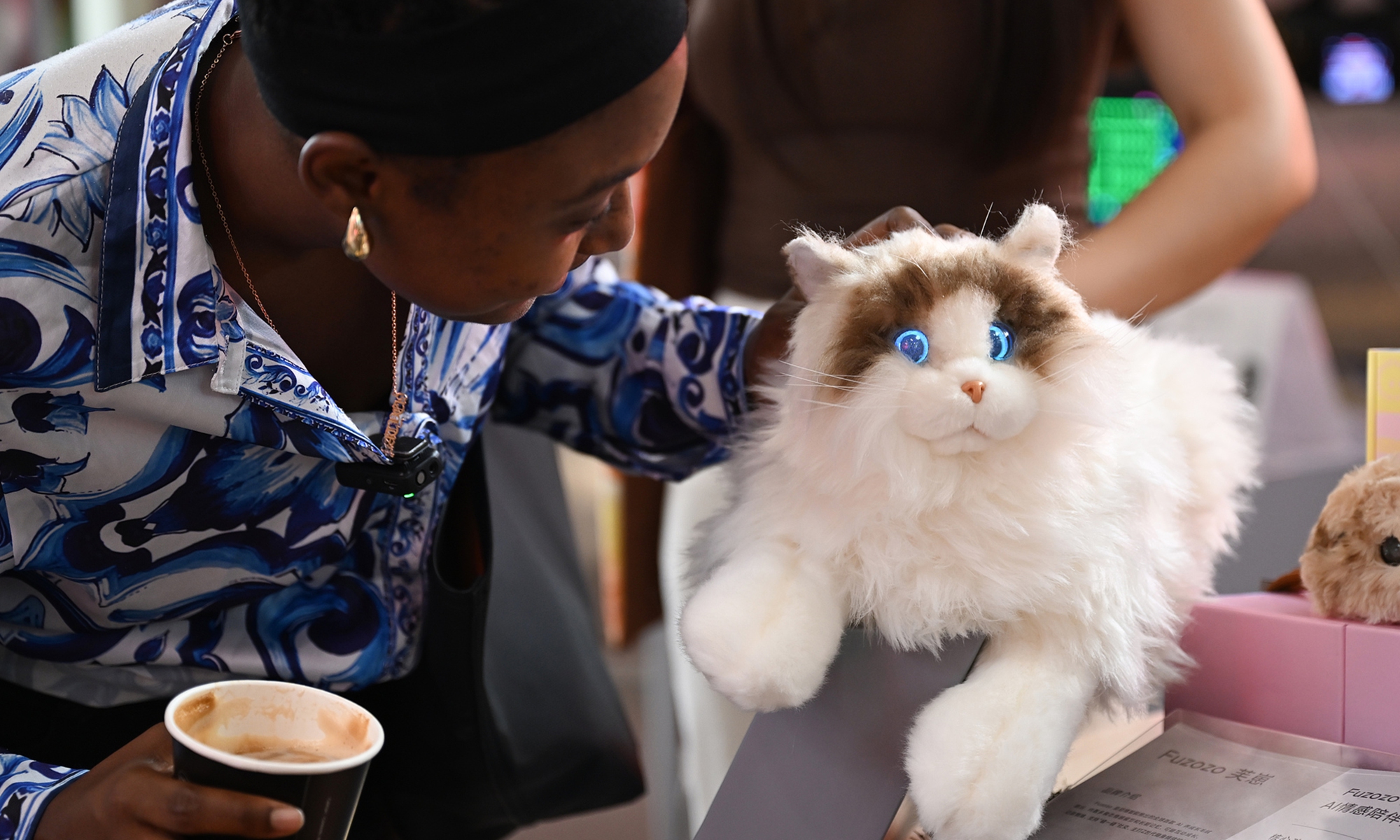
A foreign tourist interacts with an AI emotional companion robot at a digital trade and fashion consumption exhibition in Hangzhou, Zhejiang Province, on September 24, 2025. Photo: VCG
"When I said, 'I love you,' its eyes immediately lit up with red heart emojis and it responded affectionately in both Chinese and English." Ram Niranjan Sharma, an Indian business consultant, still vividly remembers the encounter at an expo in Xiamen, East China's Fujian Province, in 2023. The small cat-shaped robot, which could read emotions, shattered his preconceived notions about tech products. "At that moment, I felt warmth from technology I'd never experienced before, and now I see this kind of caring, emotional innovation has spread far and wide."In China, this quest for warmth and connection has crystallized into a growing trend known as "emotional value consumption." In the past two years, this term has become a defining buzzword in China's consumer landscape. From collectible blind boxes and anime merchandise to AI-powered companionship apps, young Chinese are increasingly spending not for utility, but to find psychological comfort, express their identity, and create moments of joy - prioritizing mental satisfaction over mere function.
This is not just a local trend. A global wave of "emotional value consumption" is surging, with the market for mood-enhancing products projected to grow robustly. London-based market research company Euromonitor International has predicted that the global market for mood-enhancing products will grow at a 12.3 percent compound annual growth rate through 2028.
Amid this worldwide shift, a new wave of Chinese products has risen to global prominence. Blending gentle Eastern aesthetics with thoughtful, responsive technology, these products speak to a universal human need for comfort and understanding and are winning hearts around the world.
A new wave of choices
When asked about his initial impression of "emotional value consumption," Sharma described it traditionally: products that offer emotional connection more than just utility. "Globally, from the US and European countries to India, these have often taken familiar forms: nostalgic gifts, handmade crafts, limited-edition collectibles, or personalized presents. Think of a locket for a photograph, a vintage video game console, or a finely restored classic bicycle," Sharma told the Global Times.
The impulse to pay for what moves people is timeless. But in today's China, Sharma observed an "upgraded version" of this emotional linkage.
What recently stirred him was something he hadn't anticipated encountering in the realm of hardcore tech products. "Two years ago, at a robotics expo in Beijing, I saw humanoid robots for the first time. They could deliver goods in stores, and also make tea and coffee for you," he said, adding that today, he's seeing many Chinese robots go beyond those functional tasks - engaging people in conversations and even cracking jokes.
This blend of advanced capability and personal touch is what defines the new wave for many consumers. Nepali influencer Garima Ghimire first discovered these China-made offerings with an emotional touch through social media. "While scrolling, I saw people sharing their favorites, which immediately caught my attention," she said. Drawn in, she began visiting malls to explore them in person. "The variety is dazzling, and there's always something new to catch the eye," she added.
Online, she has observed a global community sharing heartwarming experiences with Chinese emotional value products - from a stringless guitar featured in Time magazine's Best Inventions of 2025 list to a sleep pillow modeled after the "Mo," a mythical dream-eating creature from the renowned ancient Chinese mythology text Classic of Mountains and Seas, and from original beauty brands to autonomous companion robots.
"There was something about their design, the playful interaction, and the attention to detail that really tapped into my inner child," Ghimire reflected. "Interacting with them made me feel a sense of comfort and understanding, almost like they were quietly responding to my emotions. It was both healing and uplifting."
Core tech as the new edge
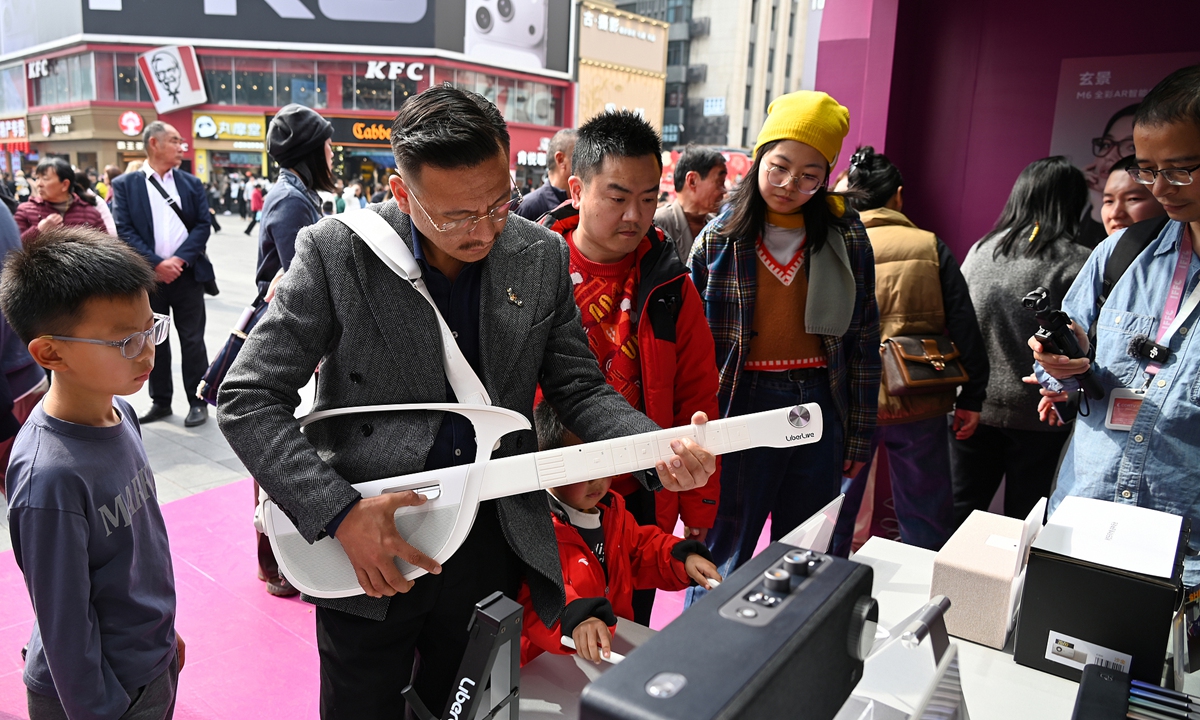
A visitor tries a stringless guitar at an AI technology exhibition in Chengdu, Sichuan Province, on February 14, 2026. Photo: VCG
"When I tell my friends about this, they are left thinking," said Sharma, referring to the high-tech emotional value products from China that are capturing attention in his home country.As a business consultant and a frequent visitor to trade shows across China since 2019, Sharma has closely followed the evolution of the country's latest technological offerings. He pointed out that currently, consumers are increasingly willing to pay for a product that can provide an intelligent relationship - one that can interact, respond, and even anticipate needs.
Sharma said that from companion robots to interactive smart toys, a new generation of products provides emotional solace by leveraging proprietary core technologies and patents. This foundation in research and development, and manufacturing scale is becoming Chinese companies' critical competitive edge as they extend into the global market.
At CES 2026, an annual consumer electronics trade show, AI-powered companion robots from Chinese firms drew significant crowds. As reported by Pakistan's ARY News, one new product is "warm and appears to breathe to make it more realistic," with the report suggesting such AI toys have the potential to be a new driver of consumer spending.
The smooth, responsive movements that bring these creations to life rely on breakthroughs in underlying hardware. "The flexibility and safety of a robot's movements and interactions depend entirely on one core component: the motor," said Chen Weijie, a representative at a technology company based in Dongguan, South China's Guangdong Province. His firm has achieved high integration of core parts - including encoders, control boards and gearboxes - essentially packing a complete control system into a single motor unit.
Beyond companion robots, another Chinese sensation taking CES and overseas social media by storm is the stringless guitar. A quick search for "China stringless guitar" on YouTube and other global platforms brings up videos with tens of thousands to hundreds of thousands of views.
According to China Media Group, Chinese companies independently developed the intelligent playing system for the stringless guitar. The built-in chip acts as a "music brain," analyzing pressed chords in real time and calling up authentic tones. The right-hand pick uses magnetic sensing technology to simulate the intensity and rhythm of strumming.
Requiring no complicated music theory or repetitive practice, this low-barrier, instant-gratification experience precisely hits the emotional needs of global users. Social media reactions echo the sentiment: "Great idea. The future" and "I actually love this idea! Really useful for when you want to sing and need backing instruments but don't feel like learning guitar first."
Chen's experience encapsulates this journey of innovation. "In the past, we only sold hardware, which meant low profit margins and frequent encounters with overseas patent barriers," Chen said, noting that this reality forced an understanding: only technological and patent innovation ensures a foothold in the global market.
Today, robots equipped with his company's self-developed technology are sold to 36 countries and regions, including the US, Germany, and Japan, for use in companionship, service, and domestic settings.
Chen pointed to this growing capability to conceive, engineer, and mass-produce as the engine behind the trend. "We're turning cutting-edge patents into accessible products," he said. "That's how emotional comfort is becoming a tangible good, newly made within reach for a global market."
Cultural code meets emotional needs
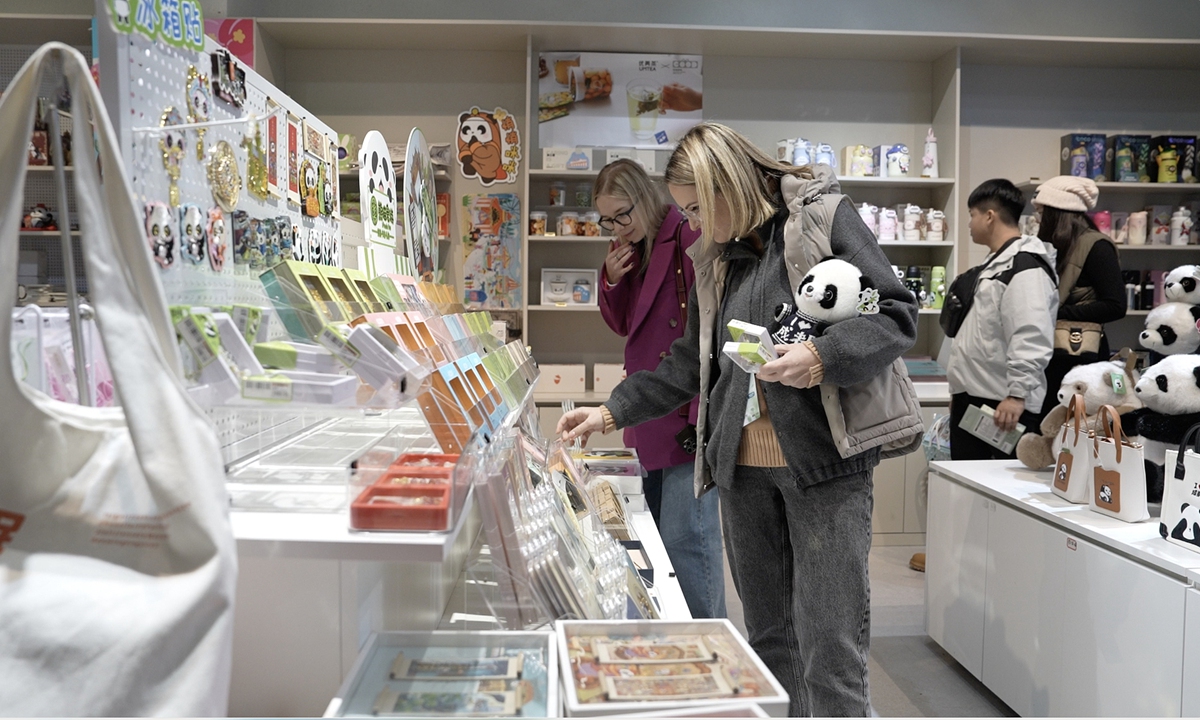
Foreign visitors shop for cultural and creative products in a store in Chengdu, Sichuan Province, on November 25, 2024. Photo: VCG
"I've always been naturally drawn to tradition," said Ghimire. For her, what resonates most about Chinese emotional value products isn't cutting-edge technology, but the traditional aesthetics and cultural depth woven into their design.In Nepal, she explained, people don't use the term "emotional value products," but they have long cherished items that carry profound emotional weight: traditional sweets like Pustakari and Gudpak, hand-woven Dhaka fabric bags, and small bamboo toys. "These products are rooted in tradition and craftsmanship, cherished for the emotions and memories they evoke," Ghimire said. That cultural affinity is precisely why she finds Chinese emotional value products so compelling: They speak to the universal human connection to heritage.
Today, a growing number of Chinese products are embracing distinct cultural identities in their design and aesthetics. In a January 2026 Financial Times article titled "Local brands weaken European luxury groups' grip in US and China," the head of luxury at consultancy Bain commented that certain Chinese brands "are better at interpreting heritage and local taste."
This ability to bridge cultural specificity and universal feeling lies at the heart of "Chinese-style emotional value," a narrative strategy that transforms weighty cultural symbols into approachable, tangible, and usable daily companions, Wu Qiaomei, brand marketing director of a trendy toy company in Dongguan, told the Global Times. "We don't just sell products. We create emotional companions rooted in our culture," she said.
Wu noted that consumers crave more than just a decoration. They want a companion that offers emotional comfort. Her team spent years refining the design, settling on skin-friendly rose velvet fabric and integrating intangible cultural heritage "lotus fragrance" beads that emit a subtle, soothing scent. This multi-sensory experience has struck a chord: The pillow secured numerous domestic and overseas orders before its launch, with exports now accounting for 30 percent of sales, expanding from Southeast Asia to Europe and the Americas.
Today in China, this blend of cultural storytelling and user-centric design isn't limited to toys. Singaporean business media Marketing Interactive has observed this aesthetic shift across categories, noting that in cosmetics, for instance, Chinese brands are "turning their products into storytelling canvases, drawing deeply from Chinese aesthetics and folklore. Rather than chasing Western standards, these brands are redefining what Chinese elegance looks like - both at home and abroad."
"Given China's over 5,000-year-old culture, their global popularity is totally understandable - It's a heritage that deserves to be preserved and shared worldwide," Ghimire said.
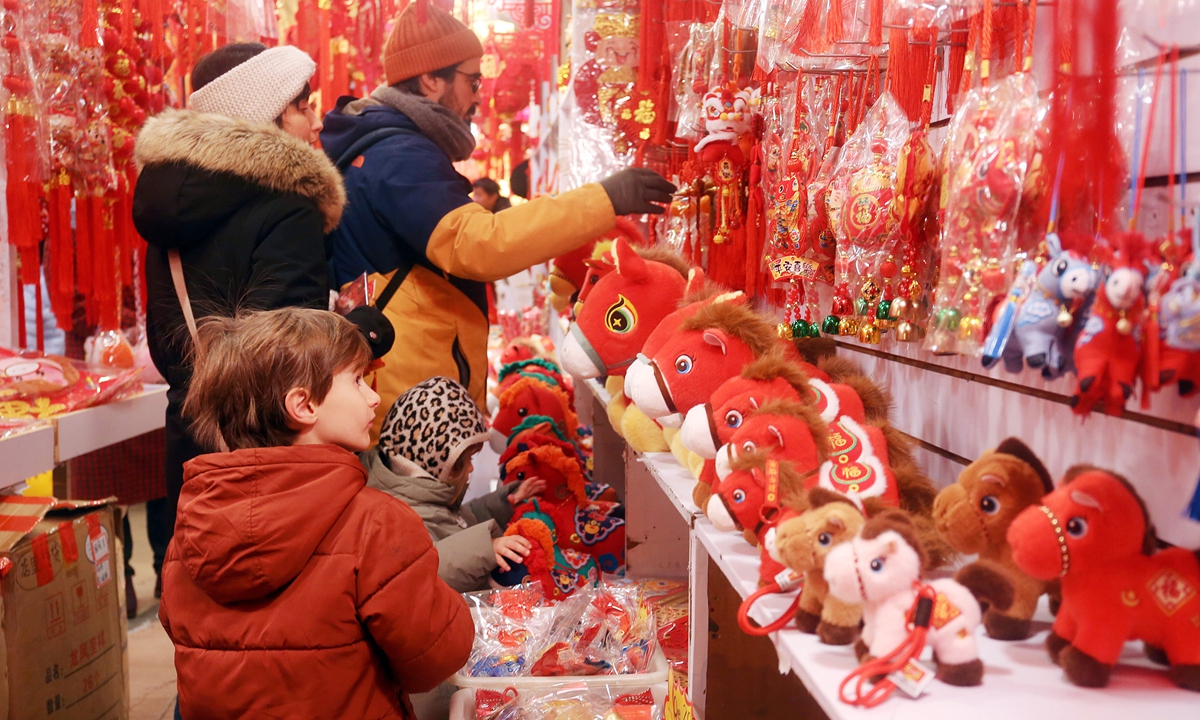
Foreign visitors select dolls featuring Chinese Year of the Horse zodiac elements at a tourist commodity market in Shanghai on February 11, 2026. Photo: VCG
Ghimire believed that this cultural resonance isn't about imposing culture on others, "but as a gift to be shared." "Every time I return home, I often bring cultural and creative products with Chinese traditional elements as gifts… It's a way to share Chinese culture and values. While rooted in Chinese traditions, they tap into universal emotions about comfort, nostalgia and playfulness."In a January report titled "Why China cares about being cool all of a sudden," The Wall Street Journal cited a media observation: "Many foreigners' perceptions of China may still be stuck at kung fu, the Great Wall and pandas. Now, through trendy collectibles, they are seeing a China full of creativity and attuned to young people's needs… Through these trend icons, China is reshaping the world's perceptions of who we are."
Looking ahead, Ghimire has high hopes for the future of Chinese emotional value products. "I expect Chinese enterprises and brands to grow even stronger," she said, "and to meet the needs of more people - no matter where they come from. Culture is a bridge, and these products are building it one heart at a time."
RELATED ARTICLES