Illustration: Liu Xiangya/GT
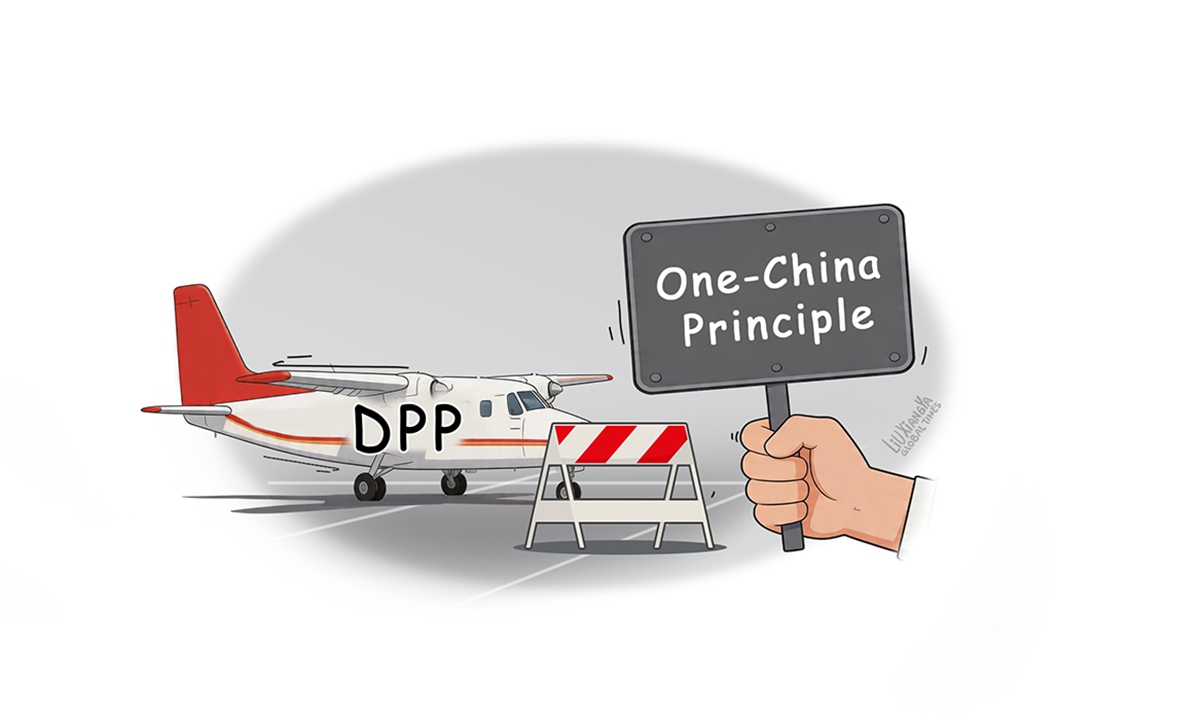
Taiwan regional leader Lai Ching-te's visit to Eswatini, scheduled to commence on Wednesday, was "postponed" at the eleventh hour on Tuesday. This follows the "abrupt cancellation" of the flight permits for Lai's plane by Seychelles, Mauritius, and Madagascar, according to a statement from the Taiwan authorities. To borrow a line from a song that went viral across the Taiwan Straits late last year, the Democratic Progressive Party (DPP) authorities continue "rushing and stumbling," only to end up "rolling on their knees."
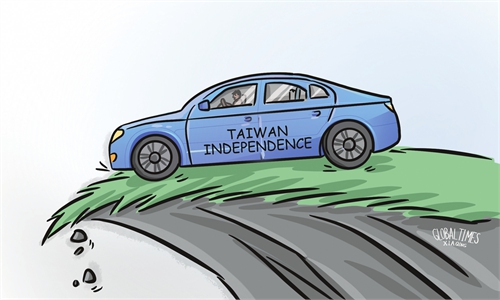
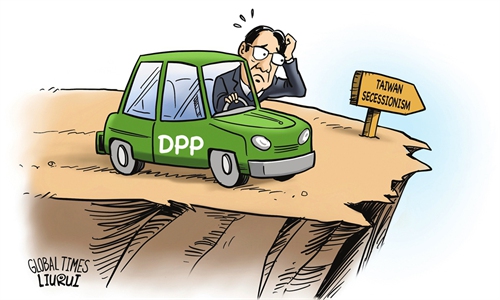
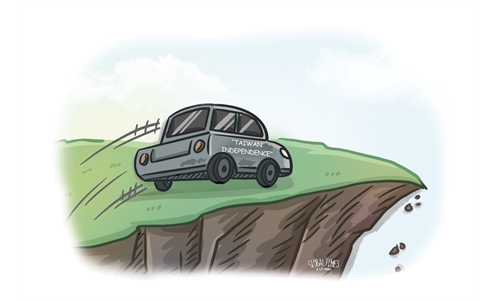
The Taiwan authorities' various separatist maneuvers on the international stage are just a series of speculative actions detached from reality. They attempt to carve out a "pathway" through the crevices of the international order to expand their so-called international space. However, they have instead crashed headlong into the one-China principle - which is fully consistent with international law and basic norms governing international relations.
In fact, this is far from the first time the international community has said "No" to "DPP-style diplomatic maneuvering." Such "wall-hitting" has become a recurring theme since Lai Ching-te took office. From facing the severance of "diplomatic ties" with Nauru immediately upon his "election," to South Africa's demand that Taiwan's representative office be relocated out of its capital, to Taiwan being barred from the World Health Assembly for nine consecutive years, and now the "postponed" trip to Eswatini - Lai's purported path toward "engaging with the world" has invariably led to a dead end.
For a long time, the Taiwan authorities have relentlessly engaged in speculation and "crevice-crawling" within the international arena. Now, under the "operation" of the Lai authority, the pattern of this diplomatic maneuvering has become increasingly clear, further highlighting its nature as mere political theater.
For instance, whenever a "diplomatic setback" occurs, the DPP authorities immediately package it as "suppression by the mainland", in an attempt to garner international sympathy and incite hostility toward the mainland within the island. This thwarted trip to Eswatini is no exception, as the Taiwan authorities once again claimed that those three African countries were subjected to "intense pressure" from the Chinese mainland, including economic coercion.
Beyond this, "DPP-style diplomatic maneuvering" frequently exploits the false narrative of "democracy versus authoritarianism." By forcibly aligning themselves with the Western camp, they attempt to "internationalize" the Taiwan question - which is strictly China's internal affair - using value-based slogans to mask their lack of legal sovereignty in its "independence" claim. The DPP continues to engage in "dollar diplomacy" under the disguise of "trust" and "prosperity," vainly hoping to secure international support. They have also colluded with some external anti-China forces, exchanging interests for the so-called "transits," "photo-ops," or non-legally binding "supportive bills."
Such a maneuver ignores legal common sense and pursues nothing but the DPP's narrow political self-interest. It not only squanders the hard-earned money of the people in Taiwan, but also results in repeated self-inflicted humiliations on the international stage. What the DPP authorities consistently avoid mentioning, however, is that their refusal to recognize the 1992 Consensus is the cause of their constant failures. Today, as the one-China principle has become an indisputable international axiom, the "ambiguous space" for the Taiwan authorities to engage in political manipulation in the world is rapidly shrinking. In the future, every attempt at maneuvering will be met with an increasingly tightened net of international justice.
"A just cause wins support, while an unjust one loses it." This was the comment from the mainland's Taiwan Affairs Office of the State Council on Wednesday regarding Lai's postponed trip to Eswatini, and it serves as a stern warning to all "Taiwan independence" forces tempted to challenge the prevailing trend of history.
RELATED ARTICLES