Illustration: Liu Xiangya/GT
Last Friday, French President Emmanuel Macron, speaking in Athens alongside Greek Prime Minister Kyriakos Mitsotakis, made a striking claim: the US, Russia and China are now all "dead against" the Europeans.
The words quickly reverberated across international media. But, upon careful examination, the equation that places China alongside Russia and the US is logically flawed and factually wrong.
The framing conjures a dramatic narrative of Europe besieged on all sides. Yet the three cases are fundamentally different. The Russia-Ukraine conflict has brought the specter of armed conflict back to the European continent - a direct assault on the security order on which the EU depends.
The US, meanwhile, has been weaponizing the alliance itself. Just as Macron was making his remarks, news broke that the Trump administration was threatening to suspend Spain's NATO membership and to reconsider American support for British claim to the Malvinas Islands, reportedly in response to London and Madrid's reluctance to back US military action against Iran.
It is not a rivalry, but a coercion: using an ally's core national interests as leverage to force compliance. It is naked hegemonic pressure, and it tells us something important - the power most visibly harming European interests right now is the US.
So what exactly has China done to deserve the label "dead against" the Europeans? China has not launched a trade war against Europe. If anything, the sequence ran the other way: It was the EU that first imposed steep tariffs on Chinese electric vehicles, citing alleged unfair subsidies. China's subsequent countermeasures were a proportionate response, not an opening salvo. Militarily, China has not threatened a single inch of European territory. Politically, China has not interfered in European domestic affairs, bankrolled European political parties or lectured European governments on how to run their countries.
Beijing's stated position has consistently supported European strategic autonomy and a multipolar international order - a posture that stands in marked contrast to Washington's long habit of treating Europe as a strategic dependent.
If real tension exists between China and Europe, it is industrial competition, not confrontation. It is pressure, not harm. That distinction matters enormously.
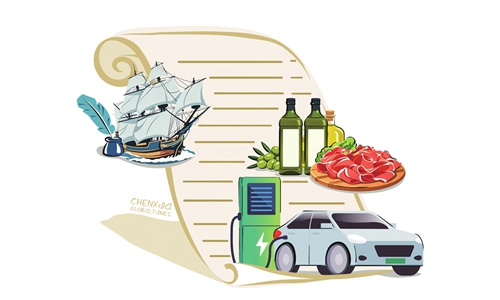
The story of OMODA & JAECOO, a sub-brand under Chinese automaker Chery, illustrates the point well. This month, the brand officially entered the French market, signing up 100 dealerships within a few weeks and targeting 130 outlets by year's end. It has established a research and development center in Paris, appointed beloved French actor Jean Reno as its brand ambassador and set up its European operational headquarters in Barcelona.
European consumers are voting with their wallets. They are not asking where a car was made; they are asking whether it is good value, well-designed and properly electrified. This puts pressure on French automakers and on the European auto industry more broadly. But that pressure flows from market competition and a choice for how to cooperate.
Chery's coming to France brings R&D investment, local employment, dealer networks and expanded consumer choice. That is categorically different from Russian missiles or American tariff threats.
The harder question for Europe is this: Why did French carmakers fall a full generation behind on the electric transition? That is a European strategic failure, not a Chinese plot.
When Macron reaches for the dead against framing, there is a domestic political logic to it - deflecting internal frustration, justifying protectionist measures and rallying a sense of collective European purpose against external threats. But rhetoric does not restore industrial competitiveness, and misidentifying the problem makes it harder to solve.
The fundamental nature of the China-EU relationship is about how to grow together. That is what separates it from both the EU-Russia and EU-US dynamics.
There is enormous space for dialogue and collaboration on green energy, electric vehicle supply chains, advanced manufacturing and market access. China needs Europe's technological depth, brand prestige and rule-making experience. Europe needs China's manufacturing scale, cost efficiency and vast consumer market.
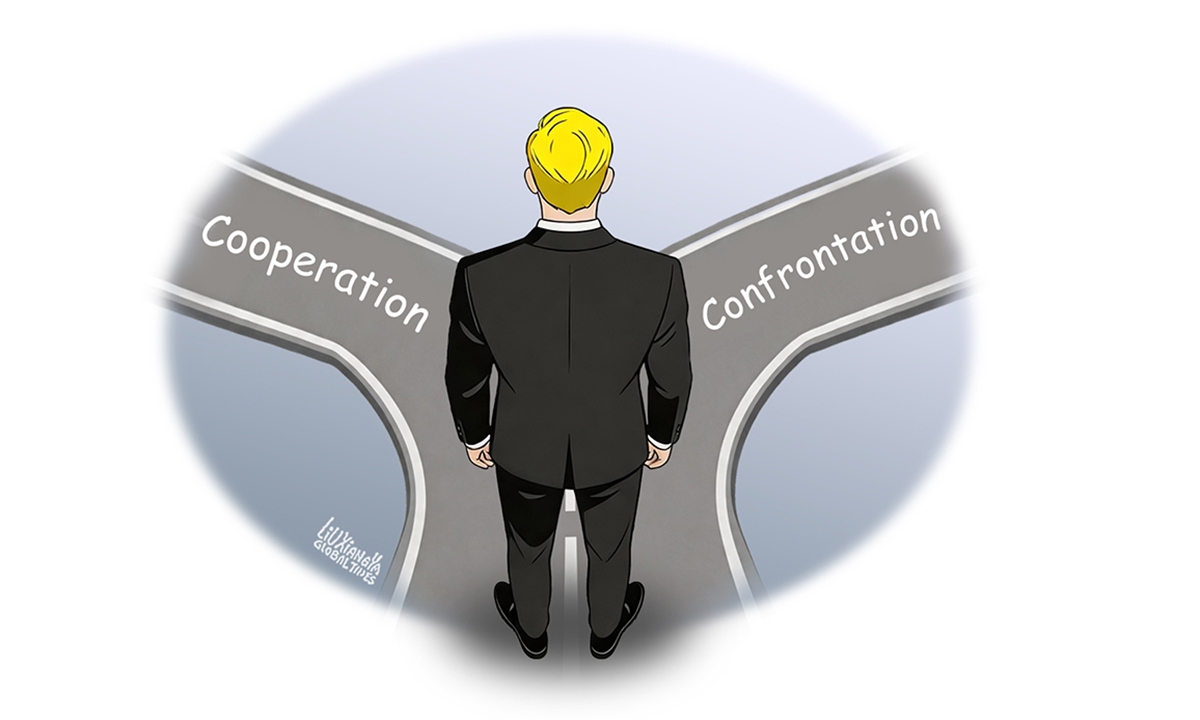
What Europe needs is not more enemies. It needs clearer thinking and a more pragmatic framework for managing its relationship with China. China is not Europe's threat. China is a force Europe must learn to compete with, engage with, build with and, where possible, cooperate with. That is the real strategic question of the 21st century.
RELATED ARTICLES