Photo: VCG
The latest data shows that in the first quarter of this year, 1.45 million Chinese tourists visited South Korea, representing a year-on-year increase of 29 percent, while more than 2.66 million South Korean visitors traveled to China, marking a 24.1 percent year-on-year rise. As these two flows of people move toward and intertwine with each other, one conclusion emerges: People-to-people exchanges between China and South Korea are undergoing structural acceleration.In November 2024, China implemented a visa-waiver policy for South Korean citizens, followed by South Korea's introduction of visa-free entry for Chinese group tourists in 2025. The sequential rollout of these two policies has released a "reservoir" of exchange demand that had long been suppressed by visa requirements.
Once policy barriers were lifted, the pent-up momentum of bilateral exchanges was quickly unleashed. Weekend getaways and spontaneous trips have increased. South Korean tourists are becoming noticeably younger, and their destinations are expanding from major cities to port cities such as Weihai and Qingdao. China and South Korea are increasingly becoming part of each other's "weekend living circle."
As young people travel back and forth, the most direct outcome is the accelerating integration of consumer brands. The food and beverage sector has led the way - malatang and Haidilao have established steady customer bases in South Korea, while Chinese tea drink brands are entering the Korean market. The "Chinese lifestyle" is increasingly becoming a daily option for South Korean consumers.
The flow of cultural content is also expanding. Chinese suspense, urban and period dramas are entering the South Korean market. More importantly, co-creation is emerging - KBS has signed a strategic partnership with China's CCTV, and SBS with iQIYI, with creators from both countries working together on shared projects.
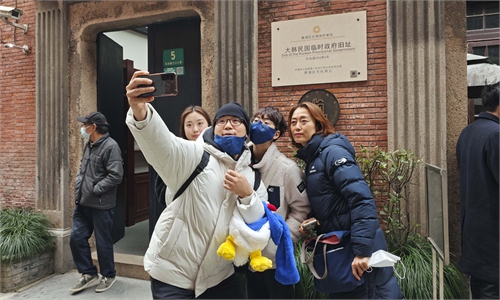
Offline experiences are also becoming more immersive. South Korean tourists are moving beyond surface-level sightseeing to explore China's morning markets and everyday neighborhoods. The historical site of the Provisional Government of the Republic of Korea in Shanghai and the Exhibition Hall of Evidence of Crime Committed by Unit 731 of the Japanese Imperial Army in Harbin are becoming meaningful destinations for South Korean visitors. People in both countries are beginning to share more genuine and common emotional connections.
Behind these changes lie four structural driving forces. First, policy relaxation has aligned precisely with actual demand. The foundational conditions between China and South Korea - geographical proximity, cultural similarities and deeply intertwined industrial chains - have always existed. The implementation of visa waivers became the most critical link in igniting this demand.
Second, competition and cooperation between the two countries' industries have laid a solid foundation. Unlike a decade ago, Chinese brands today are going global based on quality, creativity and experience. China's new tea beverage, e-commerce, gaming, and film and television industries now operate on the same generational level as their South Korean counterparts. Without this foundation, visa waivers alone would not have led to two-way brand and content recognition.
Third, the vitality and confidence of the younger generation on both sides play a key role. China's post-90s and post-00s generations are familiar with South Korean variety shows and K-pop, while young South Koreans are increasingly exposed to TikTok and malatang. As active internet users, they rely less on intermediaries to "introduce" each other's cultures and prefer direct experience.
Fourth, channels for "seeing each other" are expanding. In the past, South Koreans' understanding of China relied heavily on domestic media reporting, which involved selective and distorted narratives. Today, South Korean journalists and bloggers are directly setting up accounts on Chinese social media platforms to engage in real-time dialogue with Chinese netizens, while short videos bring shopping lists and cultural products straight to Korean audiences. This "what you see is what you get" dynamic significantly reduces the space for stereotypes.
The growing interactions are gradually breaking down invisible barriers. There remains significant potential for both countries to deepen cooperation in tourism, cultural exchange and youth engagement. The key to sustaining and strengthening the momentum of China-South Korea people-to-people exchanges lies in acknowledging differences and focusing on shared ground, transforming policy convenience into real exchanges, and turning exchanges into cultural understanding and mutual affinity.
The author is deputy director of the Center for Korean Studies at Shandong University.opinion@globaltimes.com.cn
RELATED ARTICLES