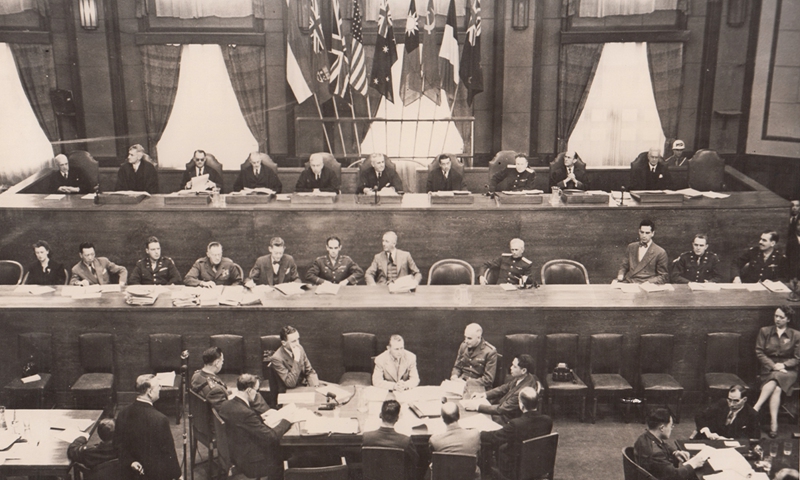
Judges of the International Military Tribunal for the Far East are seated on May 3, 1946, the opening day of the Tokyo Trial. Photo: Courtesy of Database of the Tokyo Trials Literature, Shanghai Jiao Tong University
Editor's Note:
This year marks the 80th anniversary of the beginning of the International Military Tribunal for the Far East, which is also known as the Tokyo Trial.
Eighty years ago, judges from 11 countries presided over 818 hearings over two and a half years, 419 witnesses testified, 4,336 pieces of evidence were examined, and more than 48,000 pages of trial records were produced. In the end, 25 defendants were found guilty, and seven of them, including Hideki Tojo, were sentenced to hanging.
This was a just reckoning with the crimes of Japanese militarism, and a warning to anyone attempting to revive militarism.
As the largest international trial in human history, the Tokyo Trial carries profound historical significance. Together with the Nuremberg Tribunal, they established through international judicial practice for the first time that "a war of aggression constitutes a crime" and that individuals must bear criminal responsibility for it. They sent a clear message to the world that "aggression will be punished and atrocities will be held to account," laying an important cornerstone of the post-war international order.
Looking back on the century-defining trial, its historical weight has not diminished in the slightest with the passage of time.
RELATED ARTICLES