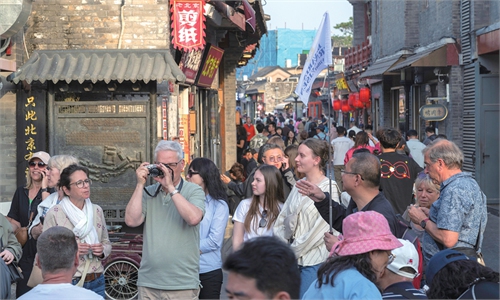
Foreigners explore rural China: Ancient villages captivate global visitors with immersive experience
Foreigners explore rural China

Tourists enjoy the view in Longsheng county, South China's Guangxi Zhuang Autonomous Region. Photos: VCG
"Wish we could wear these beautiful costumes in daily life, they're absolutely stunning. As a foreigner, I'm totally obsessed with traditional ancient Chinese outfits - Hanfu, qipao, and all ethnic minority costumes. They're all incredibly gorgeous!"The comment came from a post on Chinese lifestyle platform Xiaohongshu, or RedNote, by an Italian girl named Lucrezia, which she edited on Thursday alongside 11 photos of herself dressed in traditional Miao ethnic clothing in the Xijiang Qianhu Miao village in Leishan county, Southwest China's Guizhou Province, the Global Times reporter noted.
In another post, Lucrezia shared her thoughts and impressions of her journey in the Chinese village: "Visited a quiet Miao village near Guiyang. Tried on the beautiful traditional Miao ethnic clothes, surrounded by mountains and village breeze. Loved this slow, cultural moment in Guizhou."
As "China travel" continues to soar on the international level, a growing number of foreign tourists are venturing deeper into the ancient villages in the country to embrace the natural beauty and idyllic rural scenery found there, which reflects a fast-growing new travel trend among international visitors.
Data from Trip, one of China's leading online travel platforms, shows that amid China's continuous expansion of its visa exemption policies for foreign visitors, the country's inbound tourism market has continued gaining momentum. For rural resort farmstays, 2025 full-year inbound tourist orders surged by over 50 percent year on year, with inbound guest overnight stays climbing by more than 75 percent.

Visitors from Bhutan record a video at the Potala Palace square in Lhasa, capital city of Southwest China's Xizang Autonomous Region, on April 22, 2026.
Cultural immersion"Today is the first day of the May Day holidays, so it feels like the perfect moment to dive deeper into Chinese culture," said a tourist named Luuk from the Netherlands in a video posted on Xiaohongshu that showed him embracing local life in Daqitou village, Leping town in Foshan, South China's Guangdong Province.
As more foreign travelers explore rural China, their trips are shifting from quick sightseeing stops to immersive experiences, allowing them to experience authentic Chinese life up close.
"As I start walking around, you can really feel the history in every corner," Luuk says in the video as he wanders leisurely through the quiet lanes of the ancient village, soaking up its timeless charm and traditional rural vibes. He also tried playing the traditional Chinese instrument guzheng and tried baduanjin, a traditional Chinese breathing and stretching exercise, the Global Times reporter noticed.
"For me, this was another special experience in China, and I really enjoy learning more about Chinese culture like this," says the Dutch tourist.
Beyond the May Day holidays, a growing number of foreign visitors also traveled to China's time-honored ancient villages to soak up the immersive festive spirit of the Chinese New Year. According to CCTV.com, in Chaoyang village, nestled within the Taihang Grand Canyon in Linzhou city, Central China's Henan Province, folk artists gave live demonstrations of traditional crafts such as rubbings, paper-cutting and sugar painting. Their exquisite handiwork and engaging interactive sessions allowed foreign visitors to intimately appreciate the unique allure of traditional Chinese culture.
Village tourism in China has grown increasingly life-oriented and down-to-earth, drawing international visitors closer to the everyday lives of local people. Instead of rushing through scenic spots for quick photo stops, foreign tourists can now fully immerse themselves in authentic local experiences, Zhang Lingyun, a professor and the executive editor-in-chief of the Tourism Tribune, told the Global Times.
"This genuine, all-embracing village immersion is precisely one of the key reasons that make the Chinese countryside such a compelling draw for a rising number of foreign travelers," Zhang said.
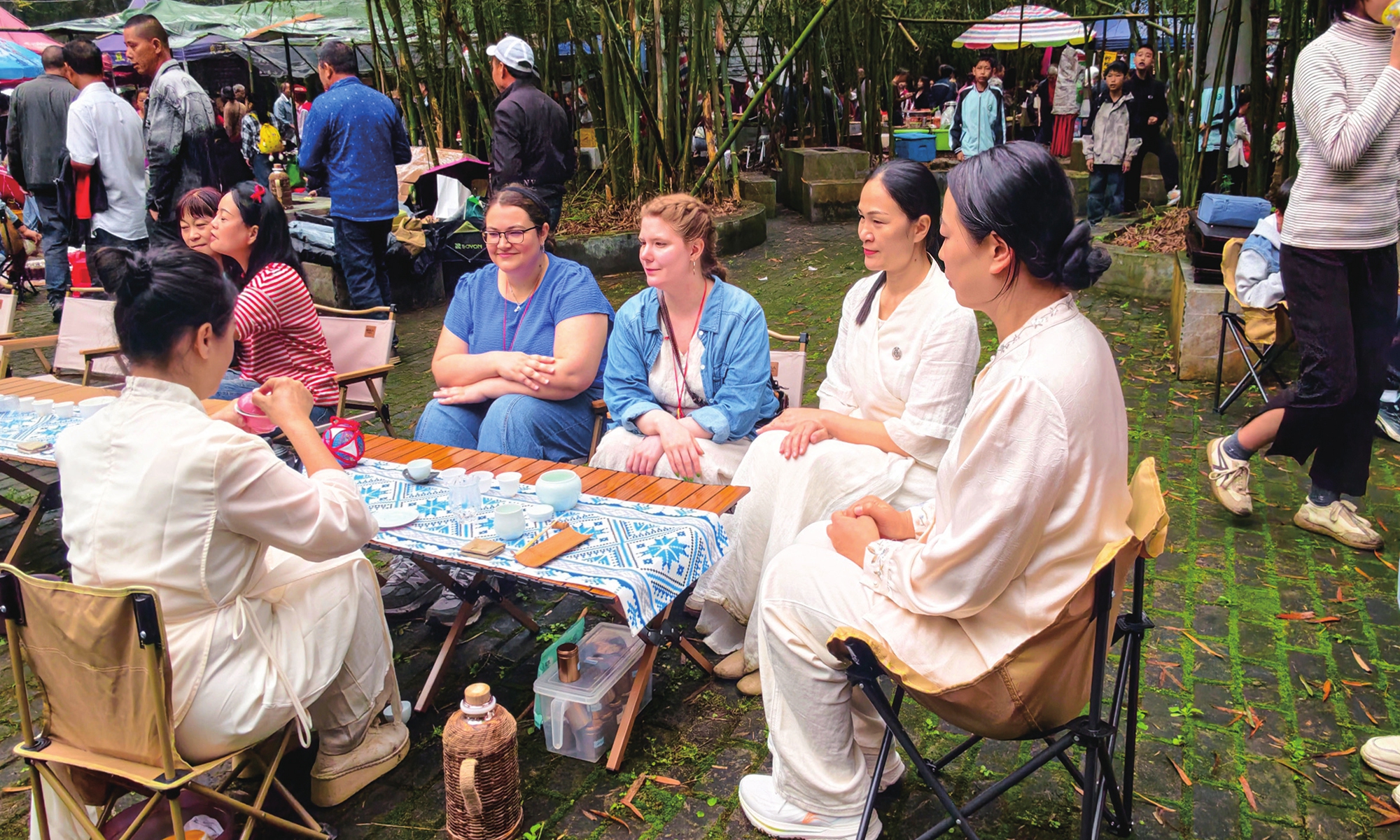
Foreign tourists experience Chinese tea culture in Zhangkou village, South China's Guangxi Zhuang Autonomous Region, on April 17, 2026.
Genuine insightChina's rural tourism is winning growing international recognition. According to the Xinhua News Agency, China now boasts a total of 19 "Best Tourism Villages" as recognized by the UN Tourism, and its continuous recognition of China's rural destinations attests to the exemplary work of China's rural tourism industry and to global acclaim for the drastic changes taking place in rural areas in China.
As more international visitors visit these idyllic rural destinations, they are gaining a deeper, firsthand understanding of the real China, as they truly immerse themselves in living Chinese ink-wash paintings in ancient villages, analysts said.
"This village is hundreds of years old, and it still feels alive," said British vlogger Barrett in a video posted on Chinese social media platform Sina Weibo documenting his visit to the historical villages of Xidi, a UNESCO World Heritage Site in Yixian county, East China's Anhui Province.
Wandering through the village's stone lanes, white walls and dark tiled roofs, and admiring the brick carvings embedded with philosophical allusions, Barrett says, "Xidi isn't just beautiful, it reflects traditional Chinese philosophy, family values and social order. Walking here feels like stepping straight into a living history book," according to a CRI Online report.
Immersive travel in rural China allows foreign visitors to experience firsthand the unique local customs and down-to-earth daily life of the countryside, Zhang told the Global Times, noting that by stepping into ancient villages, international guests can soak in the authentic scenery with their own eyes and gain a genuine feel of rural China.
Immersive experiences allow international visitors to actively engage with local villagers, gently blend into the rhythms of rural life and embrace its sincere traditions and folk customs, Zhang said. "It is this exquisite fusion of in-depth on-site exploration and timeless rural charm that allows overseas visitors to see China in a more striking and genuine way," the expert said.
RELATED ARTICLES