Putin to pay state visit to China amid a new wave of diplomacy in China; more countries see engagement with China as embracing opportunities, stability and growth: Chinese expert
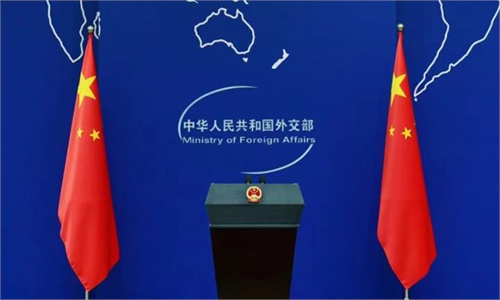
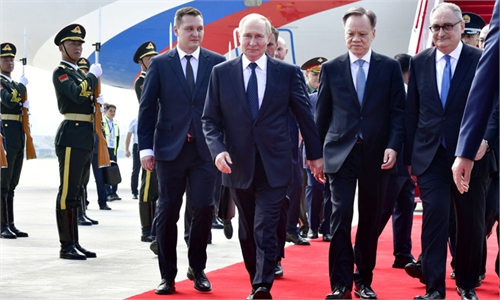
At the invitation of President Xi Jinping, Russian President Vladimir Putin will pay a state visit to China from May 19 to 20, Chinese Foreign Ministry Spokesperson announced on Saturday, according to the official website of the Chinese Foreign Ministry. The announcement came shortly after the Kremlin statement on the same day.
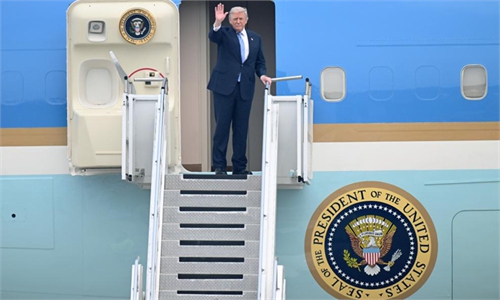
Observers used a metaphor — the world is now "calibrating" to Beijing Time — noting that since late last December, when French President Emmanuel Macron led the way, western leaders have visited China in quick succession, creating a major wave of high-level diplomacy. Now, the recently concluded high-profile visit by US President Donald Trump has sparked yet another surge, with Russian President Vladimir Putin's upcoming visit and Pakistani Prime Minister Shehbaz Sharif's reported visit soon.
Zhang Hong, a research fellow at the Institute of Russian, Eastern European and Central Asian Studies at the Chinese Academy of Social Sciences, told the Global Times that amid rising global uncertainty, China is becoming one of the most important sources of stability and certainty for the international community. Whether among Global South countries or traditional major powers, more and more countries increasingly recognize that "engagement with China means embracing opportunities, stability and growth."
According to the Russian statement, the timing of Putin's visit was highlighted at the outset: "The Russian President's visit is timed to coincide with the 25th anniversary of the Treaty of Good-Neighbourliness and Friendly Cooperation, which serves as the basis for interstate relations."
With China-Russia comprehensive strategic partnership of coordination for a new era, China and Russia have numerous practical cooperation needs. Putin's visit to China this time acts as an accelerator for the development of China-Russia relations, playing a facilitating role in steadily advancing bilateral ties, Zhang said.
According to the Kremlin, a joint statement along with a number of bilateral intergovernmental, interdepartmental, and other agreements, will be signed following the talks.
This indicates that the visit clearly includes a practical intergovernmental cooperation agenda, Zhang said, further noting that a key feature of China-Russia relations is the combination of head-of-state strategic guidance and implementation through government systems. While leaders set the overall direction, a large volume of cooperation is carried out through top-down coordination at various governmental levels and between enterprises.
The statement released by the Kremlin also mentioned "trade and economic cooperation." Zhang noted that key areas are expected to include deeper energy cooperation such as long-term oil and gas supply, energy settlement, and infrastructure coordination, and cooperation on Arctic routes and Eurasian logistics covering transport, ports, and supply chains.
He added that high-tech and industrial cooperation in areas such as aerospace, artificial intelligence, digital economy, chip substitution, and manufacturing, along with agricultural and grain trade and further alignment between the Belt and Road Initiative and the Eurasian Economic Union, would also be key areas of focus, he said.
Speaking at a previous press conference in early May, Putin described cooperation between states like China and Russia as "undoubtedly a factor of deterrence and stability" in global affairs, said the Xinhua News Agency on May 10. He noted that China is Russia's largest trade and economic partner, adding that bilateral trade diversification continues through high-tech industries, which is very important.
The Kremlin's statement also mentioned the launch of the China-Russia Years of Education (2026-2027), and that the two leaders will attend its opening ceremony. "It signals not only education cooperation alone, but also reflects that China-Russia relations are further extending beyond traditional political, security, and energy cooperation toward a long-term strategic connection at the social, cultural, and youth levels," Zhang said.
Education cooperation has long cycles and lasting impact. Once youth exchanges, joint training, language education and research cooperation reach scale, their effects can last for decades. "This shows both sides are not only focused on the current international situation, but are also laying the social foundation for the next generation of China-Russia relations," the expert said.
Observers used a metaphor — the world is now "calibrating" to Beijing Time — noting that since late last December, when French President Emmanuel Macron led the way, western leaders have visited China in quick succession, creating a major wave of high-level diplomacy. Now, the recently concluded high-profile visit by US President Donald Trump has sparked yet another surge, with Russian President Vladimir Putin's upcoming visit and Pakistani Prime Minister Shehbaz Sharif's reported visit soon.
Zhang Hong, a research fellow at the Institute of Russian, Eastern European and Central Asian Studies at the Chinese Academy of Social Sciences, told the Global Times that amid rising global uncertainty, China is becoming one of the most important sources of stability and certainty for the international community. Whether among Global South countries or traditional major powers, more and more countries increasingly recognize that "engagement with China means embracing opportunities, stability and growth."
According to the Russian statement, the timing of Putin's visit was highlighted at the outset: "The Russian President's visit is timed to coincide with the 25th anniversary of the Treaty of Good-Neighbourliness and Friendly Cooperation, which serves as the basis for interstate relations."
With China-Russia comprehensive strategic partnership of coordination for a new era, China and Russia have numerous practical cooperation needs. Putin's visit to China this time acts as an accelerator for the development of China-Russia relations, playing a facilitating role in steadily advancing bilateral ties, Zhang said.
According to the Kremlin, a joint statement along with a number of bilateral intergovernmental, interdepartmental, and other agreements, will be signed following the talks.
This indicates that the visit clearly includes a practical intergovernmental cooperation agenda, Zhang said, further noting that a key feature of China-Russia relations is the combination of head-of-state strategic guidance and implementation through government systems. While leaders set the overall direction, a large volume of cooperation is carried out through top-down coordination at various governmental levels and between enterprises.
The statement released by the Kremlin also mentioned "trade and economic cooperation." Zhang noted that key areas are expected to include deeper energy cooperation such as long-term oil and gas supply, energy settlement, and infrastructure coordination, and cooperation on Arctic routes and Eurasian logistics covering transport, ports, and supply chains.
He added that high-tech and industrial cooperation in areas such as aerospace, artificial intelligence, digital economy, chip substitution, and manufacturing, along with agricultural and grain trade and further alignment between the Belt and Road Initiative and the Eurasian Economic Union, would also be key areas of focus, he said.
Speaking at a previous press conference in early May, Putin described cooperation between states like China and Russia as "undoubtedly a factor of deterrence and stability" in global affairs, said the Xinhua News Agency on May 10. He noted that China is Russia's largest trade and economic partner, adding that bilateral trade diversification continues through high-tech industries, which is very important.
The Kremlin's statement also mentioned the launch of the China-Russia Years of Education (2026-2027), and that the two leaders will attend its opening ceremony. "It signals not only education cooperation alone, but also reflects that China-Russia relations are further extending beyond traditional political, security, and energy cooperation toward a long-term strategic connection at the social, cultural, and youth levels," Zhang said.
Education cooperation has long cycles and lasting impact. Once youth exchanges, joint training, language education and research cooperation reach scale, their effects can last for decades. "This shows both sides are not only focused on the current international situation, but are also laying the social foundation for the next generation of China-Russia relations," the expert said.
RELATED ARTICLES