Illustration: Chen Xia/GT
From the yen's nosedive to colorless potato chip packs, Japan is ringing with economic alarm bells. Yet even as its economic foundations are shaken and torn, Tokyo marches on with its remilitarization. Is this real courage, or a costly mirage?
In May, Japan's snack industry quietly staged a "color revolution." Calbee announced it would switch some of its packaging to black and white, due to certain raw materials supply disruptions caused by the Middle East crisis. Reports suggest other food makers may follow. If this continues, a trip to a Japanese supermarket could soon feel like stepping into a black-and-white silent film. What seems trivial actually signals something deeper: the fragility of Japan's economy.
Even worse, in late April, the yen slid past 160 per dollar, reaching its weakest level since 2024. The government rushed to intervene via purchasing massive quantities of yen. Reports indicate that Tokyo spent 9.8 trillion yen ($61 billion) intervening in the foreign exchange market at the end of April and early May.
Yet, as of press time, the USD/JPY exchange rate is hovering near 159, rendering previous government efforts almost futile. More dangerously, once depreciation expectations take hold, a wide-range sell-off could follow, driving the cost of defending the currency even higher.
The bitter fruits of yen weakness are ultimately borne by the Japanese people. Japan's heavy reliance on imports is a well-documented economic reality. And when the yen plunges, import costs surge.
On economic and fiscal policies, Japanese Prime Minister Sanae Takaichi once said she would promote domestic investments under the "responsible and proactive fiscal policy" to build a strong economy, with energy subsidies.
Yet ordinary wallets have felt no warmth. The reason is simple: the imported inflation triggered by the yen's depreciation has already devoured every yen of those subsidies. A Japanese housewife now pays more than 800 yen for a kilogram of rice, nearly double the price in 2024. What about her husband's wages? Data show that Japanese workers have experienced four consecutive annual declines in real wages. This is the harsh reality of yen depreciation.
Small- and medium-sized enterprises are being hit even harder. Soaring costs for imported raw materials are squeezing profits to the bone. Reports show that corporate bankruptcies in Japan involving debts of at least 10 million yen rose to 883 in April, up 6.6 percent from a year earlier.
Yet Takaichi shows little intention of focusing her main energy on rescuing the economy. Her campaign slogan of a "Prosperous and Strong Japan" sounded forceful, but observers say behind it lies a heavy right-wing political agenda: binding industrial revitalization tightly to military expansion and remilitarization. And she has obviously been more focused on hyping the so-called "threats" from the neighboring countries, damaging normal China-Japan trade ties, and provoking China into strengthening export control on dual-use items to Japan.
The result? Supplies of critical materials such as rare earths have been disrupted. Japanese automakers, defense contractors, and high-end manufacturers have already experienced production halts.
Against this backdrop, Takaichi is still busy accelerating the 2 percent military budget target ahead of schedule and lifting bans on the export of lethal weapons.
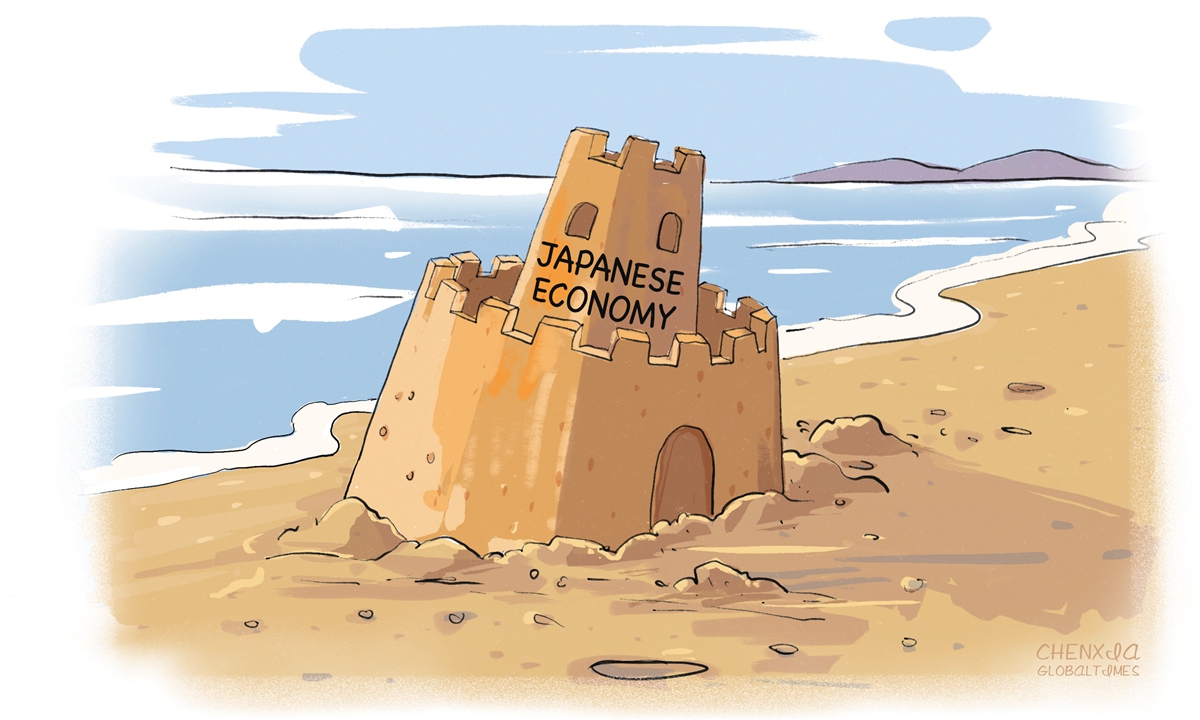
However, with the economy mired in quicksand, livelihoods deteriorating, industries hollowing out, and energy and raw materials impossible to secure independently, these militarist ambitions amount to little more than a castle built on shifting sand.
Using militarism to divert attention from domestic woes is classic poison-drinking to quench thirst, a form of self-deception. What Japanese citizens care about most right now are prices, wages, and daily life - not some illusory dream of military strength. Constantly stoking external threats only deepens social divisions and will ultimately be devoured by the very economic problems they were meant to obscure.
While China and the US, China and Russia, seek cooperation on key issues, Japan is erecting its barriers and exhausting itself. In the great currents of international politics, Japan is swimming against the tide. Worse still, Japan is attempting to build a new militaristic state on the shaky foundation of an economic quagmire. It's not hard to see where it leads.
RELATED ARTICLES