Illustration: Xia Qingi/GT
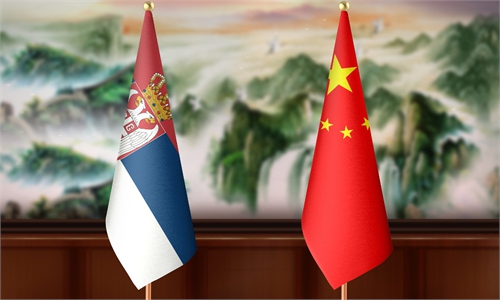
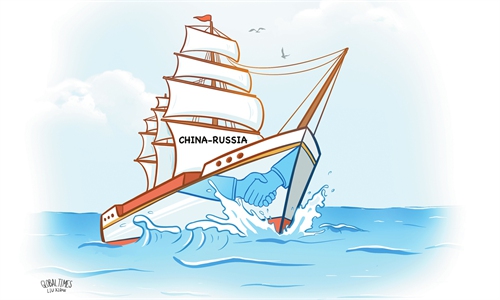
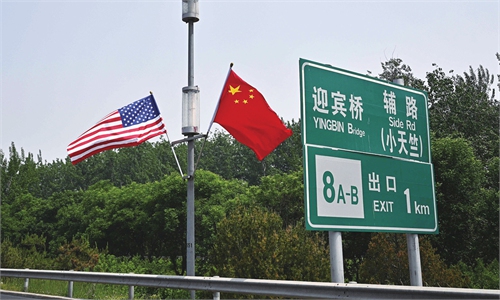
Editor's Note:China's diplomacy has gathered notable momentum of late. Since May, a succession of leaders from countries including Tajikistan, the US, Russia, Pakistan and Serbia - spanning major Western powers, Global South nations, close neighbors and partners - have visited China one after another. What does this flurry of high-level visits signal? And how might this sustained diplomatic tempo reshape China's role in this multipolar world? The Global Times has invited three experts to share their in-depth analyses.
Zivadin Jovanovic, president of the Belgrade Forum for a World of Equals who served as the minister of foreign affairs of the Federal Republic of Yugoslavia between 1998 and 2000
China, as a global power with so many unique socio-economic, scientific and cultural achievements and qualities, including openness for win-win cooperation, has naturally always been a desirable destination for visits of the highest foreign statesmen, diplomats, businessmen and scholars. Some of them seek true partnership in equitable cooperation, some explore secrets of the Chinese innovation development "miracle," and some look for advice or support for resolving various situations and shortcomings. China's history of openness, respect for partners and devotion to win-win cooperation won it the universal recognition.
The wave of China visits continues, and it may even intensify in the future. Why?
First, over decades, China has emerged as the most prosperous economic, technological, diplomatic and trustworthy global power with a clear principled policy of peaceful co-existence. Second, China has no record of aggression, colonial or neo-colonial exploitation of other countries. Third, China has been the most important contributor to the global GDP rise, overcoming the global financial, development, pandemic, as well as other slowdowns and crises. Fourth, China has been in the forefront of the global majority's efforts to build a new democratic multipolar world order, which is more just and excludes hegemonism, coercion, interventionism and expansionism and responds to and serves the interests of all humanity, not only the "first class" minority.
Finally, China has proved to be effective not only by presenting a number of global initiatives such as on development, security, civilization and governance but also by finding sustainable solutions for concrete international disputes, conflicts and challenges.
The secret of China's diplomatic success lies in unselfishness, respecting the fundamental interests of all sides, and patience.
Let us not be misled. The talks in Beijing could have not been devoted to bilateral issues and ways to solving burning conflicts only. Whatever importance and urgency for solving them, the bulk of attention had to be devoted to the consensus on acceptance of the need of the new multipolar world order, on recognition that roots of all conflicts and problems lie in the present disorder which came about during unipolarity.
Solutions of all concrete conflicts, recuperation from serious consequences and prevention from repetition or, even, potential global conflict, demand recognition of accommodation to the new democratic multipolar world order. China plays a pivotal role as a builder and advocate of this new multipolar order, promoting dialogue, stability and fairer global governance.
Josef Gregory Mahoney, a professor of politics and international relations and director of the Center for Ecological Civilization at East China Normal University in Shanghai
In May 2026, US President Donald Trump and Russian President Vladimir Putin visited Beijing. They joined a long line of leaders from other parts of the world who have increasingly turned to China for solutions - peace talks, debt restructuring, trade corridors, climate adaptation.
Some analysts have invoked the Thucydides' Trap - the idea that a rising power, for example, Athens, will inevitably clash with an established one, for example, Sparta. They cast China as Athens and the US as Sparta. But this misreads both history and the present. The real lesson lies in the "Melian Dialogue," a key passage in History of the Peloponnesian War, where Athens demanded submission from neutral Melos, declaring: "The strong do what they can and the weak suffer what they must." That was not a prescription but a diagnosis - and a prophecy of self-destruction. Athens soon collapsed from overreach.
China is neither Athens nor Sparta. For most of history, China was the world's preeminent power, not a restless riser. China's long history was supported with a foreign policy that was relatively self-limiting when compared with Western imperialism. More importantly, China today does not seek global empire or binary confrontation. Thucydides knew that empires die not when they are weak, but when their confidence becomes folly.
This is not merely the lesson we have learned over the last 20 years; it's the same lesson we've learned from the past 200 years of Western domination. From the much longer perspective of Chinese history, the West has always been Athens, Rome, Britannia and "America," and always been the rising power that aimed to overthrow in one form or other civilizations that have lasted millennia.
We once said all roads lead to Rome. We once said all roads lead to Washington. Today, many say all roads lead to Beijing. This is true for many reasons, including the simple fact that China actually built many of those roads and reinforced them with diplomacy. However, it would be better to say all roads lead to and from Beijing. China does not position itself as the terminus of a new empire but as a vital node in a more inclusive network.
We can quote another Greek thinker, Heraclitus, who wrote, "The way up and the way down are one and the same." The US climbed that way and now descends it. China, building roads in all directions, welcoming all travelers, and visiting in return, refuses to mistake ascent for destination.
Warwick Powell, an adjunct professor at the Queensland University of Technology and former policy advisor to Kevin Rudd
The world has witnessed a striking diplomatic convergence in recent months. In a compressed timeframe spanning late 2025 to mid-2026, Beijing hosted leaders from all other permanent members of the UN Security Council. Additional high-level visits from Canada, South Korea, Finland and others reinforced the pattern.
This clustering has powerful optics of course, but it points to deeper structural changes in global configurations. The 30-plus-year sugar high of post-Cold War US unipolarity - marked by unmatched military projection, financial dominance and rules-shaping capacity - is definitively over.
Yet this is no clean translatio imperii, no seamless "transfer of empire" to Beijing. China has consistently rejected aspirations of singular hegemony, advocating instead for multipolarity based on sovereignty, non-interference and win-win cooperation.
The transition is a systemic change, rather than a passing of the baton. Multipolarity itself remains unsettled - fluid, contested and without fixed architecture.
The emergent Global South actively eschews rigid bloc formation, implying a need for greater sensibilities to the legitimate interests of all major actors. This fosters a different ethos of coordination: less alliance-bloc formation defined by defense against another, and more network consolidation via the alignment of interests. By nature, this approach is complex and fluid.
Within this flux, Beijing functions as a critical immovable fulcrum. It delivers strategic continuity and predictability on trade, investment and core priorities. As global conflicts persist and institutions strain, visitors engage Beijing for its economic mass and its consistent diplomatic heft within a UN-centric framework.
What remains unresolved is the character of this emergent multipolarity. Will it be defined by great power rivalries? Or will it reflect the spirit of the UN's founding principles, in which all countries have an equal voice? Beijing seeks to anchor the possibilities of the latter.
The cascade to Beijing signals broad acceptance of this reality. The historic anomaly of unipolarity has ended. Multipolarity is emerging in contested form, with Beijing as its indispensable economic and diplomatic pivot. Powers will continue to negotiate, compete and transact around this fulcrum. Diplomacy increasingly aligns with structural economics. A new normal is unfolding.
RELATED ARTICLES