China to speed up legislation on development of AI, low-altitude economy: official

Artificial intelligence Photo: VCG
China will accelerate legislation to promote the healthy development of artificial intelligence (AI) and the low-altitude economy, an official said during a press conference on Wednesday.
The nation is stepping up legislative work across the board in 2026 to lay a solid legal foundation for the realization of China's 15th Five-Year Plan (2026-30). Priorities include advancing comprehensive legislation for the sound development of AI and laws guiding development of the low-altitude economy, a major move to bolster technological innovation and build a strong country in science and technology, Vice Minister of Justice Wu Zeng told the press conference.
As technology contributes an ever-growing share to China's economic development, strengthening legislation in relevant fields provides institutional support and safeguards for technological advancement and innovation, Li Changan, an economist at the University of International Business and Economics, told the Global Times on Wednesday.
Taking AI as an example, regulating technology ethics is among the biggest challenges facing the industry, with algorithmic discrimination and data security also ranking as key priorities for judicial work in the sector, according to Li.
The revised Cybersecurity Law, which took effect on January 1, incorporated AI-related provisions and further strengthened coordination with the Data Security Law and the Personal Information Protection Law, according to the official website of the Cyberspace Administration of China.
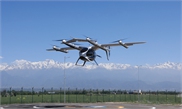
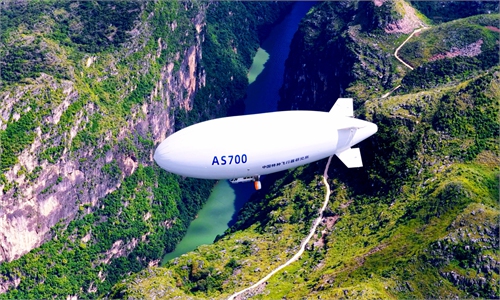
In addition, the Civil Aviation Administration of China has set up a low‑altitude safety department. This is the second national‑level body dedicated to the sector, following the low‑altitude economy department launched by the National Development and Reform Commission in December 2024. These are seen by industry insiders as moves to solidify a foundation for the long-term, standardized and high-quality growth of China's low-altitude economy.
According to the press conference, other key legislation tasks cover formulating rules for a unified national market to eliminate institutional barriers and bottlenecks that hinder market integration and rolling out administrative regulations concerning people's livelihoods covering water supply safety, medicine supervision, housing security, medical care services and road transportation.
In addition, for high-level opening-up, the country will further improve foreign-related legislation. It will revise laws and regulations on customs and foreign labor cooperation to steadily expand institutional opening-up and effectively safeguard China's national sovereignty and development interests, according to the press conference on Wednesday.
Global Times
RELATED ARTICLES