China space station's 10th batch of science samples returns aboard Shenzhou-22 for follow-up research
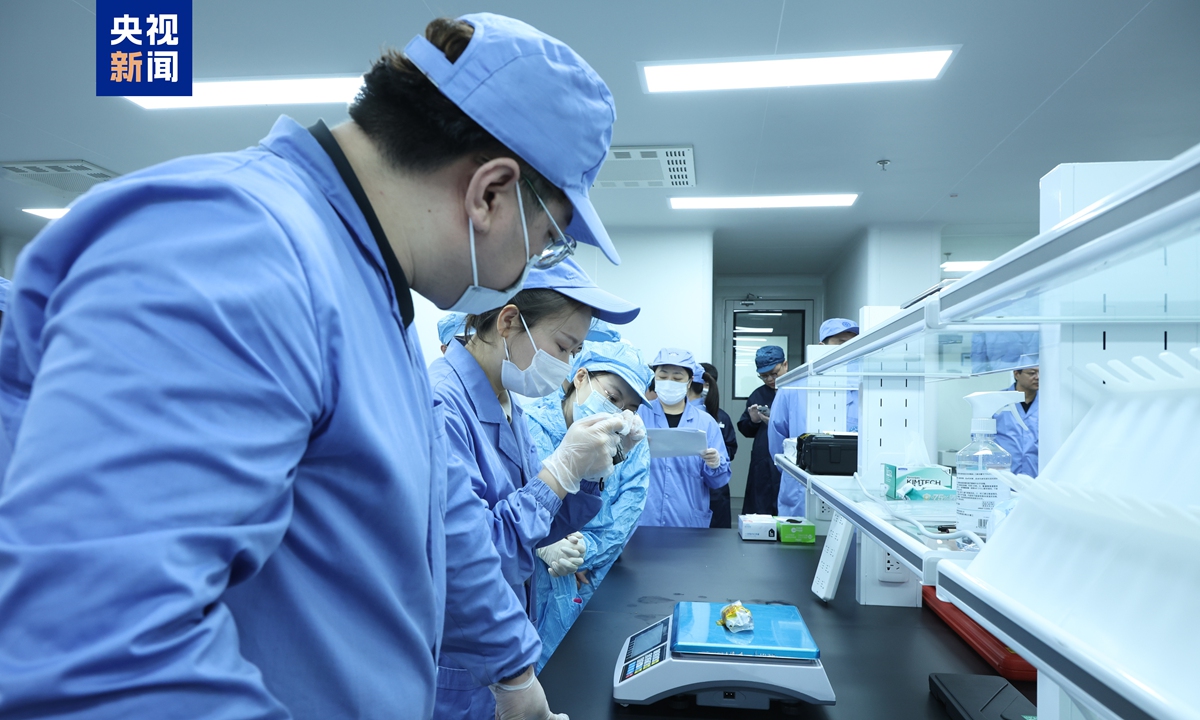
Scientists check the condition of experiment samples returned abroad Shenzhou-22 spacecraft. Photo: CCTV News
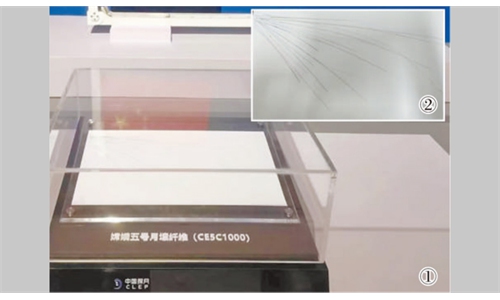
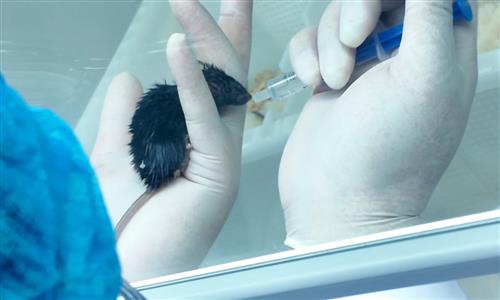
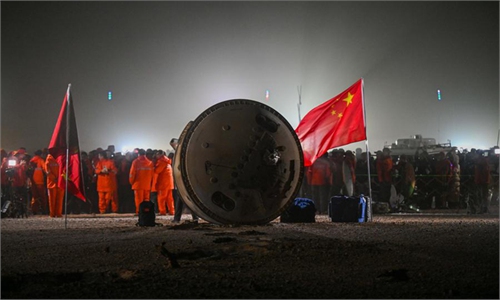
The 10th batch of space science experiment samples from China's space station returned to Earth aboard the Shenzhou-22 spacecraft on Friday, as the spacecraft's return capsule landed safely at the Dongfeng landing site in North China's Inner Mongolia Autonomous Region. Some of the samples arrived in Beijing early Saturday and were handed over to scientists for follow-up research, China Central Television (CCTV) News reported on Saturday.The returning samples came from 23 space science experiments covering life sciences, materials research and combustion studies, with a total weight of about 41 kilograms. They included nine life science samples, 12 materials samples and two combustion samples.
Life science samples, including artificial embryos and brain organoids, have been transported to the Technology and Engineering Center for Space Utilization under the Chinese Academy of Sciences. After checks on the condition of the returned samples are completed, they will be handed over to scientists for further research.
The remaining materials and combustion samples will later be transported to Beijing together with the Shenzhou-22 return capsule.
In the field of life sciences, scientists will use the returned samples to study how the space environment affects human development, stem cell behavior, organ growth, bone metabolism, cardiovascular function and other key health-related biological processes.
The research is expected to help scientists better understand how life adapts to space, and provide important theoretical support for future long-term human stays in space and deep-space exploration, per CCTV News.
The materials science samples will help scientists study how gravity affects the growth and performance of advanced materials, including new titanium alloys and high-strength steel. The findings could support the development of key materials for aerospace, high-end equipment manufacturing, precision sensing and medical ultrasound imaging.
The returned combustion samples, including a burner and soot collection devices, will help scientists study flame-based material synthesis and the formation of carbon particles in space. The findings could support future nanomaterial production beyond Earth, new energy systems, space fire safety technologies and advanced carbon-based materials.
The Shenzhou-21 crew also arrived in Beijing by plane on Saturday after successfully completing their mission. The three astronauts, Zhang Lu, Wu Fei and Zhang Hongzhang, returned to Earth safely on Friday evening aboard the Shenzhou-22 spaceship, wrapping up a 210-day stay in orbit, the Xinhua News Agency reported on Saturday.
According to the China Manned Space Agency (CMSA), they are all in good health and the Shenzhou-21 spaceflight mission is a complete success.
The crew will enter a period of medical quarantine, and undergo comprehensive medical examinations and health evaluations, the CMSA said, noting that they will meet the press in Beijing following the end of this period, per Xinhua.
Global Times
RELATED ARTICLES