FM spokesperson slams Japanese official's rhetoric on neo-militarism at Shangri-La Dialogue as groundless, pale and powerless

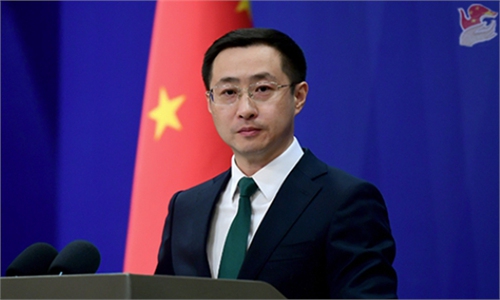
Chinese Foreign Ministry spokesperson Lin Jian
The Japanese official's rhetoric is groundless, pale and powerless in the face of a series of historical facts, legal facts and figures, and cannot win the trust of Asian neighbors and the international community, Chinese Foreign Ministry spokesperson Lin Jian said on Monday, in response to a media inquiry about Japanese Defense Minister Shinjiro Koizumi's reported remarks at the Shangri-La Dialogue, where he took an unnamed swipe at China, vowed to continue strengthening Japan's military capabilities, and opposed the label of "neo-militarism" on Japan by claiming that one country has a huge nuclear arsenal and a fleet of strategic bombers while Japan has neither.Lin said that Japan's militarism committed monstrous crimes during World War II, bringing profound suffering to its Asian neighbors and Allied countries.
To prevent the resurgence of militarism, international legal documents including the Cairo Declaration and the Potsdam Proclamation clearly stipulated that Japan should be completely disarmed and should not be allowed to maintain industries that could enable its rearmament. Japan's constitution also places strict restrictions on military force, the right of belligerency and the right of war, and has established principles such as an exclusively defense-oriented policy, together with a series of constraints under international and domestic law, Lin said.
However, Japan's latest defense budget has exceeded 9 trillion yen, hitting a postwar record high for the 14th consecutive year. Its per capita defense spending has reached three times that of China, while its defense spending as a share of GDP has surged to 2 percent and is even set to be further raised to 3.5 percent. The value of military industry orders placed by Japan's Defense Ministry over the past five years has tripled, Lin said.
Since the current Japanese government took office, Japan has accelerated the deployment of medium- and long-range offensive missiles, loosened restrictions on the export of lethal weapons, and pushed for revisions to its constitution and three key security documents, in an attempt to further break through international and domestic legal constraints and challenge the postwar international order, Lin said.
The Japanese official deliberately evaded historical criminal responsibilities, selectively ignored these facts, and instead attempted to blame others and mislead public opinion, Lin said. "Is this a guilty conscience, or an attempt to cover up its own ambition for military expansion?" Lin asked, adding that under such circumstances, Japan's so-called dialogue is hypocritical, merely a gesture and a show, with absolutely no sincerity.
This year marks the 80th anniversary of the opening of the Tokyo Trial, Lin said, noting that the trial of justice determined the numerous crimes of Japanese militarism and laid the legal foundation for the postwar international order.
International experts and scholars have pointed out that Japan's recent series of erroneous remarks and deeds are highly similar to the process through which militarism prepared for and launched war, as exposed by the Tokyo Trial, and threaten regional peace and stability, Lin said.
The international community must remain highly vigilant, and jointly guard against and resolutely curb "neo-militarism" from taking shape and becoming a scourge, Lin said.
Global Times
RELATED ARTICLES