Illustration: Chen Xia/GT
As UK Foreign Secretary Yvette Cooper wrapped her visit to China on Wednesday, her repeated emphasis on the need for "dialogue" and "cooperation" during meetings with Chinese officials stood out.
At the 11th China-UK Strategic Dialogue on Tuesday, Cooper said that at a time when the international situation is turbulent and complex, it is more important than ever for the UK and China to strengthen dialogue and cooperation to jointly address global challenges. The UK is willing to work with the Chinese side to promote institutional dialogue, and deepen cooperation in economy and trade, finance, energy, artificial intelligence, climate change and other fields, said Cooper, according to Xinhua.
Clearly, "dialogue" and "cooperation" have been recurring keywords throughout her visit. Also notably, Cooper said in a post on X on Tuesday that "China is the second largest economy and like the UK is a permanent member of the UN Security Council. We must engage for the UK's security and prosperity in line with British values." The implication is clear: engagement with China is no longer an option, but a necessity.
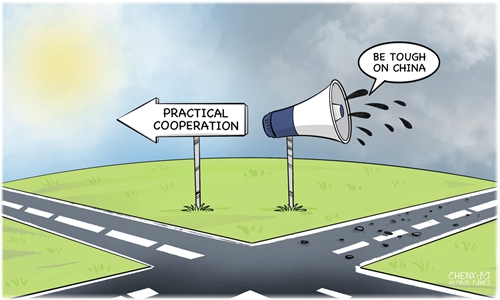
While it remains to be seen whether London will follow these rational words with concrete actions - given hardline voices of some UK politicians still advocating a confrontational stance toward China - it is clear that, after a period of tension, the UK government is now seeking a more constructive approach toward Beijing.
"Overall, at this stage, the UK government's decision to engage with China and advance pragmatic cooperation across multiple fields reflects a more rational policy direction," Dong Yifan, an associate researcher at the Institute of Country and Regional Studies at Beijing Language and Culture University, said, while noting "challenges" for London to balance its need for pragmatic cooperation with calls for security and values-based diplomacy.
Still, London's efforts to recalibrate its China policy offer a valuable lesson for Brussels, as Europe is currently in the midst of a broader debate on relations with China. The EU has been intensifying its protectionist approach toward China, seriously undermining bilateral ties, and is reported to further discuss its China policy at the EU summit scheduled for June 18-19 in Brussels.
The Financial Times reported that the agenda of the upcoming EU summit "will not use the word China." The newspaper also commented that "EU member states are tiptoeing toward a trade confrontation with China while desperately trying not to attract Beijing's attention." This lays bare the EU's contradictory approach toward China.
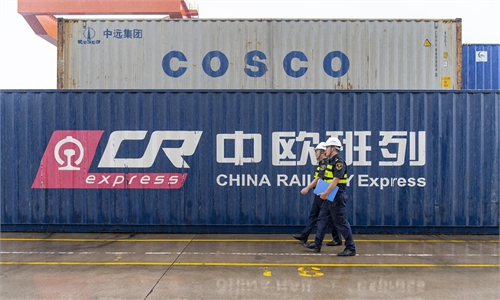
On one hand, the economies of China and the EU are deeply interconnected. On the other hand, within the EU there is a growing tendency to politicize trade issues. Recently, the European Commission held an "orientation debate." After the discussion, EU leadership stated that China remains a "critical partner" and that both sides will continue to maintain "engagement and dialogue," while also arguing that the current state of the trade and investment relationship is "not sustainable."
"At present, there are still distorted and inaccurate perceptions within the EU regarding China-related issues and China-EU economic and trade relations, which further exacerbate friction and tensions in the economic sphere," Dong said.
Confrontational approaches will only intensify trade frictions, increase uncertainty in economic relations, and ultimately backfire on the EU's own economic development. "The EU still requires a gradual process of adjustment and deeper understanding in its economic and policy approach toward China," Dong added.
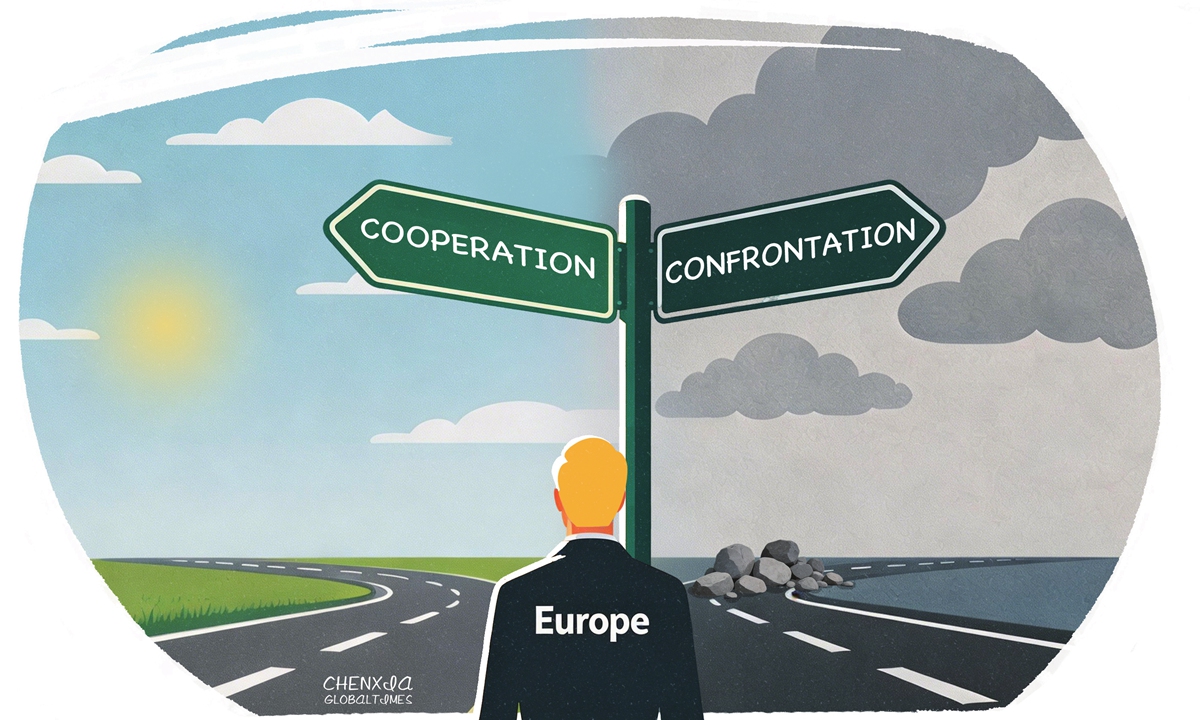
In this context, "dialogue" should be the guiding principle for Europe.
For the EU, rather than oscillating between confrontation and avoidance, it should recognize a fundamental reality: in a highly interdependent global system, relations with China cannot be simply defined as adversarial or competitive. Key issues such as climate change, global supply chain stability, and energy transition all require China-EU cooperation.
"The EU needs to return to a more rational and pragmatic approach to avoid further conflict. Both sides should address each other's concerns and, from a problem-solving perspective, work to genuinely resolve issues, rather than attempting to force change through pressure or resort to trade protectionism," Dong said.
The UK's return to a rational approach based on dialogue and cooperation is not an isolated case. During a series of recent visits to China, many foreign leaders have also advocated dialogue and cooperation. Indeed, there is no shortage of rational voices within the EU. For example, it is reported last week that Germany and Spain are leading opposition to European Commission plans to ban Chinese technology suppliers from telecom networks as part of new cybersecurity rules. It is hoped that Brussels will heed these rational voices and opt for the path of dialogue and cooperation rather than confrontation.
RELATED ARTICLES