China vows stable Latin America policy amid geopolitical pressure and political transitions, journalists’ top concerns
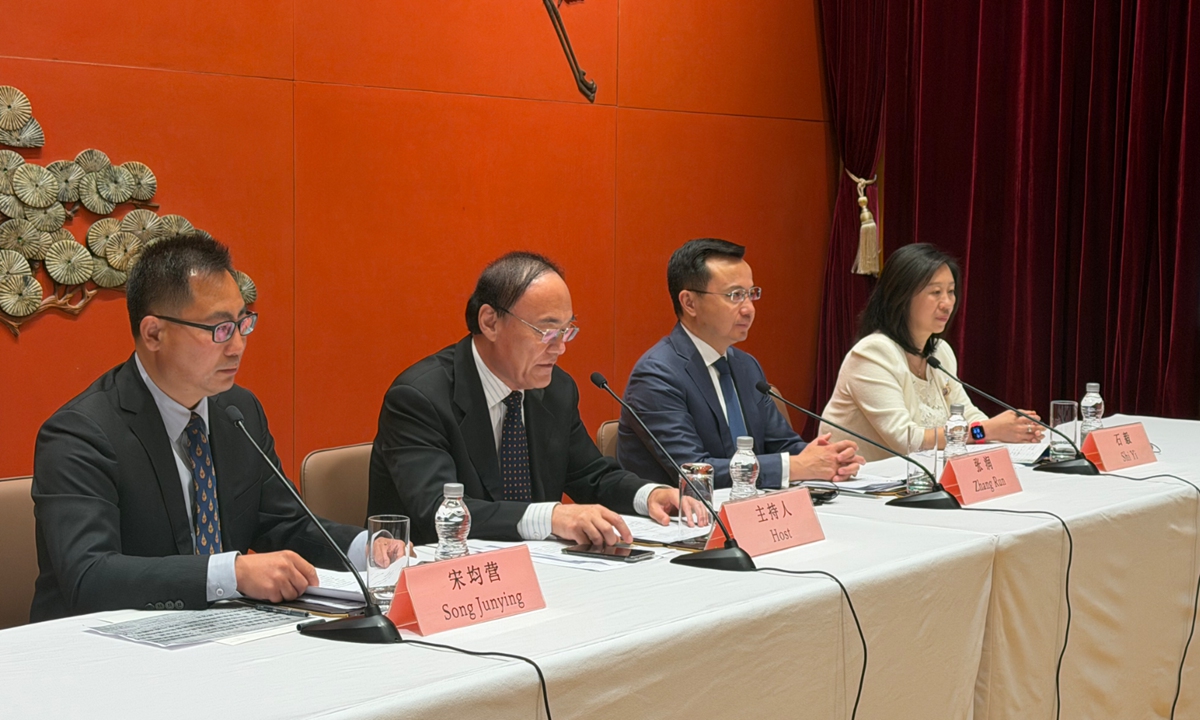
The China Public Diplomacy Association hosts the "Linjia No. 7 Salon" under the theme "The First Anniversary of the Five Programs for Building a China-LAC Community with a Shared Future: Implementation and Prospects" in Beijing on June 5, 2026. Photo: Shen Sheng/GT
In May 2025, China and Latin American countries jointly launched five major programs covering solidarity, development, civilization, peace, and people-to-people connectivity. One year later, the China Public Diplomacy Association hosted the "Linjia No. 7 Salon" on Friday under the theme "The First Anniversary of the Five Programs for Building a China-LAC Community with a Shared Future: Implementation and Prospects," taking stock of achievements and exploring future prospects.
Global Times reporters observed at the event that journalists from Latin American countries were highly active, frequently raising their hands to ask questions, and even held discussions with Chinese experts after the meeting, demonstrating their strong interests in the trajectory of China-Latin America cooperation.
External pressure and changes in Latin American governments are among the two most closely watched issues by Latin American media. Foreign media have raised the question of whether the overlap of these two variables could lead to fluctuations in China-Latin America cooperation. However, the solid results achieved over the past year in implementing the five major programs have provided a powerful answer.
Latin American media professionals told the Global Times said that over the past year, with China's support and bilateral cooperation, Latin American countries have accelerated infrastructure development and local technological advancement. The changes brought by cooperation are tangible, and they expect more positive outcomes from future collaboration.
Currently, Latin American countries are in an electoral cycle, with Brazil, Colombia, Peru and others either having recently held or soon to hold elections. Policy uncertainties brought by leadership changes, and whether such changes will affect international cooperation projects, have become a major concern in Latin American public discourse.
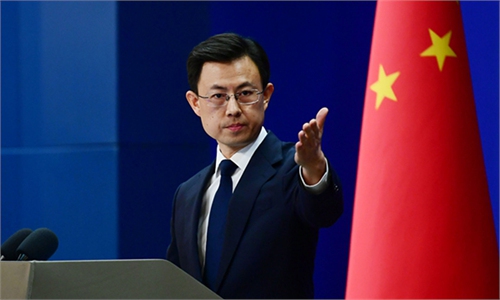
At the event, a journalist from Colombia asked how China-Latin America cooperation agreements could be steadily implemented amid political party rotation in Latin American countries. In response, Zhang Run, director-general of the Latin American and Caribbean Affairs Department of China's Foreign Ministry, stated that China-Latin America friendship is rooted in the people, and that China's policy toward Latin America will remain consistent and stable regardless of changes in internal or external conditions.
Geopolitical containment is another major concern of Latin American journalists. At the salon, reporters from Brazil, Venezuela, Mexico, Cuba, and Costa Rica jointly asked how China assesses changes in the external geopolitical environment one year after the implementation of the five major programs under the China-Latin America community with a shared future framework.
"In a context of increasing global uncertainty, instability, and unpredictability, China and Latin America are jointly advancing the five major programs, sending a strong message of solidarity and self-strengthening among Global South countries, and injecting stability and positive energy into a turbulent world," Zhang said.
He noted that from January to April this year, China-Latin America trade grew strongly by 18.5 percent year-on-year, with China's imports from the region increasing by 29.4 percent. China's visa-free policy for certain Latin American countries has also boosted travel: six months later, visits from Peru to China rose by 80 percent, while those from Argentina, Brazil, Chile, and Uruguay increased by 55 percent, 48 percent, 41 percent, and 34 percent respectively.
Nelson de Sá of Brazil's UOL media group, who has worked in China for two and a half years, told the Global Times that trade restrictions and geopolitical containment measures run counter to market principles and continuously erode Latin American economic interests. However, he believes that external pressure and political turnover cannot change the long-term positive trajectory of China-Latin America cooperation. "No matter how governments change, this cooperation trend will not be significantly affected. The natural complementarity of both economies will continue to drive economic integration," he said.
In his view, the development of Chinese-funded industries in Brazil illustrates this clearly: After Ford closed its plant in Brazil, BYD took over and resumed production, restoring lost jobs; after Mercedes-Benz halted production, Great Wall Motors took over the factory and began operations; after France's Alstom scaled down and suspended rail operations in Brazil, CRRC established local factories to fill the gap, restoring and even expanding manufacturing jobs. Nelson said these companies not only took over factories but also absorbed employment and drove upstream and downstream industrial chains. The service sector is also following suit: Meituan's Keeta and Mixue Ice Cream & Tea are accelerating entry into the Brazilian consumer market, continuously expanding local employment opportunities in services.
It is precisely through strong industrial complementarity and tangible livelihood projects that China-Latin America cooperation demonstrates strong resilience. Zhang stated in his speech that China-Latin America trade has maintained steady growth, reaching 549 billion US dollars in 2025, a record high. The 66-billion-yuan credit line China pledged to Latin America is being implemented ahead of expectations.
In addition, a number of landmark infrastructure projects have taken root: The Belo Monte Ultra-High Voltage Direct Current transmission project undertaken by Chinese enterprises in Brazil spans five states and 81 cities, easing north-to-south power transmission bottlenecks and benefiting 22 million people; the Mexico City Metro Line 1 renovation project has been fully completed and opened to traffic, increasing daily passenger capacity to 1.2 million; the Bogotá Metro Line 1 project in Colombia has progressed by more than 70 percent, and upon completion will significantly improve transportation for nearly 2.9 million residents.
"Many friends from Latin America and the Caribbean have told me that 'China studies' and Chinese language learning are booming in the region," Zhang said. China has completed ahead of schedule the provision of 1,000 "Chinese Bridge" program slots, and has provided 1,752 Chinese government scholarships and 4,000 training opportunities for Latin American countries, with 254 recipients admitted under the International Chinese Language Teachers Scholarship.
The "China-Brazil Cultural Year" has been held in both countries in turn. China has established three new Confucius Institutes in Honduras, Chile, and Brazil, and Brazil has established the first Confucius Institute alliance in Latin America. The region's first Luban Workshop has been inaugurated in Nicaragua. Currently, the exhibition "Maize, Gold, Jaguar - Ancient Civilizations of the Maya and Andes" is being held at the Capital Museum in Beijing, serving as another platform for China-Latin America civilizational exchange.
"Cooperation between Uruguay and China covers not only education exchanges such as student mobility, but also high-tech and medical fields. A large number of Uruguayan medical workers are now coming to China for training," said Florencia Pujadas, a journalist from Uruguay's Channel Canal 4, in an interview with the Global Times. As both a Uruguayan citizen and journalist, she believes both peoples must make further efforts to promote mutual understanding and the healthy integration and development of different cultures and systems.
Shi Yi, a vice president of China Foreign Affairs University and researcher at the Center for a Community with a Shared Future for Mankind, shared the story of Brazilian professor Marcus Vinicius De Freitas. In 2018, Marcus joined China Foreign Affairs University. Over eight years, he has moved between classrooms in China and Brazil, think tank platforms in Morocco, and global English-language podcasts and Brazilian mainstream media, presenting an objective account of China's path to modernization. In his view, China's development is not an abstract theoretical model in textbooks, but a vivid practice of exploring modernization in a complex geopolitical and developmental environment.
During the Q&A session, Zhang noted a phenomenon he observed: Walking through the streets and tourist sites of Beijing, Spanish and Portuguese can be heard everywhere; on social media, a wave of Latin American youth is enthusiastically experiencing Chinese lifestyles, with both "China fever" and "Latin America fever" shaping a new landscape of people-to-people exchanges.
Song Junying, director in the Department for Latin American and Caribbean Studies at the China Institute of International Studies, analyzed the deeper drivers of such cooperation from a macro perspective. He argued that China-Latin America exchanges on modernization are driven by strong internal momentum for three main reasons: First, both share similar historical experiences and a strong aspiration for independent modernization and catch-up development; second, they share similar civilizational foundations, providing cultural support for mutual learning; third, amid global transformations unseen in a century, both face similar historical missions, as the collective rise of the Global South shifts the balance of global power in a more favorable direction for developing countries.
"Advancing China-Latin America modernization exchanges and mutual learning requires building a China-Latin America community with a shared future and implementing the five major programs on the basis of high-quality Belt and Road cooperation to align development strategies," Song said.
RELATED ARTICLES