As summer travel peak season looms, visa waiver, trendy urban experiences drive South Koreans' rising China visits
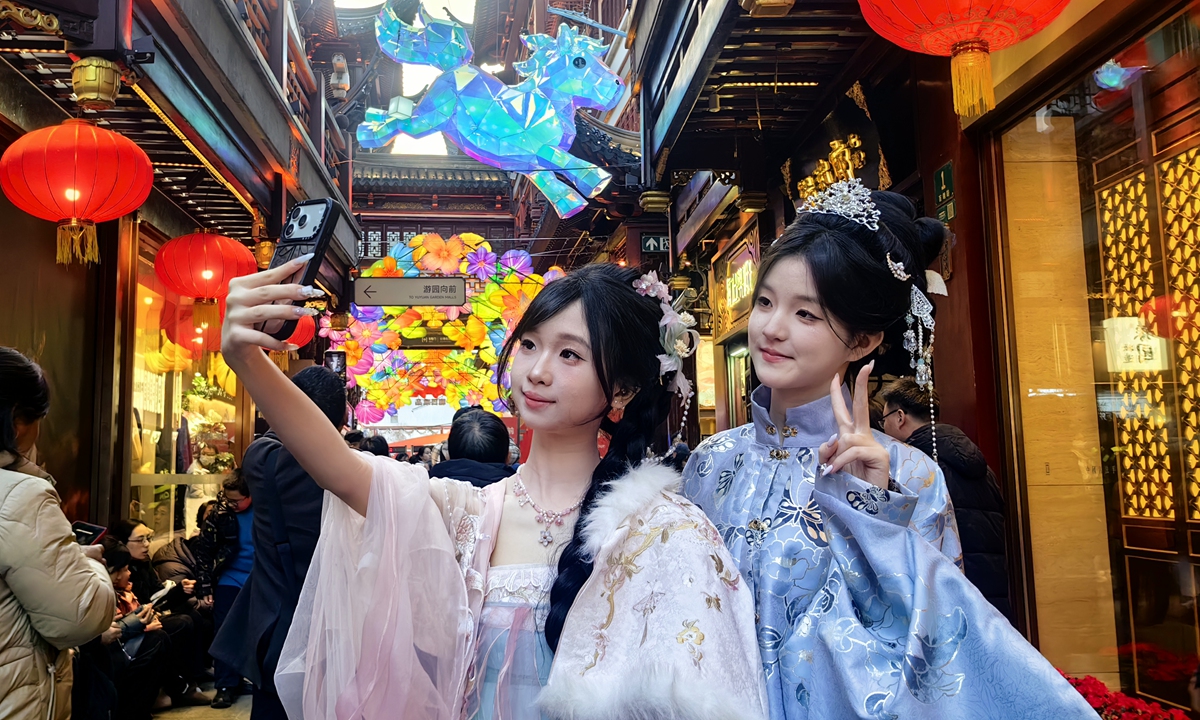
Two South Korean tourists wearing Hanfu, the traditional Chinese attire, pose for photos at Yu Garden in Shanghai on February 12, 2026. Photo: VCG
With the looming of the July-August summer travel peak, bookings for trips from South Korea to China have soared by 105 percent year-on-year, indicating that China is poised to emerge as the top hotspot in the overseas travel market this summer, South Korean media reported. Enjoying makeup and styling services, as well as visiting popular local restaurants and beverage shops, have become new must-do activities for South Korean tourists visiting China.
Citing data from Mode Tour, a South Korean travel platform, the Korea Daily reported that reservation demand for the peak summer season of July and August has surged by a striking 105 percent compared to the same period last year, signaling that China will become the hottest destination in this summer's overseas travel market.
YB Tour, another South Korean travel platform, reported that its overseas package tour reservations for July and August were led by China, which accounts for 22.2 percent, followed by Japan, Vietnam and Europe, the Korea Daily reported.
The report notes what South Korean tourists do in China has undergone a shift. Where travel by middle-aged Koreans was once dominated by visits to natural landscapes like Zhangjiajie in Central China's Hunan Province and the Taihang Mountains in North China's Hebei Province, the rise of city tours and food-focused travel among Millennials and Gen Z is now a key driver of surging demand for trips to China, per the Korea Daily.
An employee of South Korean budget carrier Eastar Jet was quoted by the Korea Daily as saying that "The popularity of Chinese cuisine in Korea, such as hotpot and malatang, a numbing-spicy hotpot, has spurred greater interest in travel to China than ever before." Shanghai is also a top destination for visitors seeking experiences at Disneyland or makeup services by influencers, according to the report.
A staff member at a makeup and styling service studio located on Shanghai's bustling Huaihai Middle Road said the shop has customers from South Korea every week, and that most of them opt for date makeup or camera‑ready makeup looks.
"Many Korean female customers choose the shop's 258 yuan ($38) package, which features a sweet, girl‑group style that aligns well with their tastes," the staff member told the Global Times on Sunday.
In addition to makeup, the package includes brow shaping, false eyelashes and a disposable touch‑up kit, the staff member said, adding that "Some South Korean customers have told us that these extras came as a pleasant surprise and that they feel it's a great deal."
In addition to modern makeup, experiencing classical makeup has also become a new activity for South Koreans traveling to China. On YouTube, many South Korean females have posted videos of their makeup experiences while wearing traditional Chinese clothing, captioned with phrases such as "Experiencing Chinese influencer makeup and styling."
A shop owner specializing in classical makeup and styling near Shanghai's Chenghuang temple said their shop has been open for five years, and since January of this year, they have clearly noticed an increase in South Korean customers. "South Korean customers tend to prefer the combination of a water‑ripple hairstyle paired with the traditional Chinese garment, the qipao," the owner told the Global Times.
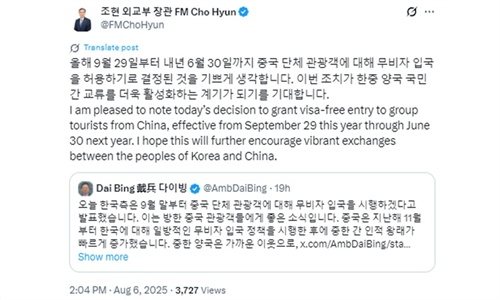
The Korea Herald reported that after Beijing introduced a visa waiver program for South Korean travelers in 2024, trips to China increased sharply.
According to official figures, about 3.16 million South Korean visitors traveled to China in 2025, up 36.9 per cent from 2024 and the highest growth rate among major outbound destinations for South Koreans, per the Korea Times. The Yonhap News Agency reported last Thursday that the number of passengers traveling to China from South Korea had rebounded to surpass the level seen before the COVID-19 pandemic.
A South Korean woman named Enson recently wrapped up a trip to Shanghai. During her three-day, two-night itinerary, which she praised as "fulfilling," she visited trendy areas such as Anfu Road. As for food, she tried several restaurants popular among her friends, including the barbecue chain, Haidilao hotpot and a few coffee shops.
She told the Global Times that the visa‑free policy, along with conveniently timed and reasonably priced flights, was one of the main reasons driving her choice to visit Shanghai, and that the city's coffee culture and its vibrant, fashionable atmosphere attracted her too.
RELATED ARTICLES