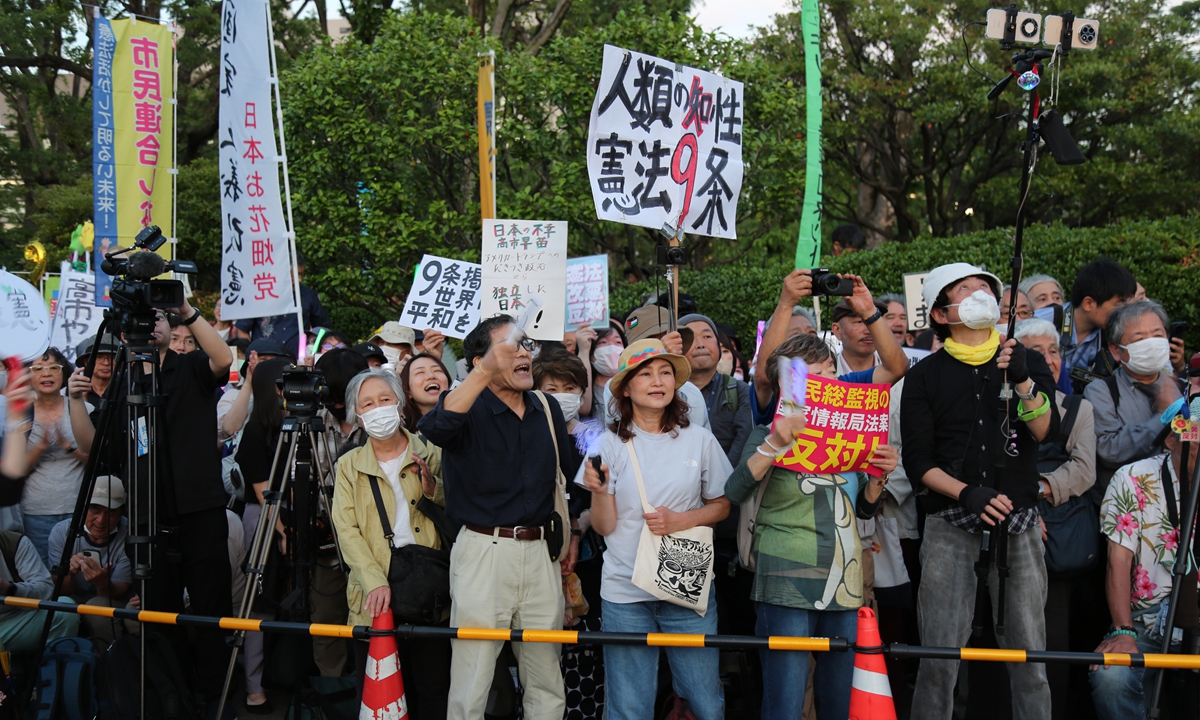
On the evening of May 19, 2026, Japanese citizens gathered in front of the National Diet Building in Tokyo to protest the Sanae Takaichi administration's attempts to revise the constitution and its series of military buildup moves. Photo: VCG
On May 27, the Japanese government passed a bill to establish a "National Intelligence Council" and a "National Intelligence Agency," creating a national-level intelligence system directly overseen by the Prime Minister's Office. This disruptive institutional overhaul bears striking similarities in power structure, functions and operational logic to Japan's notorious Special Higher Police (Tokko).Observers within Japan and the international community have sounded the alarm: The specter of the Japanese militaristic Tokko is making a comeback.
Founded in 1911, the Tokko acted as a secret police force for Japanese fascists. Before and during World War II, the Tokko resorted to mass arrests, torture and other harsh tactics to suppress progressive thoughts, manipulate public opinion and silence anti-war voices. As militarism ran rampant, Japan embarked on a path of foreign aggression, inflicting catastrophic losses across the globe, especially on Asian countries.
During the war, the Tokko savagely suppressed China's anti-Japanese national salvation movements and aided Japanese troops in conducting "cleansing" operations.
After the outbreak of the Pacific War, it followed the military into occupied areas in Southeast Asia, arresting and persecuting local resistance fighters and Allied personnel. Through espionage and harsh crackdowns, the agency helped Japanese forces plunder local resources and enforce brutal colonial rule. It was officially disbanded right after Japan's surrender.
Drawing on wartime lessons, postwar Japan set up a decentralized multi-department intelligence framework featuring checks and balances, designed to prevent intelligence agencies from falling under authoritarian control and prevent militarism from re-emerging.
Today, the Sanae Takaichi administration is rapidly pushing through reforms to centralize intelligence authority. The new system will concentrate all power within the Prime Minister's Office, with a subordinate "National Intelligence Agency" granted cross-departmental coordination authority and the power to compel the disclosure of intelligence.
More alarmingly, the bill deliberately blurs the boundaries of intelligence gathering, failing to establish red lines for the protection of citizens' privacy and lacking mechanisms for real-time parliamentary scrutiny and third-party oversight.
Such unchecked intelligence centralization is highly susceptible to becoming a political tool for right-wing governments to suppress dissent, potentially leading to a repeat of the pre-war nightmare of secret police rule.
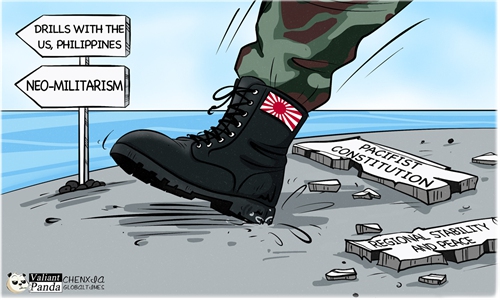
The intelligence centralization marks a key step for Japan's right-wing forces to breach the "exclusive defense" principle and accelerate remilitarization. In modern history, every instance of Japan's external aggression has relied on large-scale, systematic intelligence support. Tokyo also plans to establish a "Foreign Intelligence Agency" to bolster its overseas intelligence gathering. By merging its intelligence network with its war apparatus and building an offensive intelligence system, Japan blatantly violates the postwar peace principles the country has established.
The introduction of this intelligence bill has drawn strong criticism from all quarters. Several Japanese media outlets have noted that the Takaichi administration's moves evoke the terrifying history of pre-Pacific War intelligence agencies that used their immense power to suppress free speech and mobilize the public toward war. They argue that Japan has moved one step closer to a "new pre-war system" and urge vigilance against the Japanese government's subsequent efforts to push through the "anti-spy" law and establish a "Foreign Intelligence Agency."
Large numbers of Japanese citizens have staged spontaneous protests outside the National Diet building against the proposed National Intelligence Agency. They chanted slogans calling for an end to constitutional revision and military expansion, warning that the bill will pose lasting risks to Japan's political landscape.
A global poll also found that 84.8 percent of respondents viewed Japanese right-wing forces' attempts to strengthen intelligence functions as yet another dangerous move toward neo-militarism that warrants high vigilance from the international community.
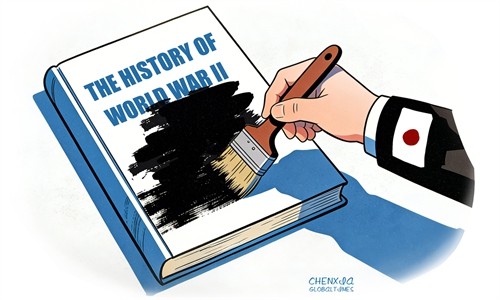
Japan's revival of a centralized intelligence system reminiscent of the Tokko is, in essence, a blatant challenge to the postwar international order and a gross disregard for the lessons of history. It not only severely erodes the foundations of peace within Japan but is also bound to significantly heighten security risks in the region.
As Japan marches down the path of militarist revival, the international community must remain highly vigilant and cannot stand idly by while Japan's neo-militarism takes root and becomes a threat. Any indulgence or appeasement could once again plunge the region into the abyss of conflict and confrontation.
The author is an international affairs observer. opinion@globaltimes.com.cn
RELATED ARTICLES