Illustration: Chen Xia/GT
There is a question that has long perplexed many: Why, as both Axis powers and defeated nations in World War II, has Germany been able to thoroughly reflect on its war guilt while Japan has consistently failed to do so?In June 2025, a book by a Japanese scholar titled Japan and Germany: Two Postwar Thoughts was translated and published in China. Its author, Masaki Nakamasa, is a professor in the Faculty of Law at Kanazawa University. The book points out that the divergence in post-war ideologies between Japan and Germany stems from their vastly different circumstances in the immediate aftermath of defeat. Germany experienced a "total defeat," which triggered an ideological upheaval of revolutionary proportions. Japan's defeat, however, was "incomplete," leaving its reflection on the war marked by striking ambiguity.
After Germany's surrender, the country was jointly occupied by the Soviet Union, the US, Britain and France. The Allied powers carried out a complete purge of Nazi forces, and the Nuremberg Trials eradicated the ideological and institutional soil in which Nazism had thrived. Having lived through the horrors of war themselves, and under the Allied occupation's re-education efforts, a "culture of guilt" became the dominant mind-set in Germany.
Japan, by contrast, underwent a "compromise reckoning." While the Tokyo Trials prosecuted some Class-A war criminals, they failed to fully eliminate militaristic forces. The imperial system was preserved, and numerous militarists returned to positions in politics, the military and education. This incomplete reckoning prevented Japan from clarifying its war guilt, sowing the seeds of future trouble.
The book argues that Japan and Germany took fundamentally different paths of reflection. Germany developed a post-war ideology centered on a "culture of guilt," which became internalized as a collective societal consciousness. The German government explicitly acknowledged its war guilt, integrating historical reflection into its foreign policy and national identity. History education centers on Nazi crimes, forcing younger generations to confront this dark past. Literature, film and art continuously critique Nazism. This nationwide reflection has earned Germany the respect of the international community and enabled its successful integration into a united Europe.
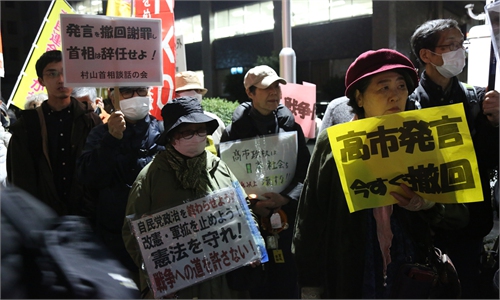
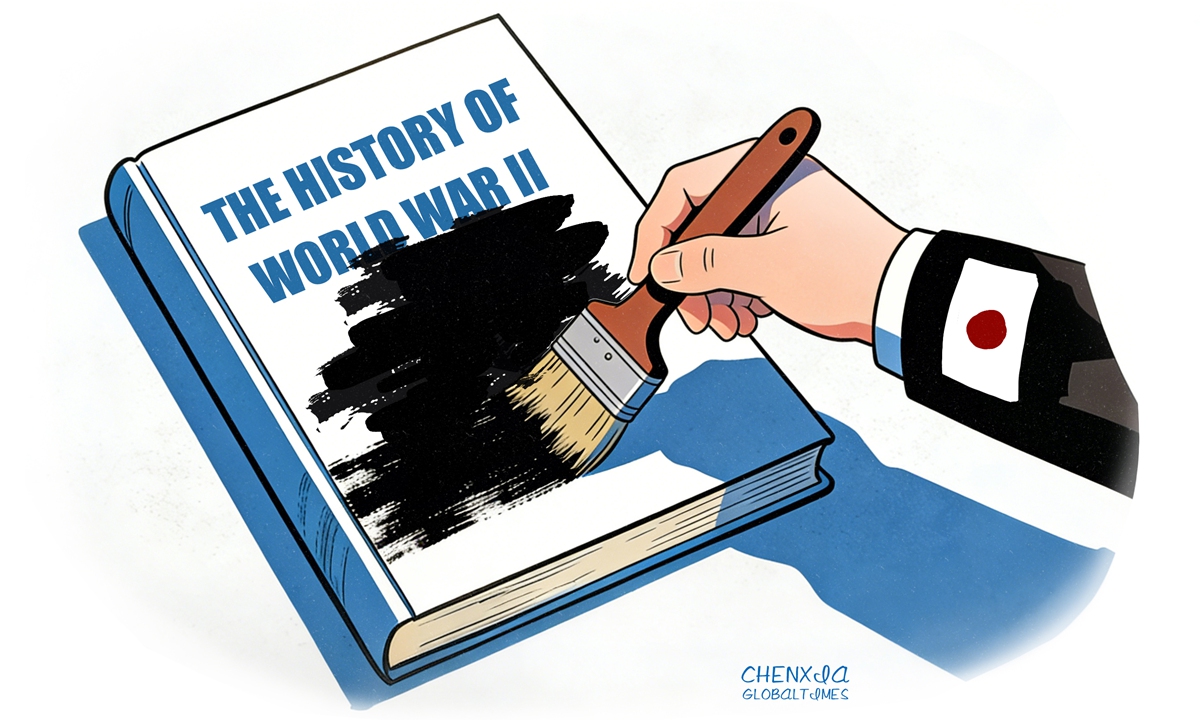
Japan's post-war ideology has remained split into two currents: a conservative narrative promoted by the state that seeks to downplay or even whitewash its history of aggression, and a reflective narrative among progressive civil society that insists on facing history squarely. The conservative official narrative has long held sway. Successive Japanese governments have never fully acknowledged war guilt as Germany has; instead, they have repeatedly downplayed aggression and emphasized a "victim mentality."
While some progressive scholars, writers and citizens in Japan continue to call for confronting history honestly, right-wing ideologies persist and have even gained momentum in recent years. Influenced by the official narrative, many Japanese lack a correct understanding of the war. Japan has never forged a unified, accurate view of history.
The book also analyzes why Japan and Germany developed such distinct postwar ideologies from three dimensions: cultural traditions, national identity and social psychology.
From the perspective of cultural traditions, Germany has a deep-rooted heritage of Enlightenment thought, with values of reason, freedom and equality deeply embedded in society, allowing Germans to examine Nazism through a rational lens. Japan, long shaped by the imperial system and Bushido culture, emphasizes "loyalty to the emperor" and "collective obedience," making it difficult to fundamentally repudiate its history of aggression.
In terms of national identity, Germany has constructed its national identity around "reflecting on history and integrating into Europe," linking its national development to European peace and prosperity. Postwar Japan became dependent on the US strategic framework, losing diplomatic independence. After the Cold War, it pursued "national normalization" and embarked on a path of "constitutional revision and military expansion," trapping its postwar ideology within a conservative framework.
Regarding social psychology, Germans personally witnessed the Holocaust perpetrated by the Nazis, making "guilt consciousness" a collective psychological imperative. The Japanese people endured wartime suffering, but the official narrative deliberately severed this suffering from the history of aggression, portraying the public as "war victims" rather than "participants in aggression," fostering a narrow victimhood mentality.
The year 2025 marked the 80th anniversary of the victory in the World Anti-Fascist War. The end of the war does not mean the end of history. How a nation confronts its wartime past is a question every defeated country must answer. Germany has emerged from the shadow of war through thorough reflection and resolute action. Japan, due to its incomplete reflection, has never escaped the historical haze - straining relations with its Asian neighbors and trapping itself in the quagmire of narrow nationalism.
These two outcomes reveal a simple yet profound truth: Facing history squarely is the prerequisite for safeguarding peace, and thorough reflection is the key to national rebirth. Only by daring to confront its dark past and bravely assuming its guilt can a nation truly win the respect of the international community and embed the ideal of peace into the very fabric of the nation.
The author is an observer of international affairs. opinion@globaltimes.com.cn
RELATED ARTICLES